
Somewhere between October and March, the days get shorter, mornings stay dark longer, and a noticeable number of people find themselves feeling heavier, slower and less motivated than usual. For some, the culprit is reduced daylight. Light therapy lamps – devices designed to replicate the intensity of natural outdoor light – have become a practical tool for managing that seasonal dip, along with sleep and energy issues that aren’t tied to the season at all.
This guide explains how light therapy lamps work, who benefits from them, how to use one effectively, and which models are worth considering. If winter regularly leaves you with lower energy, slower to wake and less like yourself, light therapy is one of the better-evidenced tools available for addressing it, particularly in clinical research on seasonal depression.
What Is a Light Therapy Lamp?
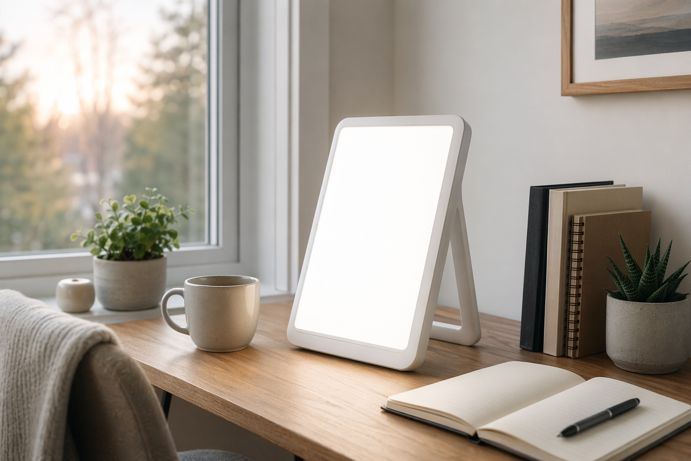
A light therapy lamp emits bright white light designed to mimic the intensity of outdoor daylight. Most are rated at 10,000 lux (the unit that measures how much light reaches a surface at a given distance). A typical indoor room sits at 100-500 lux. An overcast day outside reaches around 1,000 lux. At 10,000 lux, a light therapy lamp sits well above indoor lighting levels, high enough to trigger the measurable physiological effects associated with daylight exposure.
The key mechanism is light’s effect on melatonin and serotonin. Bright light exposure early in the day suppresses melatonin production, reducing feelings of sleepiness, and is associated with changes in serotonin activity linked to mood and alertness. This is why the timing and duration of sessions are important factors. It’s not simply about sitting in front of a bright light.
Reputable light therapy lamps are designed to emit little or no UV light, so they won’t tan your skin or cause sunburn.
Who Benefits from Light Therapy?
The clearest evidence is in Seasonal Affective Disorder (SAD) – a form of depression that follows a seasonal pattern, usually arriving in autumn and lifting in spring. SAD affects an estimated 5% of US adults, with a further 10–20% experiencing a milder version sometimes called the winter blues. Clinical guidelines from multiple professional bodies support light therapy as a treatment option for SAD, with some studies finding comparable response rates to antidepressant medication in certain patients.
Circadian Rhythm Disruption
People with delayed sleep phase disorder, where the internal clock runs late, making it difficult to sleep and wake at conventional times, can use morning light exposure to shift their body clock earlier. Shift workers, frequent travelers dealing with jet lag, and anyone whose schedule has drifted from daylight hours may also benefit from structured light exposure.
Non-Seasonal Depression
Some research suggests light therapy produces antidepressant effects independent of season. A 2016 randomized controlled trial published in JAMA Psychiatry found light therapy – both alone and combined with fluoxetine – outperformed placebo in treating non-seasonal major depressive disorder. This doesn’t make it a standalone treatment for clinical depression, but it points to potential value as part of a broader approach under medical supervision.
General Energy and Focus
People who work in windowless environments or get limited daylight exposure in winter often report improved alertness from morning light therapy sessions, even without a diagnosed condition. The clinical evidence here is thinner than for SAD, but it’s the most common reason people try light therapy.
One important note: light therapy isn’t appropriate for everyone. People with bipolar disorder should consult their doctor before using it, as bright light can trigger manic episodes. Anyone with eye conditions, photosensitivity, or taking medications that increase light sensitivity (certain antibiotics, antipsychotics and St. John’s Wort among them) should seek medical advice first.
How to Use a Light Therapy Lamp
Effectiveness depends less on which lamp you buy and more on how consistently you use it. Getting the variables right – timing, duration, distance and positioning – is what separates useful therapy from an expensive desk lamp.
Timing: Morning Is Almost Always Correct
For most users, morning sessions are where light therapy works. Exposure in the first one to two hours after waking suppresses residual melatonin and signals your circadian clock that the day has started. Evening use is generally counterproductive. Bright light late in the day can delay your internal clock, pushing sleep onset later. The exception is specific circadian applications where a sleep specialist has prescribed evening light to shift the clock in the opposite direction.
Duration: 20-30 Minutes at 10,000 Lux
Most research protocols for SAD use sessions of 20-30 minutes at 10,000 lux – the combination that appears most consistently in clinical literature, and what most lamp manufacturers design their products around. If your lamp is rated below 10,000 lux, you’ll need to sit closer or extend the session to achieve a comparable light dose.
Starting with shorter sessions (around 10 to 15 minutes) and building up over the first week is sensible, particularly if you experience headaches or eye strain initially. Most side effects are mild and settle within a few days.
Distance: Follow the Manufacturer’s Guidance
Lux ratings are always distance-dependent. A lamp rated at 10,000 lux delivers that intensity at a certain distance from the panel, typically 12 to 16 inches for most consumer lamps. Move further away and the lux drops significantly. Check your model’s recommended distance and keep your position consistent across sessions.
Positioning: In Front, Not Directly Into
You don’t stare directly into the lamp. Light needs to reach your eyes indirectly, from the direction of the lamp without looking at it. Positioning it slightly above eye level and angled downward allows light to enter your visual field naturally while you read, eat breakfast or work through email. The lamp should be in front of you, not off to the side where peripheral vision can partly block it.
Consistency Matters
Light therapy works cumulatively. Many people using it for SAD notice initial improvements within a few days to two weeks, but consistent daily use throughout the relevant season is what produces sustained benefit. Skipping sessions regularly undermines the circadian signaling effect you’re trying to build.
Light Therapy Lamps Worth Considering
The five models below cover the main price tiers and use cases. Not all light therapy lamps are equal. The key differences come down to panel size, usability and how reliably they deliver therapeutic lux levels at a comfortable distance. Getting that right makes the habit considerably easier to stick to.
| Model | Price | Best For | Key Detail |
|---|---|---|---|
| Verilux HappyLight Luxe | $65-75 | Most users | Large panel, 10,000 lux, UV-free, adjustable color temperature |
| Verilux HappyLight Liberty | $35-45 | Budget pick | Compact and portable, 7,500 lux, good entry-level option |
| Carex Day-Light Classic Plus | $140-170 | Clinical use | Large panel, has been used in clinical research settings and is commonly referenced in SAD treatment discussions |
| Lumie Vitamin L | $100-115 | Desk users | Slim vertical profile, 10,000 lux, desk friendly design |
| Circadian Optics Lumos 2.0 | $65-75 | Minimalists | Most compact option, 10,000 lux, modern folding design |
Verilux HappyLight Luxe
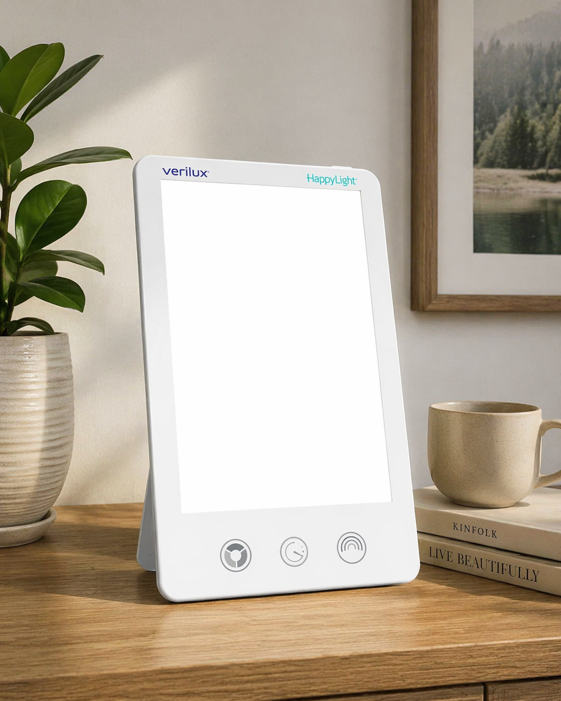
The most well-rounded option for most users. Its large panel delivers 10,000 lux across a broad surface area, making precise positioning less critical than with smaller lamps. Touch controls let you adjust brightness and color temperature, and UV-free output means no protective eyewear is needed. Verilux is one of the most established names in consumer light therapy.
Verilux HappyLight Liberty
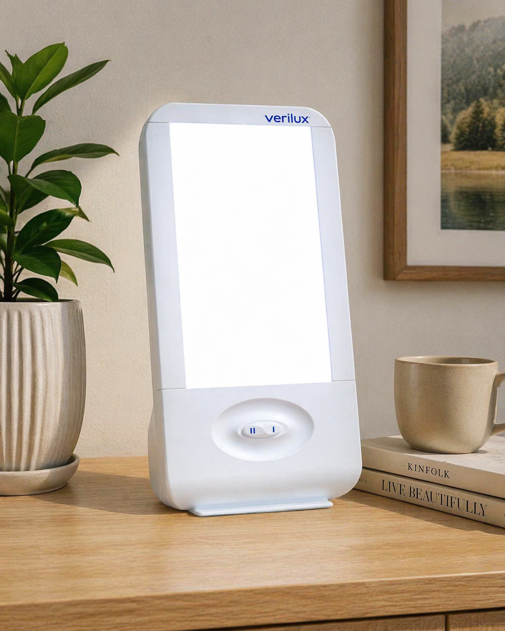
The Liberty trades panel size for portability. At roughly half the price of the Luxe, it delivers 7,500 lux – within the effective therapeutic range, though it usually needs slightly closer positioning than a 10,000 lux model – in a compact form that works well on small desks or for travel. A sensible starting point if you’re trying light therapy for the first time.
Carex Day-Light Classic Plus
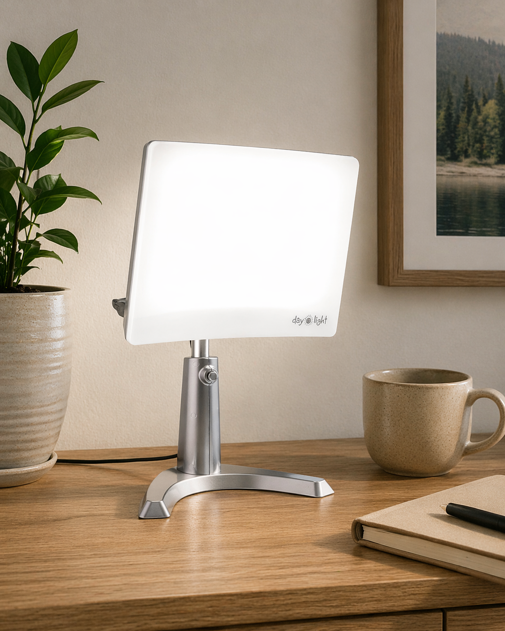
The Carex Day-Light has a longer clinical track record than most consumer lamps. It’s been used in research settings and is commonly referenced in SAD treatment discussions. The large panel and adjustable stand make positioning straightforward. It’s bulkier and less visually refined than the Verilux options, but for users focused on therapeutic efficacy over aesthetics, it’s a strong choice.
Lumie Vitamin L
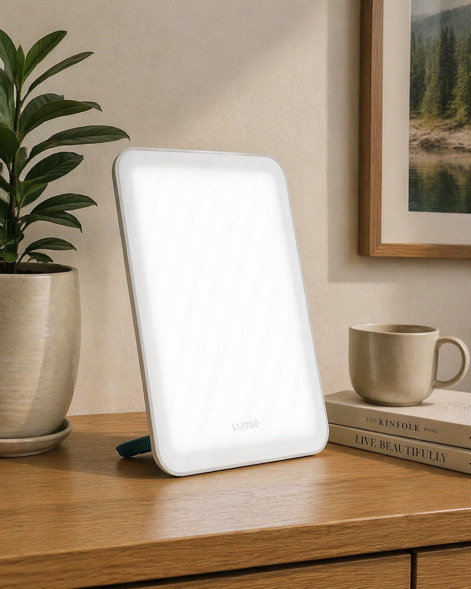
Lumie is a UK based brand that has been manufacturing light therapy devices since the early 1990s. The Vitamin L has a slim vertical profile that fits neatly on a desk corner without dominating the workspace. At 10,000 lux in a compact form, it works well on either side of the Atlantic. Lumie also produces SAD alarm clocks and sunrise simulators if you want to extend light therapy into your bedroom routine.
Circadian Optics Lumos 2.0
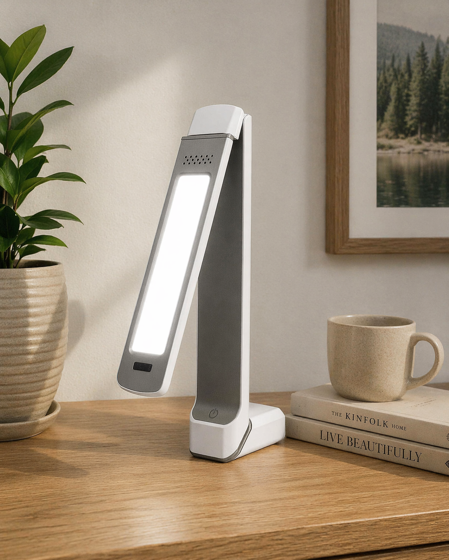
The most compact option here. The Lumos 2.0 folds flat for travel and fits easily on small desks, in laptop bags and beside hotel bathroom mirrors – the most portable 10,000 lux lamp in this group. For users who want something they can keep out permanently without it feeling clinical, it has a clear aesthetic edge over the larger, more medical looking options.
Fitting Light Therapy Into Your Morning Routine
The practical appeal of light therapy is that it doesn’t demand dedicated time. A 20-30 minute session layers easily onto things you’re already doing, like making breakfast, drinking coffee, reading, or working through email. The lamp sits on your desk or kitchen table and runs in the background.
If you already use smart lighting to support circadian rhythms, a dedicated light therapy lamp fills the gap smart bulbs can’t (they typically max out well below 10,000 lux however well they adjust colour temperature).
What to Expect, and When to Seek Professional Help
Most people using light therapy for SAD or winter blues notice improvement within the first one to two weeks of consistent use. Energy and mood tend to improve before sleep timing does. If you’re using it primarily for circadian adjustment – shifting a delayed sleep schedule earlier – expect two to three weeks of consistent morning sessions before the shift becomes reliable.
Side effects are generally mild. Headaches, eye strain and mild nausea are occasionally reported in the first few days, and usually resolve with shorter initial sessions and proper positioning. If side effects persist beyond the first week, decrease session length or consult a doctor.
Light therapy is not a substitute for professional mental health care. If you’re experiencing significant depression (seasonal or otherwise), a conversation with your doctor is the right starting point. Light therapy may well form part of a treatment plan, but that decision belongs with a clinician rather than a consumer guide.
Let There Be (the Right) Light
Light therapy lamps sit in an unusual category – clinical in origin, mainstream in practice, and genuinely useful when used consistently. The research behind them for SAD is among the stronger evidence bases in consumer wellness, and multiple medical bodies recommend light therapy as a treatment option for SAD.
The key variables are simple. Use it in the morning, sit at the right distance, give it 20–30 minutes daily, and stick with it through the relevant season. The lamp matters less than the habit around it.
Pair it with smart lighting that supports your evening wind-down, consistent sleep timing, and the other habits that make recovery possible – and you’re working with your biology instead of against it. Some of the most effective wellness tools aren’t the most complex. They’re just the ones you actually use every morning.