
You filled the tank, added a few drops of lavender and pressed the button. Nothing happened. Or it misted for a minute then stopped. Or the scent was so faint you wondered if it was working at all. Most essential oil diffuser problems come down to setup, not the diffuser itself.
This guide covers everything from first use to daily routine, including how long to actually run it.
These instructions are written for ultrasonic diffusers – the most common type, which use water and vibration to disperse essential oil as a fine mist. If you have a nebulizing diffuser (waterless, no tank), the process is different. Take a look at this nebulizing diffuser guide for that category.
Quick Picks
⚡ Just want the steps → How to Use a Diffuser: Step by Step
⏱️ How long to run it → How Long Should You Run a Diffuser?
🔧 Not working properly → Troubleshooting
📱 Using a smart diffuser → Smart Diffuser Tips
Who This Guide Is For
This guide is for you if: you’ve just bought your first diffuser, your diffuser isn’t behaving the way you expected, or you want to get more out of a device you’ve had for a while but never fully figured out.
Skip this guide if: you already have a working routine and just need blend ideas – those are covered in the essential oil diffuser blends guide.
How to Use an Essential Oil Diffuser: Step by Step
Step 1: Choose Your Location
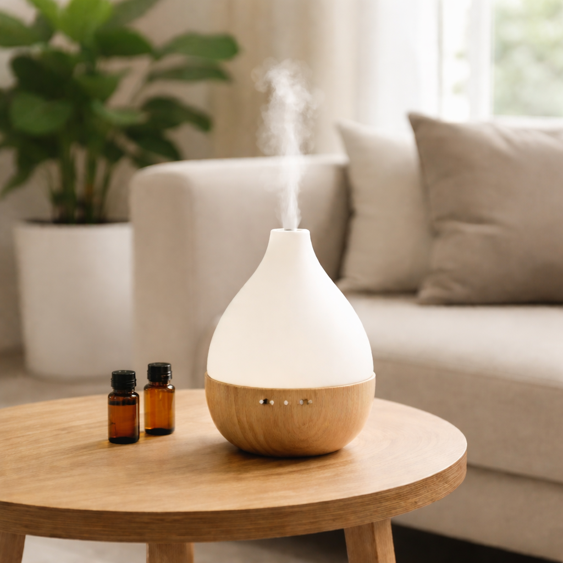
Place your diffuser on a stable, flat surface at least a foot or two off the ground. A side table, shelf or desk works well. Elevated placement helps the mist disperse into the room rather than settling on the surface directly below. Keep it away from electronics, books and anything else that wouldn’t benefit from fine moisture.
For even scent distribution, a central location is usually better than a corner. In a bedroom, a nightstand is convenient but the mist should face into the room, not directly at your face while you sleep.
Step 2: Fill the Water Tank
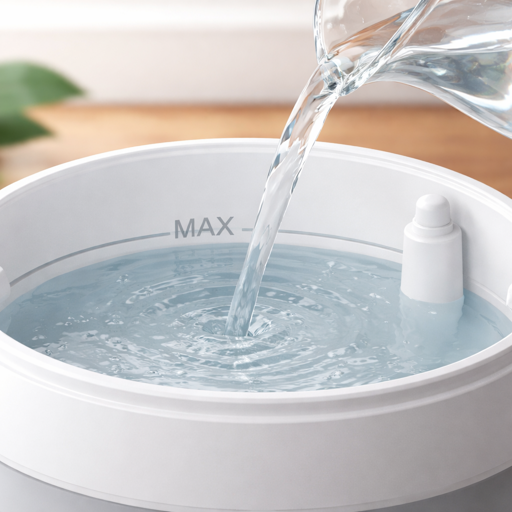
Remove the lid and fill the tank with clean, room temperature water up to the fill line, never above it. Many diffusers have a maximum capacity marked on the inside of the tank. Overfilling can cause leaking or affect mist output.
If you’re in a hard water area, filtered or distilled water will extend the life of your diffuser. Tap water works fine but tends to leave mineral deposits on the ultrasonic plate over time, which gradually reduces mist output.
Step 3: Add Your Essential Oil
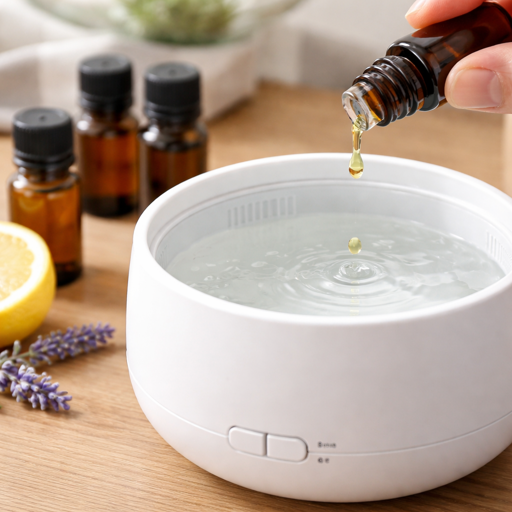
Add your essential oil drops directly to the water. Roughly 3 to 5 drops per 100ml of water is a good baseline, but you don’t usually need to scale that proportionally for larger tanks. Start at the lower end, especially with strong oils like peppermint, eucalyptus or cinnamon.
Use 100% pure essential oils intended for aromatic use. Carrier oils (like coconut or jojoba), heavy blends and some fragrance oils can clog the ultrasonic plate or affect performance over time. For a full list of substances to avoid, read my what not to put in a diffuser guide.
If you’re not sure which oils to use or how to combine them, the essential oils for diffusers guide covers oil selection, safety and drop counts in more detail.
These blends are for diffusion only, not for ingestion or direct skin application.
Step 4: Replace the Lid and Power On
Replace the lid, plug in the diffuser and press the power button. Most diffusers begin misting within a few seconds. Select your mist intensity if the option is available. Start on low or medium for a first session and adjust from there based on how strong the scent becomes in your room.
If your diffuser has a light function, this is usually controlled separately from the mist. You can run the diffuser with or without the LED on depending on your preference. A properly set up diffuser should produce a steady visible mist and a noticeable but not overwhelming scent within a few minutes.
Step 5: Let It Run, Then Empty the Tank
Run the diffuser for your chosen session length (more on this below), then switch it off and empty any remaining water from the tank. Don’t leave water sitting in the tank between sessions. Stagnant water can develop an off smell over time and may allow bacteria or mold to build up if left for extended periods.
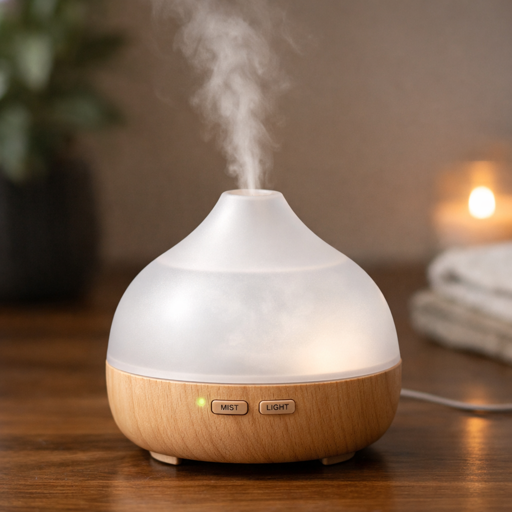
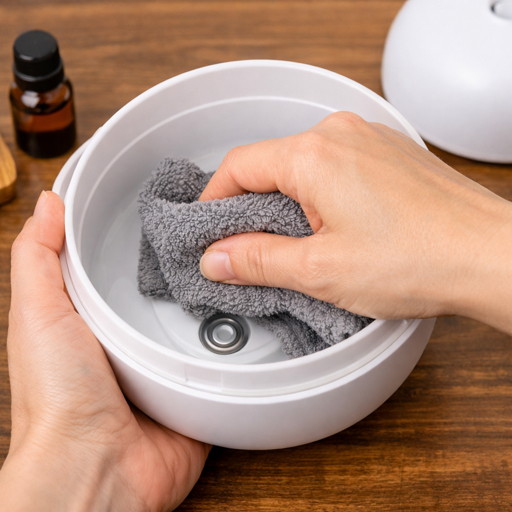
Wipe the inside of the tank dry with a soft cloth before putting the lid back on. This takes thirty seconds and makes a noticeable difference to how your diffuser performs and smells over time.
How Long Should You Run a Diffuser?
The most common mistake is running a diffuser continuously for hours and wondering why the scent seems to disappear or why you’ve developed a headache. Both are signs of the same problem – too much, for too long.
The 30-60 Minute Rule
For most situations, 30 to 60 minutes at a time is enough. Your nose adapts to a scent within 15 to 20 minutes. After that, you stop consciously noticing it even though it’s still dispersing into the air. Running the diffuser for longer doesn’t make the scent stronger from your perspective. It just builds up concentration in the room, which can cause headaches or irritation for some people.
A better approach is intervals. 30 to 60 minutes on, then 30 to 60 minutes off. This keeps the scent noticeable when the diffuser is running and gives the air in the room time to refresh between cycles.
Session Length by Situation
| Situation | Suggested session length |
|---|---|
| Morning routine / wake up | 30 minutes |
| Work from home focus block | 20-30 minutes per hour |
| Before bed wind down | 30-45 minutes, then off |
| Air freshening (kitchen, bathroom) | 15-30 minutes as needed |
| Background scenting (living room) | 30-60 minutes, then break |
Can You Run a Diffuser Overnight?
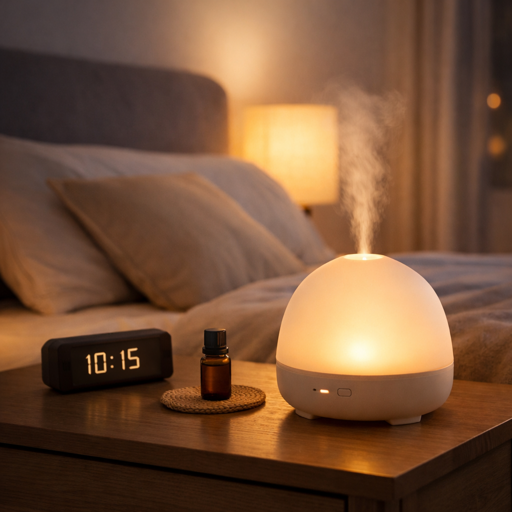
Most diffusers have an auto shut-off that triggers when the water runs out, which makes overnight use safer from a device perspective. From a scent perspective, running a diffuser continuously in a closed bedroom overnight isn’t recommended. The concentration of oil in the air builds up in an enclosed space and can become irritating.
A better approach for sleep is to run the diffuser for 30 to 45 minutes before you go to bed, then let it switch off. If you want it running while you fall asleep, set a timer to stop it after 30 minutes instead of letting it run until the tank empties. Always diffuse in a well ventilated space, and be mindful that household members can react differently to airborne scent, particularly children and anyone with respiratory sensitivities.
For nebulizing diffusers specifically, overnight use needs extra care. They disperse undiluted oil and produce a more concentrated output than water-based models, so shorter sessions with lower intensity are advisable.
Using a Smart Diffuser
If your diffuser connects to an app – whether via Wi-Fi or Bluetooth – the setup process is the same as above, with the addition of pairing the device to your phone before first use. Most smart diffusers use either a dedicated app or a third-party platform like Tuya Smart.
Setting Up Schedules
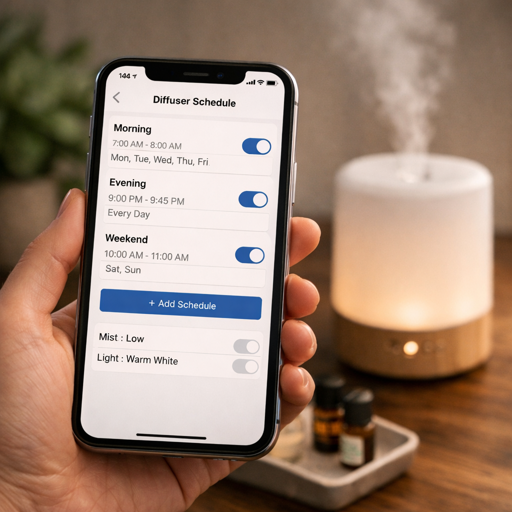
The main advantage of a smart diffuser is scheduling, setting the diffuser to run automatically at the same times each day without you having to touch it. A morning schedule that starts 15 minutes before your alarm, an evening schedule that runs for 45 minutes before bed, and a weekend schedule with lighter, different scents are all easy to set up once and run indefinitely.
Most apps let you control mist intensity and run time separately, and some let you schedule the LED light independently from the mist. Set these up during your first session while the settings are fresh. It takes about five minutes and removes the need to manually control the diffuser day to day.
Bluetooth vs Wi-Fi
Bluetooth diffusers require your phone to be within range (typically around 20 feet) to change settings, but most will run their programmed schedules independently once set. Wi-Fi diffusers can be controlled remotely from anywhere. For most home scenting routines, Bluetooth is perfectly sufficient. You set the schedule once and the diffuser handles the rest. If your smart diffuser uses Wi-Fi, make sure your router is broadcasting on 2.4GHz. Many smart home devices, including most diffusers, don’t support 5GHz. The 2.4GHz vs 5GHz guide explains the difference and how to check your network settings.
If you’re looking for a smart diffuser recommendation, this smart diffuser guide covers the best options at different price points, including hands-on testing of the ASAKUKI.
How Many Drops of Essential Oil Should You Use?
The standard starting point is 3 to 5 drops per 100ml of water. Use the table below as a guide, then adjust based on how strong the scent is in your room.
| Tank size | Starting drop range |
|---|---|
| 100ml | 3-5 drops |
| 200ml | 6-8 drops |
| 300ml | 9-12 drops |
| 400ml | 12-15 drops |
| 500ml | 15-20 drops |
Room size matters as much as tank size. A large open space may need more drops than a small bedroom.
If the scent is too faint, add one or two more drops next time. If it’s overwhelming or causes a headache, decrease the drops and shorten the session length. More oil does not always mean a stronger or better result. In fact, it often means a worse one. Note that larger tanks don’t always need proportionally more oil. Room size and airflow are also important considerations.
Diffuser Safety: What to Know
General Safety
Always diffuse in a well ventilated room. Keep diffusers out of reach of children and ensure pets can leave the area freely (see the pet section below). Avoid adding carrier oils and heavier fragrance oils to an ultrasonic diffuser unless the manufacturer explicitly states they’re compatible.
Pets
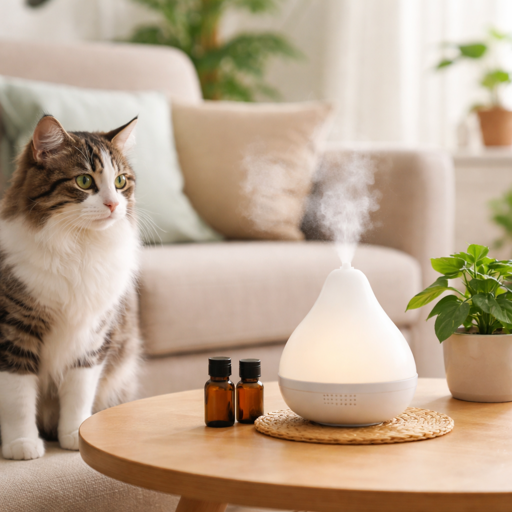
Several common essential oils warrant extra caution around pets. Tea tree, eucalyptus, peppermint, cinnamon and ylang ylang are among the oils most commonly cited as higher risk in veterinary guidance and essential oil safety resources, particularly for cats. Because birds have very sensitive respiratory systems, avoid diffusing oils in the same room as pet birds. Before diffusing in a home with animals, review the full essential oils pet safety guide.
Pregnancy and Children
Some essential oils are commonly avoided during pregnancy, including clary sage, rosemary and cinnamon. For children under two, many sources recommend avoiding diffusion entirely or using only very gentle oils like lavender in low concentrations. Always check with your healthcare provider if you have any concerns.
Troubleshooting: Common Diffuser Problems
The Diffuser Isn’t Misting
Check the water level first. Ultrasonic diffusers need the correct water level to generate mist properly. If the water level is fine, the ultrasonic plate may have mineral or oil residue on it. A cleaning cycle with white vinegar or a cotton swab with isopropyl alcohol on the plate directly usually resolves this. The full process is covered in the diffuser cleaning guide.
The Scent Is Very Faint
Three likely causes. First, not enough oil. Try adding a few more drops next session. Second, scent fatigue. You’ve been in the room long enough that your nose has stopped registering the scent, even though the diffuser is working normally. Leave the room for ten minutes and come back. Third, a dirty ultrasonic plate. Residue build-up reduces mist output and can mute scent. Clean the diffuser and try again.
The Scent Smells Off or Stale
Usually caused by oil residue from previous sessions mixing with new oils in a tank that wasn’t emptied and wiped between uses. Empty and clean the tank fully before each refill, instead of adding to old water and oil.
The Diffuser Stops After a Short Time
Most diffusers have a timer or auto shut-off function that may be set to a short interval. Check the settings, either on the device itself or in the app if it’s a smart diffuser. Some models also stop when they detect the water level is low, even if there’s still some water remaining.
Keeping Your Diffuser Clean
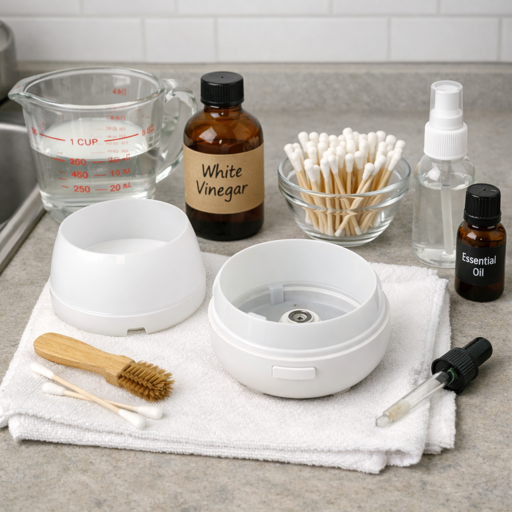
A clean diffuser performs better, lasts longer and produces a truer scent. The two minute habit that makes the biggest difference is emptying and wiping the tank dry after every session rather than leaving water sitting in it.
Beyond that, a weekly vinegar rinse and a monthly deep clean of the ultrasonic plate should keep things running well.
What to Diffuse: Choosing Your Oils
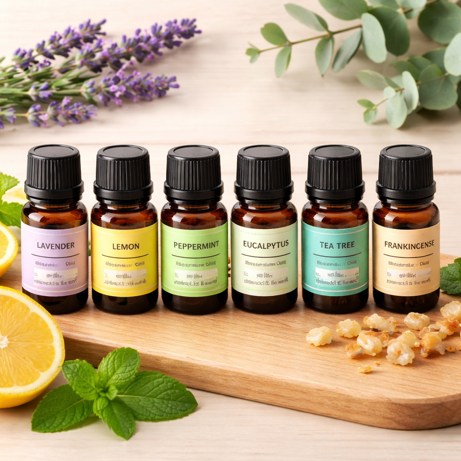
The oils you pick are just as important as the choice of diffuser. A few well-chosen oils used consistently will do more than a large collection used randomly. For first time buyers, a starter set of six versatile oils – lavender, peppermint, lemon, eucalyptus, frankincense and tea tree – covers sleep, focus, air freshening and stress without overcomplicating things.
Clear The Air
Using a diffuser well comes down to a few basics – the right water level, a sensible number of drops, a moderate session length, and a clean tank. Get those right and most issues disappear.
If the results feel underwhelming, add less before adding more. Adjust one variable at a time and pay attention to what changes in your space. Many people who give up on diffusers do so before they’ve had a chance to get it right – not because the device failed them, but because the setup never quite clicked.
Set it up properly once, and it becomes something you enjoy, not something you manage.