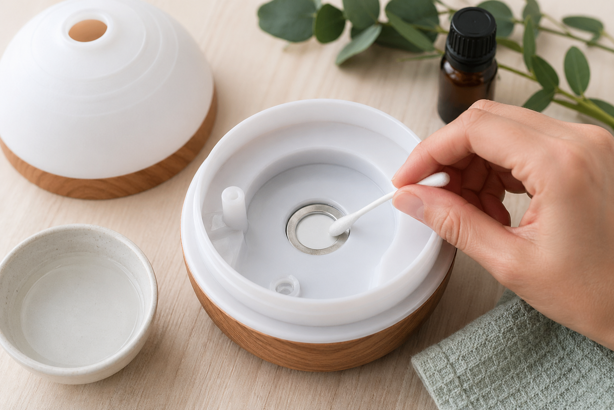
Most diffuser problems (poor mist output, strange smells, a unit that stops working after a few months) trace back to one thing – putting the wrong substance in the tank. Most ultrasonic diffusers are designed to work with two things – water and pure essential oils. Anything else risks reducing performance, damaging internal components, or leaving residue that shortens the life of the unit.
Here’s what to avoid, and why each one causes problems.
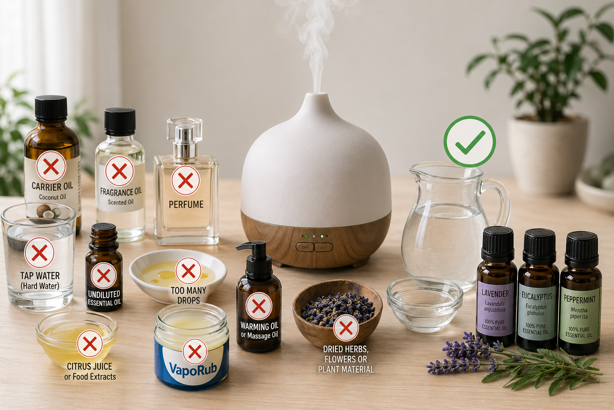
Substances to Avoid
Carrier Oils
Carrier oils like coconut, jojoba, almond and grapeseed are too thick and viscous to be broken down by an ultrasonic plate. While essential oils are temporarily dispersed by the ultrasonic vibration, carrier oils are heavier and tend to sit on the surface. Over time, they coat the plate and tank walls with a residue that is difficult to remove and steadily reduces mist output. Eventually, this film can stop the ultrasonic mechanism from working altogether. Carrier oils belong in topical applications, not diffusers.
Fragrance Oils
Fragrance oils are synthetic aromatic blends, not plant extracts. They may contain solvents, fixatives and proprietary fragrance compounds that are not fully disclosed on the label. Many are formulated for candles, soap or room sprays rather than inhalation through ultrasonic diffusion. Beyond the question of what you’re inhaling, fragrance oils can leave residue on the ultrasonic plate and degrade internal plastic components over time. If your bottle says “fragrance oil”, “perfume oil” or “scented oil” without a clear statement of 100% pure essential oil content, don’t put it in your diffuser.
Perfume or Cologne
Perfumes and colognes are formulated for skin application and ambient wear, not for ultrasonic diffusion. They are primarily alcohol-based and contain synthetic fragrance compounds, stabilizers and fixatives. The alcohol content can damage the seals and plastic components inside an ultrasonic diffuser over time, and their additional fragrance compounds may create a harsher indoor scent experience than intended. The scent may work temporarily, but the risk of damaging the diffuser isn’t worth it.
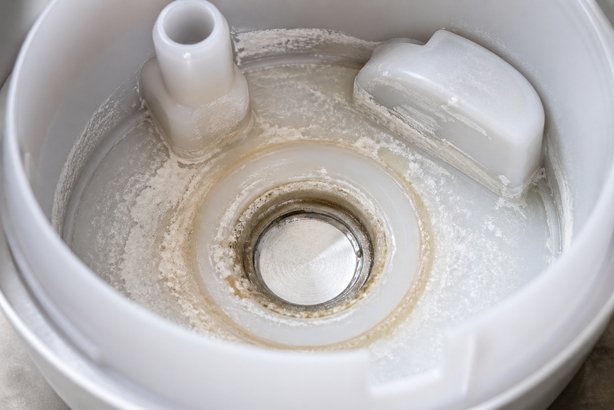
Tap Water (in Hard Water Areas)
Tap water itself won’t damage a diffuser immediately. In areas with hard water, however, the mineral content gradually builds up on the ultrasonic plate and tank walls, reducing mist output and eventually affecting performance. Distilled or filtered water is the better choice for daily use, particularly if you live in a hard water area. If distilled water isn’t practical, tap water is acceptable with more frequent cleaning. Just don’t let mineral scale accumulate.
Undiluted Essential Oils Without Water
Ultrasonic diffusers are designed to disperse a water and oil mixture. Running pure essential oil without water in an ultrasonic model (as opposed to a nebulizing diffuser, which is built for undiluted oil) puts excessive strain on the ultrasonic plate and will damage it. It also produces a far higher airborne concentration than is appropriate for most home use scenarios. That can cause headaches, nausea or respiratory irritation. Always add water first, then drops of oil on top.
Too Many Drops
Overloading the tank with essential oil is one of the most common diffuser mistakes. The ultrasonic plate can only disperse so much oil effectively. Excess oil remains in the tank, creates a stronger than intended concentration in the air, and leaves residue. A good baseline is about 3 to 5 drops per 100ml of water, starting at the lower end. More is not always better. It’s usually the reason a diffuser session produces headaches instead of relaxation. If the scent feels overwhelming within minutes of starting, the drop count is too high.
Citrus Juice or Food Extracts
Lemon juice, orange juice and similar food liquids contain sugars, acids and pulp that are not designed for diffusion. The sugars leave a sticky residue on the ultrasonic plate and tank. The acids may gradually affect internal components, and any solid particles can clog the mechanism. This applies to vanilla extract and similar kitchen liquids too. Even if they smell pleasant, the non-volatile components cause damage that builds up with repeated use. If you want a citrus scent, use a pure cold-pressed citrus essential oil.
Warming Oils and Massage Oils
Warming oils and massage blends are typically essential oils pre-diluted in a carrier oil base. The carrier oil component makes them unsuitable for ultrasonic diffusers for the same reason as using carrier oils directly. They’re too thick to disperse and will coat the ultrasonic plate. Even if the product contains genuine essential oils, the carrier oil content disqualifies it for diffuser use.
Dried Herbs, Flowers or Plant Material
Some sources suggest adding dried lavender, rose petals or herbs to a diffuser for a natural scent. This is not suitable for ultrasonic models. Plant material, however finely ground, introduces particles that the ultrasonic mechanism cannot process. These particles clog the plate, block the mist output and can cause the unit to fail. If you want the scent of a particular plant, use the essential oil derived from it.
Vicks VapoRub and Vapor Rubs
Vicks VapoRub and similar vapor rubs are petroleum-based ointments designed for topical skin application. They contain a petrolatum base that is far too thick and waxy to be processed by an ultrasonic plate. Putting any amount in a diffuser will coat the mechanism with a sticky residue that is very difficult to remove and will likely damage the unit. If you want a similar menthol or eucalyptus effect through diffusion, use a pure eucalyptus or peppermint essential oil at a low drop count instead.
What You Should Put in a Diffuser
Clean water and pure essential oils. That’s it. For ultrasonic diffusers, distilled or filtered water is preferable to tap water, and oils should be 100% pure with no additives, carrier oils or synthetic compounds. If you’re unsure which oils to use or how many drops to add, the how to use an essential oil diffuser guide covers drop counts, session timing and setup in detail.
For guidance on which oils to choose for specific goals – sleep, focus, stress relief or air freshening – the essential oils for diffusers guide covers the most commonly used options with practical recommendations.
A Note on Nebulizing Diffusers
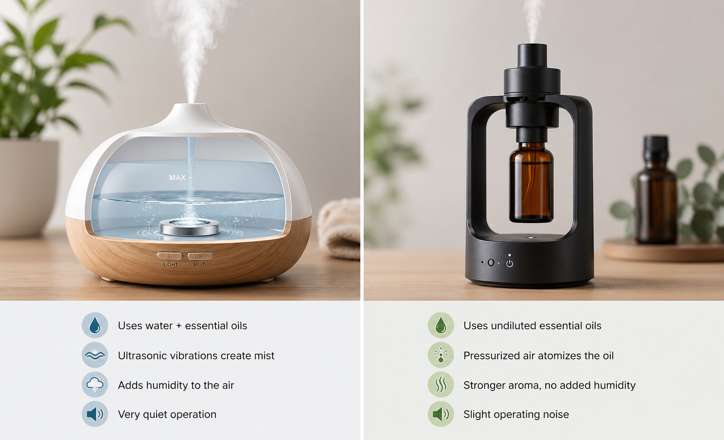
The guidance above applies specifically to ultrasonic diffusers, which are the most common type for home use. Nebulizing diffusers work in a different way. They use pressurized air to disperse undiluted essential oil directly, without water. If you have a nebulizing diffuser, the rules around carrier oils, fragrance oils and food extracts still apply. The water requirement does not. For more on how nebulizing diffusers work and when they make sense, read the nebulizing diffuser guide.
Don’t Mist the Point
Most diffuser problems start long before the mist gets weaker or the scent turns stale. They start with the wrong thing going into the tank. Carrier oils, perfume, vapor rubs, food extracts, and even too much essential oil all leave behind build-up that decreases performance and shortens the life of the unit.
If your diffuser seems underwhelming, check the basics before replacing it. Lower the drop count, switch to distilled or filtered water if hard water is an issue, and clean the ultrasonic plate thoroughly. Many diffusers that seem “broken” are simply clogged with residue from normal use or the wrong products.
Keep it simple – clean water, pure essential oils, and regular maintenance. That protects the diffuser, improves the scent experience, and makes every session work the way it should. For the full cleaning routine, see the how to clean a diffuser guide.