
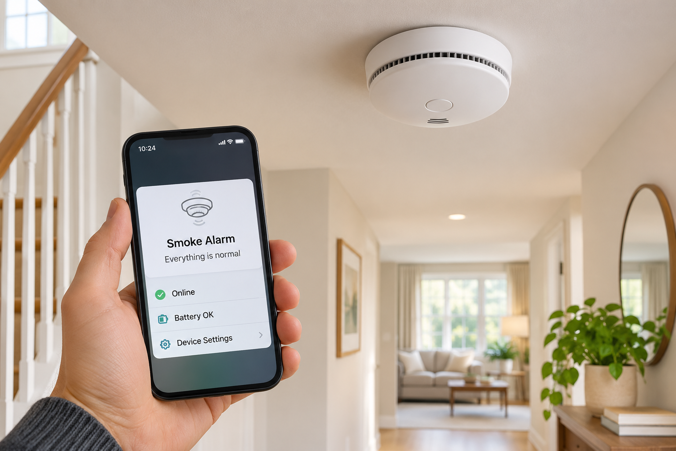
A smart smoke detector sounds its siren like any other alarm. The smart part is the phone alert when you’re away, the low battery warning and smart home integration. But the options aren’t interchangeable, and some need extra hardware.
This guide covers three US options, one each for Ring, YoLink and Matter homes.
Quick Picks
🏆 Best Overall: Kidde Smart Smoke + CO Alarm with Ring – $65-80 | Smoke and CO, battery or hardwired
📡 Best for Long Range: YoLink Smoke Alarm (YS7A12-UC) – $45-50 plus hub | Up to 2,034 ft range, grouped alarms can sound together during outages
🧩 Best for Matter Homes: Heiman Smart Smoke Alarm (S1-TM) – $45-50 | Matter over Thread, temperature and humidity sensor
30-Second Selector
What’s your situation?
- Uses Ring, or wants smoke and CO in one alarm → Kidde RGCUDR-RW (battery)
- Already has compatible hardwired Kidde alarms → Kidde RGCUAR-RW (hardwired)
- Large property or detached buildings → YoLink YS7A12-UC
- Runs a Matter platform with Thread → Heiman S1-TM
Not sure which ecosystem your home is built around? My Smart Home Compatibility Audit Kit gives you a full protocol and hub compatibility picture in about 30 minutes.
Quick Comparison
| Model | Price Range | Detects | Power | What It Needs | Certification Source |
|---|---|---|---|---|---|
| Kidde RGCUDR-RW | $65-70 | Smoke + CO | 2 AA batteries | 2.4 GHz Wi-Fi, Ring app | Intertek Authorization to Mark supplied by Kidde |
| Kidde RGCUAR-RW | $70-80 | Smoke + CO | 120V AC + 2 AA backup | Wiring, 2.4 GHz Wi-Fi, Ring app | Intertek ETL directory |
| YoLink YS7A12-UC | $45-50 | Smoke only | CR123A battery | YoLink Hub + Internet | Intertek ETL directory |
| Heiman S1-TM | $45-50 | Smoke only | CR123A battery | Thread Border Router + Matter platform | Intertek ETL directory |
Jump To:
- Kidde Smart Smoke + CO Alarm with Ring (Best Overall)
- YoLink YS7A12-UC (Best for Long Range)
- Heiman S1-TM (Best for Matter Homes)
- Before You Buy: What to Check
Best Smart Smoke Detectors for 2026
The alarms below suit very different smart homes, but each has a US safety listing I could trace to its exact model number, in Intertek’s ETL directory or in Intertek documents from the manufacturer. Ratings take into account detection coverage, certification, extra hardware, upkeep and value.
Kidde Smart Smoke + CO Alarm with Ring
Best Overall | $65-80 | View Battery Model • View Hardwired Model
Rating: 4.5/5
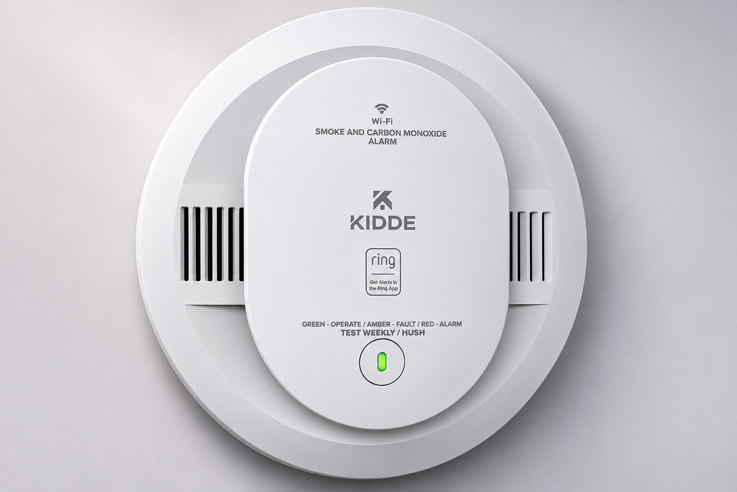
The only pick that detects carbon monoxide as well as smoke. It connects straight to Wi-Fi and the Ring app, with no hub or other Ring devices needed, and Kidde says app alerts don’t need a subscription.
The battery model (RGCUDR-RW) is the simpler option where local codes allow battery-powered alarms. The hardwired model (RGCUAR-RW) replaces a compatible wired alarm and, per Kidde, also brings alerts from compatible hardwired Kidde alarms into the app.
Key Specs
- Detects: Smoke (photoelectric) and CO (electrochemical), with low-level CO alerts in the app
- Connectivity: 2.4 GHz Wi-Fi only, wire-free interconnect with compatible Kidde alarms
- Subscription: Optional Ring 24/7 smoke and CO monitoring, from $5 a month
- Battery model: 2 AA batteries, changed about once a year (no lithium). ETL Listed to UL 217, 10th Edition (smoke) and UL 2034, 5th Edition (CO), per an Intertek Authorization to Mark supplied by Kidde (issued Feb 12, 2026), not yet in Intertek’s online directory
- Hardwired model: 120V AC with 2 AA backup, 85 dB at 10 ft, interconnects with up to 24 Kidde devices (Kidde cites an NFPA (National Fire Protection Association) limit of 12 smoke or smoke/CO alarms and 18 alarms in total). ETL Listed to UL 217, 10th Edition (smoke) and UL 2034 (CO) (Intertek ETL directory, checked Nov 12, 2026)
Worth Knowing
Kidde’s data sheets say its mobile alerts are “not intended or suitable for life safety or critical purposes.” The siren is your protection, and the app alert is an extra.
The hardwired model’s Wi-Fi features need AC power, and it requires a continuous, non-switched, non-GFCI circuit, so use a qualified electrician. Both versions share one Amazon listing, so check the Configuration and choose the “Smoke & Carbon Monoxide Detector” style.
Best For
Ring households, and anyone who wants smoke and CO protection in one alarm without a hub.
YoLink Photoelectric Smoke Alarm (YS7A12-UC)
Best for Long Range | $45-50 plus hub | View on Amazon
Rating: 4.2/5
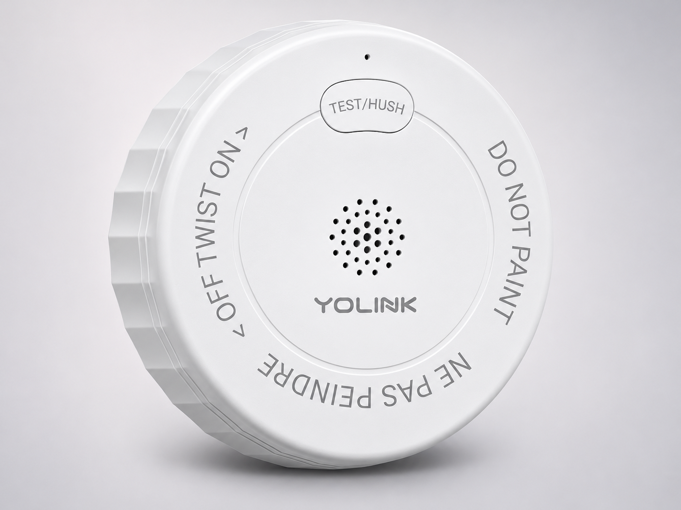
YoLink uses LoRa, a long-range radio technology, instead of Wi-Fi, with a rated range of up to 2,034 ft in open air – useful for detached buildings Wi-Fi can’t reach.
Once configured, YoLink says its Group Interlink feature can make compatible alarms sound together during hub or Internet outages, as long as they stay powered and within radio range. Alerts arrive by app, email and SMS, including rapid temperature change warnings.
Key Specs
- Detects: Smoke only (photoelectric)
- Power: CR123A battery, rated for up to 5 years
- Sound level: At least 85 dB
- Connectivity: YoLink LoRa, up to 2,034 ft in open air
- Extras: Remote self-tests, history, and local actions with YoLink sirens and lights (sold separately)
- Certification: ETL Listed to UL 217, 10th Edition (Intertek ETL directory, checked Nov 10, 2026)
Worth Knowing
A YoLink Hub (sold separately) and Internet are required for setup and notifications. Long range doesn’t make it suitable for every outbuilding, though. YoLink rates it for 40-100°F, so garages, sheds and unfinished attics may fall outside its operating limits.
Best For
Large properties, heated outbuildings and existing YoLink users.
Which YoLink Hub Do You Need?
YoLink support confirmed to me that the YS7A12-UC works with all YoLink Hub models, including these two:
- X3 Hub (YS1613) – $55-70: My pick. It uses 2.4 GHz Wi-Fi or Ethernet, with a backup battery that YoLink support told me should last about 2-3 hours.
- SpeakerHub (YS1604) – $20-30: The budget option. It has no internal battery, so it stops working if unplugged.
In a longer power outage, grouped alarms still sound locally, but phone alerts stop until the hub is back online.
Heiman Smart Smoke Alarm (S1-TM)
Best for Matter Homes | $45-50 | View on Amazon
Rating: 4.0/5
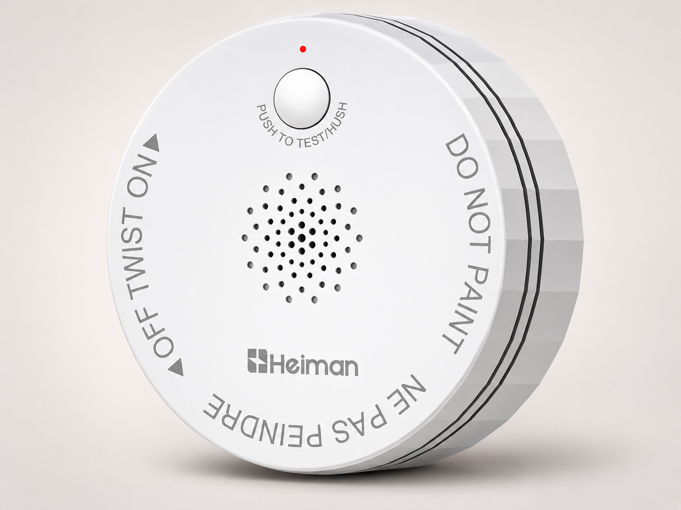
The S1-TM is a Matter smoke alarm that connects over Thread, giving it more platform flexibility than alarms tied to one app. Heiman lists it as working with Apple Home, Google Home, Amazon Alexa, SmartThings and Home Assistant.
Heiman says it also includes a temperature and humidity sensor, though how readings appear depends on your platform.
Key Specs
- Detects: Smoke only (photoelectric)
- Power: CR123A lithium battery, advertised by Heiman for up to 5 years
- Sound level: At least 85 dB at 10 ft
- Connectivity: Matter over Thread, up to 200 ft in an open area
- Works with (per Heiman): Apple Home, Google Home, Amazon Alexa, SmartThings, Home Assistant
- Certification: ETL Listed to UL 217, 10th Edition (Intertek ETL directory, checked Nov 10, 2026)
Worth Knowing
Heiman’s manual notes Apple Home may not yet display test button notifications, and advises against installing it in garages or unfinished attics, where temperature and other conditions can cause problems. Heiman sells similar models for other markets, so check for S1-TM and UL 217 on the box or back label.
Best For
Matter and Thread households that want smoke alerts in the same app as everything else.
Matter and Thread: What the Heiman Needs
The S1-TM needs a Thread Border Router, which you may already own in a smart speaker, display or streaming box. It also needs a Matter controller to add and manage it. That’s often the same device, running Apple Home, Google Home, Alexa or another Matter platform.
Alerts can display differently across platforms, so test the alarm after setup and confirm the alert reaches your phone.
Don’t Forget Carbon Monoxide
Only the Kidde pick detects carbon monoxide (CO). If you choose the YoLink or Heiman, add separate CO alarms. The Consumer Product Safety Commission recommends CO alarms on each level of your home and outside sleeping areas.
Before You Buy: What to Check
Certification and Labels
Look for a lab listing: UL 217 (smoke) and UL 2034 (CO) are the US standards. An alarm doesn’t need to be tested by UL itself. Recognized labs such as UL Solutions or Intertek (which uses the ETL mark) can test and list it to these standards. “Meets UL 217” on a listing isn’t the same thing.
Check the back label: Before installing, look for an ETL or UL mark and a UL 217 reference on the alarm itself.
What a listing covers: The alarm itself – how it detects smoke or CO, sounds its alarm, and on interconnected models, signals other alarms. App and phone alerts are an extra. Kidde, for example, calls its mobile alerts “ancillary to the product.” Matter certification is a separate thing again. It covers smart home compatibility, not smoke alarm safety.
Power and Battery Upkeep
Battery or hardwired: Battery alarms install in minutes. The U.S. Fire Administration says only qualified electricians should install hardwired smoke alarms.
Battery life: From about a year (Kidde’s AAs) to up to 5 years (YoLink and Heiman). Use only the battery types each manufacturer lists.
Hubs, Apps and Connectivity
What else you need: No separate hub for the Kidde, a YoLink Hub for the YoLink, and a Thread Border Router plus a Matter controller for the Heiman.
2.4 GHz Wi-Fi: The Kidde alarms and both YoLink hubs use 2.4 GHz Wi-Fi. If setup fails on a combined-band network, make sure 2.4 GHz is enabled.
Interconnect stays within a brand: Don’t expect alarms from different brands to sound together.
Where to Install Smart Smoke Detectors
The Consumer Product Safety Commission recommends smoke alarms on every level of your home, outside sleeping areas and inside each bedroom. The U.S. Fire Administration advises mounting them on the ceiling or high on a wall, following the manufacturer’s instructions.
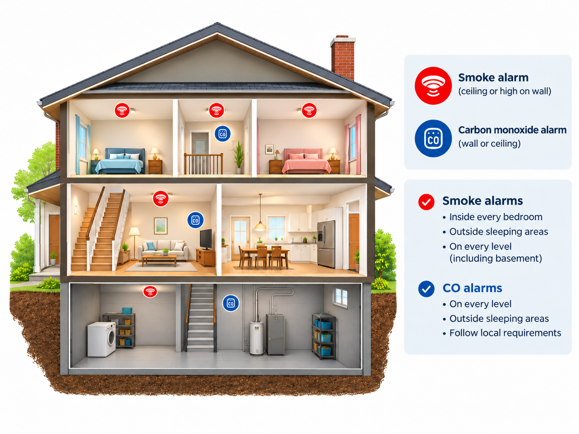
Test alarms at least monthly, or more often if the manufacturer says so. YoLink and Heiman both recommend weekly testing. Replace each alarm by the manufacturer’s end-of-life date, and no later than 10 years from manufacture. The U.S. Fire Administration notes you may have less than 2 minutes to get out once an alarm sounds.
Frequently Asked Questions
Do smart smoke detectors work without Wi-Fi or Internet?
The siren does. All three picks sound locally, as long as they’re powered and working. Phone alerts may stop, depending on the model and platform. YoLink needs a working hub and Internet for remote alerts, and Heiman’s smart features depend on a working Thread network and Matter controller.
Can I mix smart smoke detectors from different brands?
Yes, but don’t count on them sounding together. Kidde says its alarms aren’t designed to interconnect with other brands. Any cross-brand response would come from platform automations, which a listing doesn’t cover.
Where There’s Smoke, There’s an Alert
Think of your smoke alarms as a household safety system rather than a collection of individual smart devices. Once installed, make sure everyone in your home knows what the alarm sounds like, how to respond and where to meet outside.
Smart technology can give you an extra pair of ears when you’re away from home, but the real value of early detection lies in what it buys you – precious time that no amount of technology can give back.
Wondering what the ETL mark means, and how it compares with UL? My guide to whether smart plugs are safe explains UL and ETL certification and what a listing actually covers.