Your oven preheats on the way home from work. The refrigerator alerts you when you’re running low on milk. Your air fryer pulls in app-guided recipes and applies the right cook settings once you choose one. None of this requires a six-figure remodel. It requires connected appliances, a reliable Wi-Fi network, and a clear understanding of what a smart kitchen is.
The term often gets applied loosely. Manufacturers label almost anything with an app “smart”. That makes it harder to evaluate whether a connected appliance is genuinely useful or just adding complexity to something that worked fine before.
This guide covers what smart kitchens involve, how the technology works, and whether building one makes practical sense for your home.
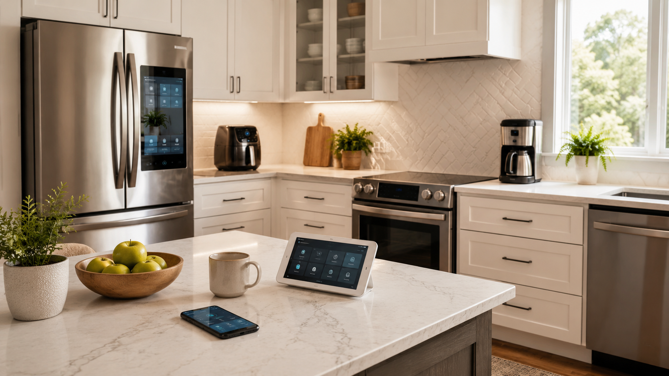
What Makes a Kitchen Smart?
A smart kitchen is a cooking and food management space where appliances connect to the Internet, a local home network, or both – enabling remote control, automation and data exchange between devices. The connectivity layer typically runs over Wi-Fi or Bluetooth, with some newer appliances beginning to support Matter for cross-brand compatibility (though adoption in kitchen appliances remains inconsistent).
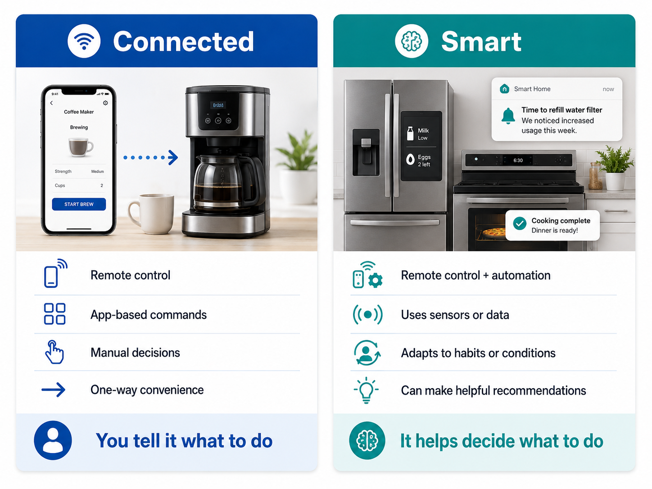
The key distinction is between connected and smart. A connected appliance lets you control it remotely (starting the coffee maker from bed, for example). A genuinely smart appliance goes further, using sensors or algorithms to adapt its behavior based on usage patterns, environmental conditions or data from other devices. Most products on the market today sit somewhere between these two points, offering remote control with some degree of adaptive behavior layered on top.
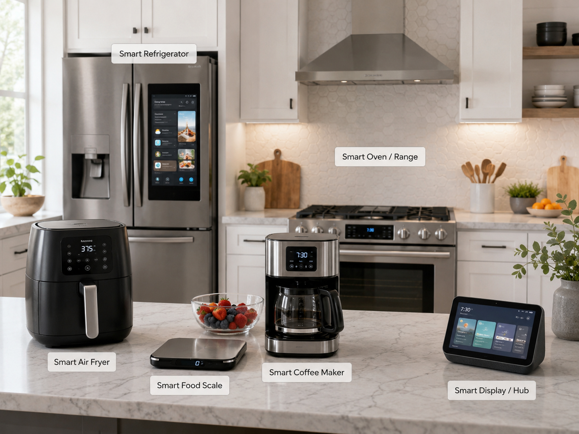
A practical smart kitchen doesn’t require every appliance to be connected. Most people build incrementally – a smart scale here, a connected air fryer there – rather than replacing an entire kitchen at once. The appliances that tend to deliver the most day-to-day value are those handling repetitive tasks where automation saves time, or those managing food safety and nutrition where real-time monitoring makes a real difference.
Core Smart Kitchen Appliances
Smart Refrigerators
Smart refrigerators represent the high end of kitchen connectivity. Models from Samsung, LG and GE include internal cameras that let you check contents remotely – useful when grocery shopping and unsure what’s already at home. Some models track expiration dates, suggest recipes based on available ingredients, and integrate with voice assistants. Touchscreen displays on the door handle calendar management and notes. Smart refrigerators come with one big caveat – they’re expensive. Premium connected models commonly land in the $2,000-$5,000+ range depending on size, finish and display features. The smart features deliver real value only if you actively use them.
Smart Ovens and Ranges
Connected ovens let you monitor cooking, adjust temperature, and in many cases preheat remotely through companion apps. Remote start typically requires enabling the feature at the appliance first, and implementation varies by brand and model. More capable models include built-in cameras for visual monitoring, automatic recipe downloads that configure cook settings, and food recognition that adjusts time and temperature based on what’s being cooked. Remote monitoring is the feature with the clearest everyday utility. Being able to confirm the oven is off after leaving the house solves a real problem. Recipe-guided cooking appeals most to people who find timing and temperature decisions stressful.
Smart Air Fryers
App-connected air fryers bring Wi-Fi and voice assistant compatibility to one of the most popular countertop appliances in US households. Cosori’s VeSync platform, for example, supports Alexa and Google Assistant integration alongside smartphone monitoring and cooking notifications. The smart angle is useful when it supports real cooking behavior. Shake reminders, timing alerts, and recipe presets add genuine value when your hands are occupied elsewhere in the kitchen. Connectivity just for the sake of it is less compelling.
For my top pick in this category, check out the smart kitchen appliances guide.
Smart Food Scales
Smart food scales connect to companion apps that calculate calories, macros and nutritional values as you weigh ingredients. Instead of manually estimating portions, you place food on the scale, select or scan the ingredient in the app, and the data logs automatically. Models from Etekcity, Renpho and Cosori use Bluetooth connectivity to iOS and Android, though exact app integrations and third-party platform support vary by model. For anyone tracking macros, managing portions, or following a structured nutrition plan, a smart food scale removes much of the guesswork from meal prep.
Smart Coffee Makers
Wi-Fi connected coffee makers let you schedule brewing from bed, start a pot remotely, and adjust brew strength through an app. Hamilton Beach and several other brands offer app-controlled models at mid-range price points, with Alexa compatibility common across the category. The convenience argument is stronger here than in most kitchen categories. Morning coffee timing is a repetitive task that automation handles naturally, and the price premium over non-connected models is usually modest.
Smart Displays and Hubs
Dedicated kitchen displays, such as Amazon Echo Show, Google Nest Hub, or purpose-built models like the GE Kitchen Hub, serve as control centers for connected appliances, recipe guidance and voice assistant access while cooking. They fill a gap smartphones don’t fill well – hands-free access to information and controls when your hands are covered in flour or raw chicken. A kitchen display isn’t an appliance itself, but it often becomes the primary interface through which the rest of the smart kitchen gets used.
How Smart Kitchen Devices Connect
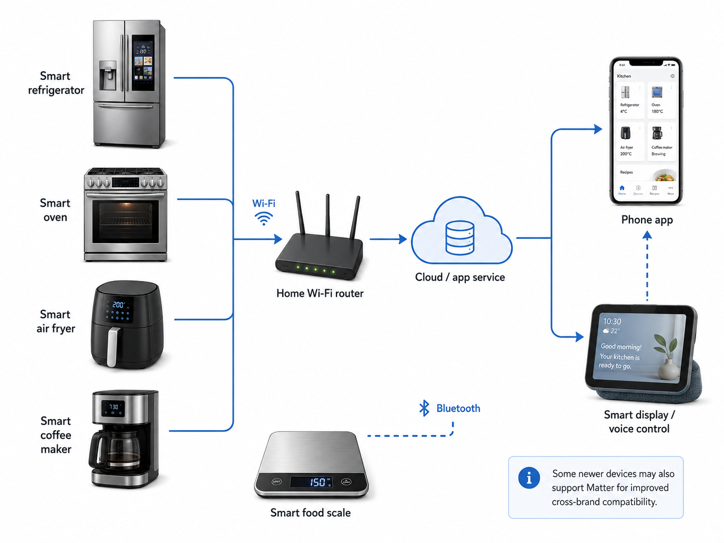
Most smart kitchen appliances use Wi-Fi for primary connectivity, providing the range and bandwidth needed for data-intensive features like camera feeds or firmware updates. Bluetooth handles shorter range connections, typically between a countertop appliance and a nearby smartphone, and works well for food scales, handheld thermometers and smaller devices where cloud connectivity isn’t required.
Protocol fragmentation has historically been a frustration in smart kitchens. A Whirlpool oven, a Samsung refrigerator and a Cosori air fryer each speaking different languages meant managing multiple apps with no meaningful communication between devices. Matter, the cross-brand standard backed by Apple, Google, Amazon, and most major manufacturers, is beginning to address this, though adoption in kitchen appliances specifically is still in its early stages.
Voice assistant integration through Alexa or Google Home is the most common way smart kitchen appliances surface in daily use. Rather than opening an app, you issue a voice command. This is a genuine functional advantage in the kitchen where hands-free operation isn’t just convenient but often necessary.
Smart Kitchen Benefits Worth Taking Seriously
Convenience and Automation
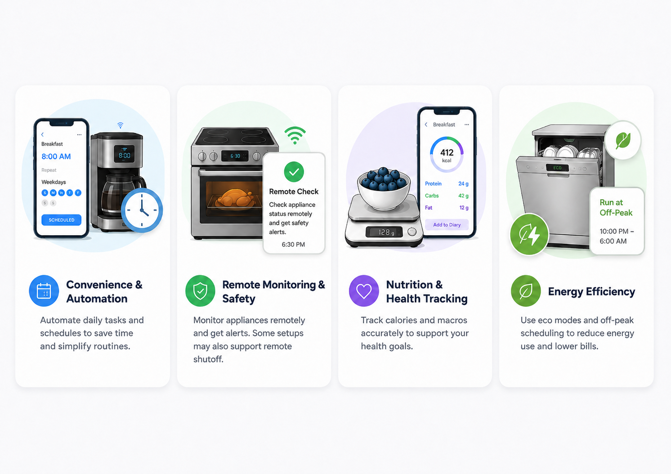
The most tangible benefit is removing the hassle of repetitive tasks. Scheduling the coffee maker the night before, preheating the oven from the car, and receiving an alert when the dishwasher cycle ends all create small gains that add up over a week. Automation matters most for tasks with consistent timing and clear triggers, which describes a significant portion of kitchen activity.
Remote Monitoring and Safety
Connected ovens and ranges can alert you if they’ve been left on, let you turn them off remotely, and in some cases shut off automatically after a set period. In some setups, smart smoke detectors can also trigger compatible shut-off devices or automations through smart home hubs. For households with elderly family members or young children, remote visibility into what’s active in the kitchen has practical safety implications beyond pure convenience.
Nutrition and Health Tracking
Smart food scales and connected nutrition apps bring precision to meal preparation that manual tracking can’t replicate. Automatic nutritional logging at the point of preparation removes the uncertainty and inconvenience that causes most manual tracking efforts to fail. That’s particularly relevant for anyone managing a health condition through diet or following a structured fitness plan.
Energy Efficiency
Some smart appliances include energy monitoring, eco modes or scheduling features that can help shift certain cycles to lower cost or lower demand periods. A connected dishwasher, for example, may let you delay a cycle until off-peak hours. Some utility programs also support smart appliance integrations for demand response or time-of-use (TOU) pricing. The savings depend heavily on local electricity rates, your utility plan, and how consistently you use those features, but the capability is real and growing.
Smart Kitchen Limitations to Understand
App Dependency and Longevity
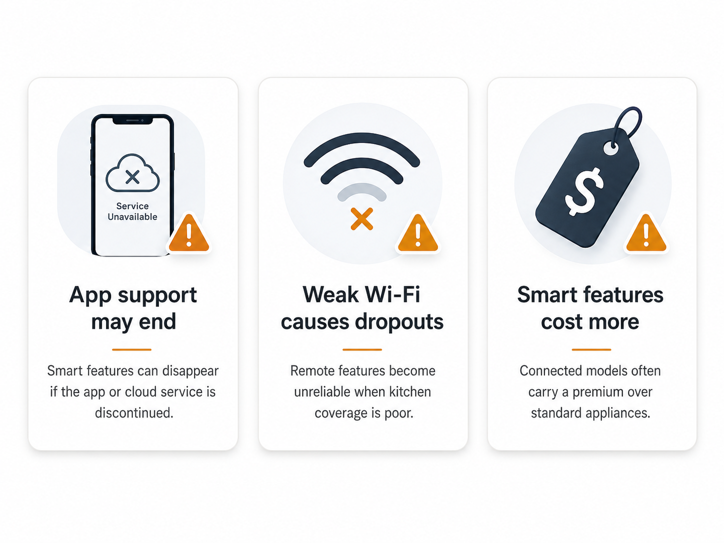
Every smart kitchen appliance depends on a companion app and usually a manufacturer’s cloud service. When companies discontinue support or stop updating apps for newer operating systems, connected features stop working. That can leave an otherwise functional appliance considerably less useful. This risk is worth factoring into purchase decisions, particularly for smaller brands or startups. Established manufacturers have stronger incentives to maintain support, but no company is immune to product line discontinuations.
Network Reliability
Wi-Fi dead zones in kitchens, common in homes where the router sits far from the cooking area, cause connectivity dropouts that make remote features unreliable. Many smart appliances continue to function manually without a network connection, but the connected features that justify their price premium stop working. Solid Wi-Fi coverage in the kitchen is a prerequisite for getting consistent value from connected appliances.
Price Premium
Smart versions of kitchen appliances generally cost more than their non-connected equivalents. A connected range can run $500-$1,500 more than a comparable non-smart model. Smart refrigerators can carry a premium of several hundred to a couple thousand dollars over comparable non-smart models. Smaller appliances like smart air fryers and coffee makers add a more modest premium, often $30-$80. Whether the premium is justified depends entirely on whether you’ll actively use the connected features. A smart oven never connected to the app delivers exactly the same value as the cheaper non-smart version.
Is a Smart Kitchen Worth Building?
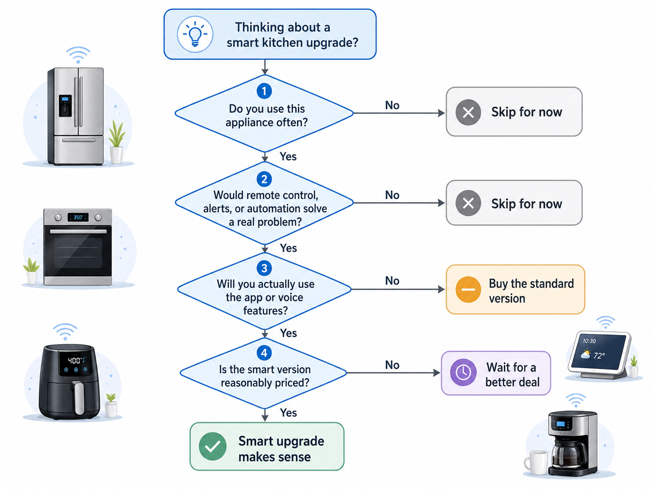
The answer honestly depends on which appliances you’re considering and how your kitchen gets used. Blanket smart kitchen upgrades rarely make sense. Costs add up quickly and not every appliance benefits equally from connectivity. Selective upgrades, chosen based on specific friction points in your cooking routine, tend to deliver the clearest value.
A smart food scale makes immediate sense for anyone tracking nutrition. A connected air fryer pays off quickly given how often people use them and how much app-guided cooking simplifies the experience. A smart refrigerator makes less sense unless it’s competitively priced against comparable non-smart models or the internal camera feature directly addresses a real habit in your household.
Identify the appliances you use most frequently, where timing or monitoring creates real stress, and where automation would genuinely change your behavior. Start there instead of trying to connect everything at once.
The Secret Ingredient Is Usefulness
A smart kitchen works best when it starts with your actual routine, not a showroom vision of the future. If you forget what’s in the fridge, internal cameras may help. If meal tracking feels tedious, a smart scale could be the better first upgrade. Do mornings feel rushed? A connected coffee maker may deliver more daily value than a touchscreen refrigerator.
The strongest smart kitchen upgrades reduce small, repeated frustrations – checking, timing, logging, preheating, monitoring or reminding. The weakest ones add another app without changing how you cook, shop or clean.
So before buying the next connected appliance, ask yourself one simple question: what problem will this solve every week? If the answer is clear, the smart feature has a job. If the answer is vague, your kitchen may already be smart enough.