
Your current toilet works. It flushes reliably, it’s paid for, and it asks nothing of you. The question is whether the premium, which ranges from around $150 for a powered bidet seat to several thousand dollars for an integrated unit, changes anything that genuinely matters – hygiene, comfort, your water bill, or how long you spend on bathroom maintenance.
This guide gives you a straight answer, including the situations where the upgrade doesn’t make sense.
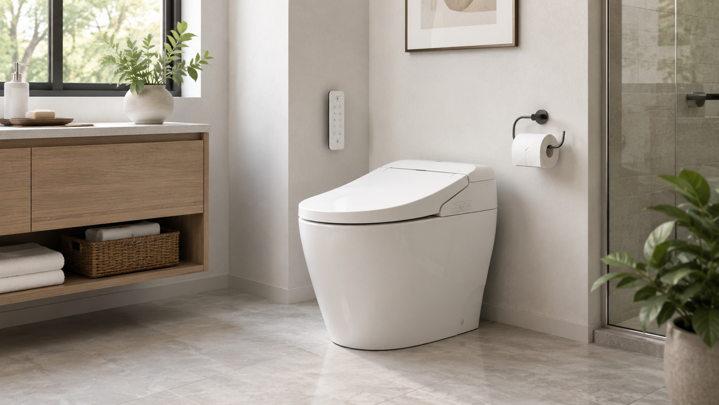
Smart Toilet vs Standard Toilet: At a Glance
| Feature | Standard Toilet | Smart Toilet |
|---|---|---|
| Bidet washing | No | Yes (most models) |
| Heated seat | No | Yes |
| Warm air dryer | No | Yes (most powered models) |
| Self-cleaning nozzle | No | Yes |
| Auto-flush | No | Some models |
| Night light | No | Many models |
| Deodorizer | No | Mid-range and above |
| Energy use | Negligible | Varies by model and heating type |
| Outlet required | No | Yes (powered models) |
| Typical price | $200-$600 installed | $150-$8,000+ depending on type |
What “Smart Toilet” Covers
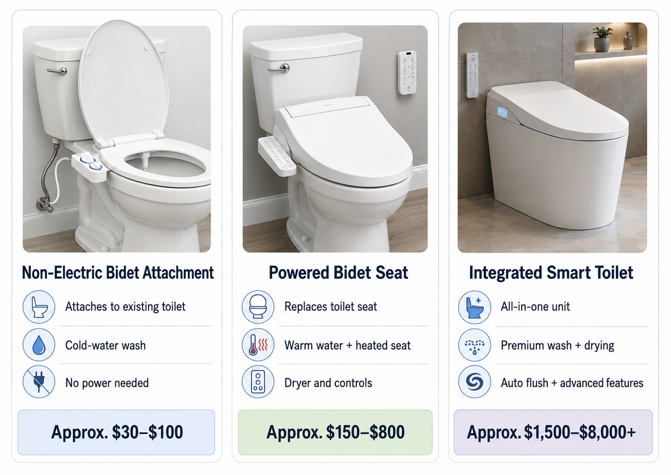
The term gets applied to products at different price points, not all of which are actually “smart” in any meaningful sense. This guide focuses on two powered categories, bidet seats and integrated smart toilets, both of which connect to an electricity supply and offer electronic features. Non-electric bidet attachments, which simply connect to your cold water line with no power or electronics involved, are a simpler alternative. They’re worth considering if you only want basic bidet washing, but they aren’t the main focus of this smart toilet cost benefit comparison.
Powered bidet seats ($150-$800) replace your existing seat and connect to both the water supply and a nearby outlet. They add heated water, a heated seat, warm air dryer, deodorizer, self-cleaning nozzle and adjustable spray controls. This is the most commonly purchased category and where the payback math is most straightforward.
Integrated smart toilets ($1,500-$8,000+) are one-piece units where the bowl and seat are manufactured together. Top-tier models may include tankless flushing, self-cleaning bowl surfaces, and more polished one-piece designs. They require professional installation and sometimes plumbing modification.
What Smart Toilets Do
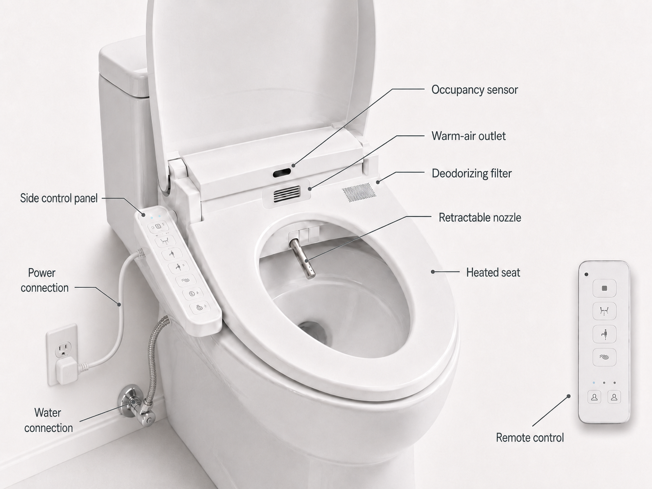
Bidet washing is the core feature. A retractable nozzle delivers a targeted water stream for posterior or feminine washing, with adjustable pressure and temperature. Water is thermostatically controlled rather than relying on whatever temperature comes out of the cold line.
Heated seats draw power continuously when active. Many include occupancy sensing or eco modes that lower the heating element’s output during extended non-use.
Self-cleaning nozzles retract and rinse automatically before and after each use. Standard on powered seats, these are helpful for maintaining hygiene in shared bathrooms.
Warm air dryers can draw around 1,000-1,400 watts during use, but usually run for only a few minutes per session.
Deodorizer on mid-range and above uses activated carbon filtration to neutralize odor at the source.
Auto-flush triggers via motion or proximity sensor, eliminating handle contact. Common on integrated units and some higher-end seats.
Tankless flushing (integrated units only) connects directly to the supply line rather than refilling a tank, delivering consistent pressure on every flush without a waiting period between uses.
The Hygiene Case
For many people, the most compelling argument for a smart toilet has nothing to do with energy savings or payback periods. It rests on the hygiene difference between water washing and dry paper wiping.
In everyday use, water washing can feel more thorough than dry paper alone. For some people, including those recovering from surgery or managing irritation from conditions such as hemorrhoids, IBS or Crohn’s disease, the difference can be more than a comfort upgrade. Water washing reduces wiping friction and may make cleaning easier, though a 2022 systematic review found the clinical research base thin enough that it couldn’t draw firm conclusions either way.
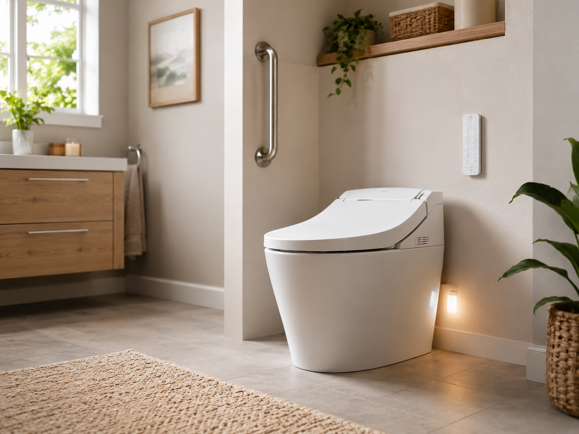
For households with elderly members or anyone with limited mobility, a powered bidet seat changes what’s independently achievable in the bathroom, which puts it in a different category than a simple convenience feature.
Water Use: Does a Smart Toilet Save Water?
Toilet flushing accounts for nearly 30% of indoor household water consumption, according to EPA WaterSense data. Older, inefficient toilets use as much as 6 gallons per flush (GPF). WaterSense certified models use 1.28 GPF or less (20% less than the current federal standard of 1.6 GPF).
Replacing an old, inefficient toilet with a WaterSense labeled model can reduce water used for toilets by 20 to 60 percent, saving the average family nearly 13,000 gallons and more than $170 per year in water costs.
Many integrated smart toilets are WaterSense certified and include dual-flush options, so if water savings matter to you, this is where the case is strongest. Bidet washing adds a small amount of water per cycle – a fraction of a single flush.
Energy Use: What It Costs to Run a Smart Toilet
The running cost of a powered bidet seat depends almost entirely on how the water heating system works, and the difference between types is substantial.
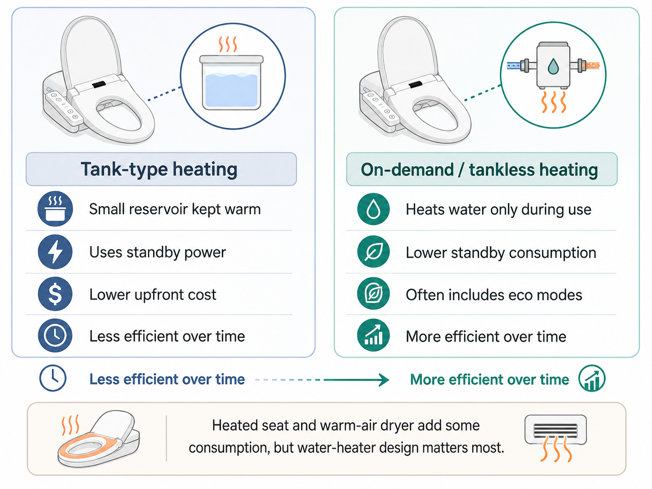
Entry-level seats use tank-type heaters that keep a small reservoir of water warm continuously, drawing power even when the seat isn’t in use. This makes them less efficient overall despite their lower upfront cost. Mid-range and luxury seats use on-demand or tankless heating that only activates during use, consuming far less energy over time. Eco modes and occupancy sensing on these models reduce standby draw further.
Heated seats and warm air dryers add to consumption during active use, but both run briefly enough per session that they’re a secondary factor compared to the water heating method.
Running costs are modest for efficient models and noticeably higher for entry-level tank-type seats. Integrated smart toilets draw additional power from features like auto-flush sensors, auto-open lids and night lights, but in either case a smart toilet is not a major household energy draw. Potential energy costs are worth knowing for accurate budgeting, but this rarely changes the decision.
The Payback Case: Toilet Paper Savings
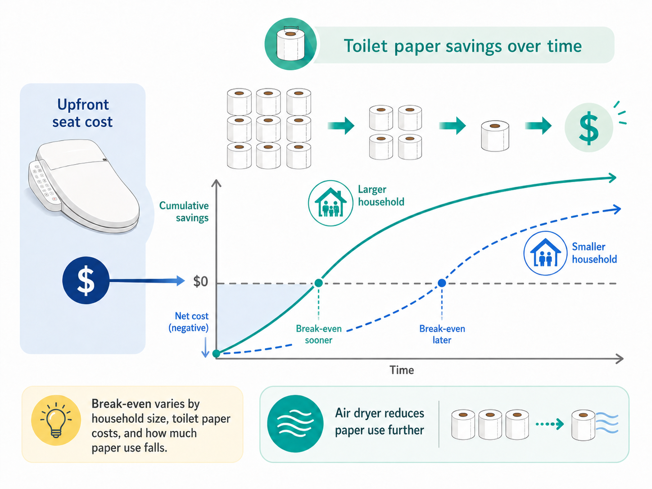
The average American uses around 141 rolls of toilet paper per year. For a two person household, that can land in the low hundreds per year depending on brand, roll size and buying habits. US roll sizes are not standardized, which makes precise comparisons difficult. Many bidet users consume less toilet paper, especially when using the air dryer, which can translate to annual savings.
For a $300 powered seat, payback on toilet paper savings alone is realistic for most households over several years. Larger households with higher annual toilet paper spend will usually get there faster.
When a Smart Toilet Isn’t Worth It
Rental properties: Powered bidet seats are portable and move with you, while non-electric bidet attachments are an even cheaper renter-friendly alternative. An integrated smart toilet stays with the property when you move, with no guaranteed return at lease end.
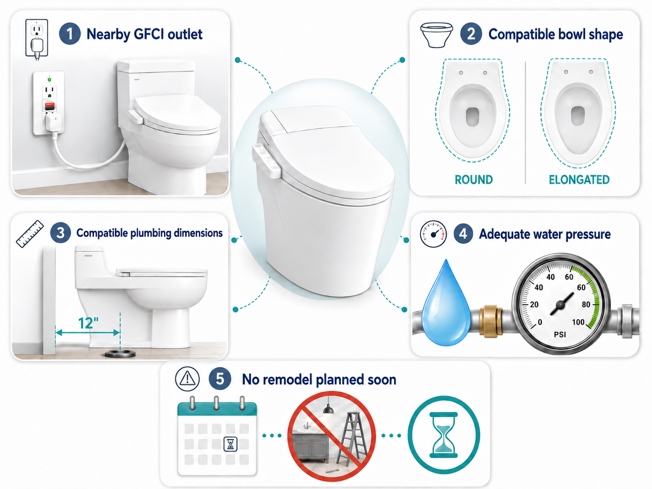
No nearby outlet: Powered seats require a GFCI outlet within reach of the toilet. Adding one typically costs $150-$300 or more and requires a licensed electrician in most jurisdictions. Factor this into the total cost before purchasing.
Non-standard bowl geometry: Powered bidet seats are generally designed for elongated and round bowls. Confirm compatibility before ordering. Some integrated units have specific plumbing dimension requirements that may not match older plumbing layouts.
Low water pressure: Tankless flushing systems on integrated units require adequate supply pressure. Worth confirming in an older home before purchasing a top-tier unit.
A remodel already planned: If a bathroom renovation is coming within 12-18 months, waiting and selecting a unit as part of the remodel typically makes more sense than adding a seat now and replacing it during the renovation.
The Bottom Line Is More Than Paper
The smartest upgrade is rarely the most expensive toilet. For most households, a powered bidet seat delivers the biggest improvement for the least disruption, while an integrated model earns its place through accessibility, design, or a wider bathroom renovation.
Before buying, check the outlet, bowl fit, and features you will use every day. The real return comes when a routine fixture gives you greater comfort, independence and control every single time you sit down.
If you want to dig into which features matter before choosing a model, the smart toilet features guide covers what to look for across both tiers. When you’re ready to compare specific products, the best smart toilets roundup evaluates the top options across powered seats and integrated units.