
You bought a humidifier for dry winter air, then wondered if an air purifier would have done more good. Or you’ve been eyeing a diffuser but aren’t sure if it does anything beyond making the room smell nice. The names sound similar, the boxes make overlapping health claims, and the more you research, the less clear it gets.
Here’s the short version. An air purifier removes particles and pollutants from the air, a humidifier adds moisture to it, and a diffuser disperses scent from essential oils. They solve different problems, and which one belongs in your home depends entirely on what problem you’re trying to fix.
This guide explains what each device does, what it doesn’t do, and how to figure out which one (or combination) you actually need.
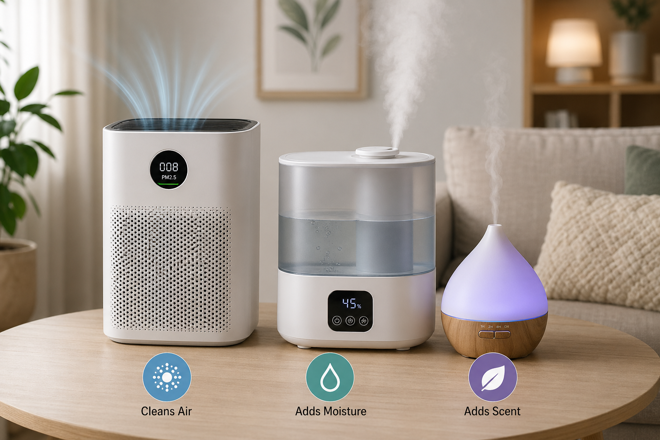
Quick Comparison
| Device | Primary Job | What It Doesn’t Do | Best For |
|---|---|---|---|
| Air Purifier | Removes particles, allergens and pollutants from air | Add moisture, add scent, replace ventilation | Allergies, asthma, pet dander, smoke, poor air quality |
| Humidifier | Adds moisture to dry air | Clean or filter air, add scent | Dry climates, winter heating, dry skin, sinus irritation |
| Diffuser | Disperses essential oils into air | Clean air, meaningfully raise humidity | Aromatherapy, scenting rooms, stress and sleep routines |
Air Purifiers: What They Do and Don’t Do
An air purifier pulls air through one or more filters and releases cleaner air back into the room. The most effective home models use True HEPA filtration, which captures at least 99.97% of particles at 0.3 microns – the most difficult particle size to trap – and often performs even better for both larger and smaller particles. Many also include activated carbon filters that help reduce odors and some VOCs, though how much depends on the depth and quality of carbon used.
The practical result is a measurable reduction in airborne particle concentration. Multiple peer-reviewed studies show HEPA air purifiers decrease particle levels by roughly 30 to 80 percent in real home conditions, with the strongest results in bedrooms running continuously. For people with allergies, asthma or other respiratory sensitivities, this translates to fewer airborne triggers, such as pollen, dander and mold spores. Symptom relief is often noticeable. For the research behind these claims, my guide on whether smart air purifiers really work covers the evidence in detail.
What Air Purifiers Don’t Do
They don’t add moisture to the air, so they won’t help with dry skin, chapped lips or irritated sinuses caused by low humidity. Scenting the air isn’t their job either. They also don’t replace ventilation. An air purifier recirculates and filters indoor air, but it doesn’t introduce fresh outdoor air or remove carbon dioxide. If your home feels stale despite a running purifier, the issue is likely ventilation, not filtration.
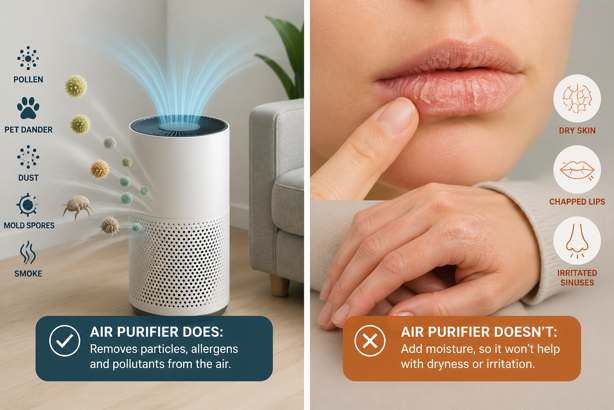
Who benefits most: People with allergies, asthma or COPD (Chronic Obstructive Pulmonary Disease), households with pets, homes near busy roads or in wildfire-prone regions, anyone noticing persistent respiratory symptoms indoors. My best smart air purifiers guide covers the top rated models for each situation.
Not worth it if: You live somewhere with excellent outdoor air quality, have no respiratory sensitivities, and no pets or indoor pollution sources. The difference may be minimal for someone whose indoor air is already clean.
Humidifiers: What They Do and Don’t Do
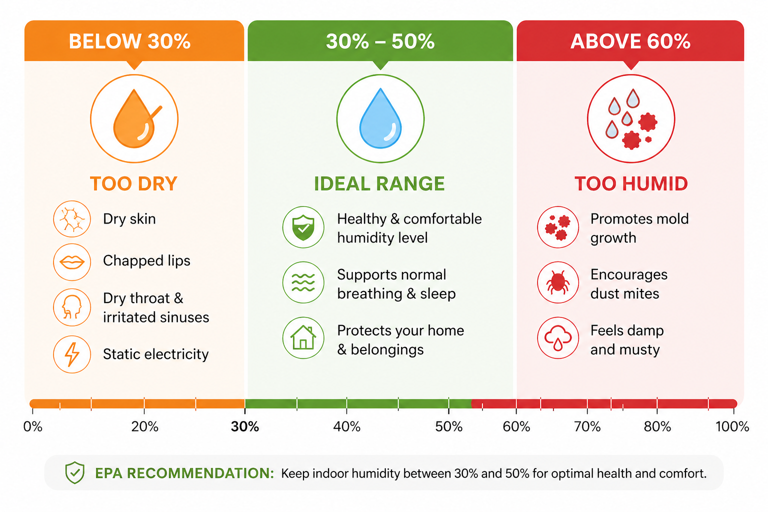
A humidifier adds moisture to indoor air by releasing water vapor or mist. That’s its entire function, and it’s a genuinely useful one when the air in your home is too dry. The EPA recommends keeping indoor humidity between 30 and 50 percent. Below 30%, many people notice dry skin, chapped lips, and irritated nasal passages. Dry air reduces natural moisture barriers in the airways, which can make respiratory discomfort more noticeable. Many US homes drop well below this threshold in winter when heating systems run continuously and windows stay shut.
Smart humidifiers take this further by monitoring humidity levels automatically and adjusting output to hit a target range. A built-in humidistat maintains your preferred setting without manual intervention. This matters because over-humidifying is as problematic as under-humidifying. The EPA notes that indoor humidity above 60% promotes mold growth and dust mites, which can worsen the very respiratory symptoms you’re trying to relieve. Smart controls make it easier to stay in the right range without guesswork.
There are two main types worth knowing. Cool mist humidifiers (including ultrasonic models) produce room temperature mist and are generally safer around children because there’s no heating element. Warm mist humidifiers heat water before releasing warm mist, which can decrease some waterborne microbes. Regular cleaning remains essential regardless of type. Either works for raising humidity. The choice is mainly about safety preference and energy use.
What Humidifiers Don’t Do
A humidifier isn’t designed to filter or clean the air. It adds moisture, not purity. Poorly maintained tanks can promote bacterial growth and mold, which may then be dispersed into the air depending on the humidifier type. That’s why weekly cleaning is non-negotiable. Humidifiers also aren’t a meaningful source of fragrance. Some include an essential oil tray or aroma box, but the scent output is minimal compared to a dedicated diffuser. Note that adding essential oils directly to most humidifier water tanks can damage internal components.
Who benefits most: Anyone experiencing dry skin, nosebleeds, sinus irritation or static electricity in winter, people in dry climates year-round, households where wood furniture or flooring shows signs of dryness, people with respiratory infections who want symptom relief from dry air.
Not worth it if: You already live in a humid climate, your home consistently runs above 45% humidity, or you’re in a basement or other area prone to dampness. Adding moisture to already-humid air creates conditions for mold and dust mites.
Diffusers: What They Do and Don’t Do
A diffuser disperses essential oils into the air as fine droplets or vapor. The most common home type is the ultrasonic diffuser, which uses high frequency vibration to break a water and oil mixture into cool mist. Nebulizing diffusers skip the water entirely and atomize pure oil directly. Smart diffusers add app scheduling, adjustable intensity, and voice assistant integration so your scenting routine runs automatically.
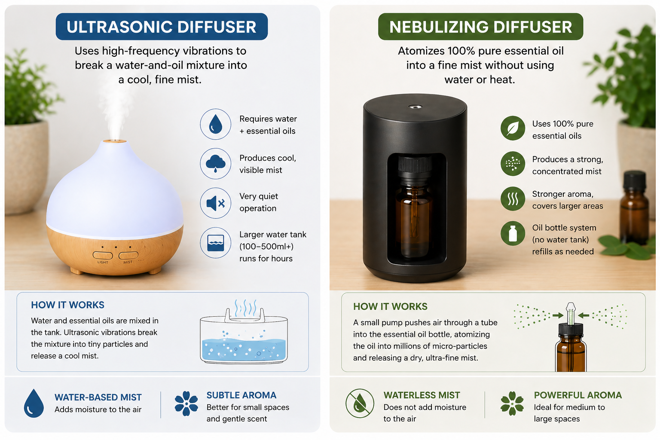
The legitimate benefit of diffusers is aromatherapy: creating a pleasant smelling environment, and with certain oils like lavender and chamomile, supporting relaxation and sleep routines. Research on aromatherapy’s psychological benefits is reasonably consistent for mood and stress outcomes, though the evidence is more limited when it comes to direct health claims. Diffusers are a legitimate wellness tool for ambiance and routine support.
What Diffusers Don’t Do
They don’t clean the air. A diffuser adds fragrance. It doesn’t remove particles, allergens or pollutants. Running a diffuser in a room with poor air quality will make it smell nicer, but the allergens will remain. Ultrasonic diffusers add a small amount of moisture to the air through their mist, but not enough to meaningfully raise room humidity the way a dedicated humidifier would.
One caution worth stating clearly – people with asthma or significant respiratory sensitivities should use diffusers carefully. Inhaled essential oils can irritate airways in susceptible individuals, and some people find concentrated essential oil vapor triggers symptoms rather than relieving them. If you’re in this group, test new oils at low intensity in a ventilated space before running a full session. Pet owners should check oil safety by species. Certain oils are harmful to cats and dogs. Birds are especially sensitive to airborne oils and fragrances, so diffusers should be used with extreme caution around them and only with veterinary guidance. This guide on essential oils and pet safety covers this in more detail.
Who benefits most: Anyone using aromatherapy for stress management, sleep routines or home ambiance, people who want automated scenting without candles or sprays, those building consistent morning or evening wellness routines. My best smart diffuser guide covers the main types and what each suits.
Not worth it if: You’re sensitive to fragrances, have asthma or significant respiratory issues, or prefer an unscented environment. The wellness benefits of diffusers are real but not universal.
Choosing Between Them
Air Purifier vs Humidifier
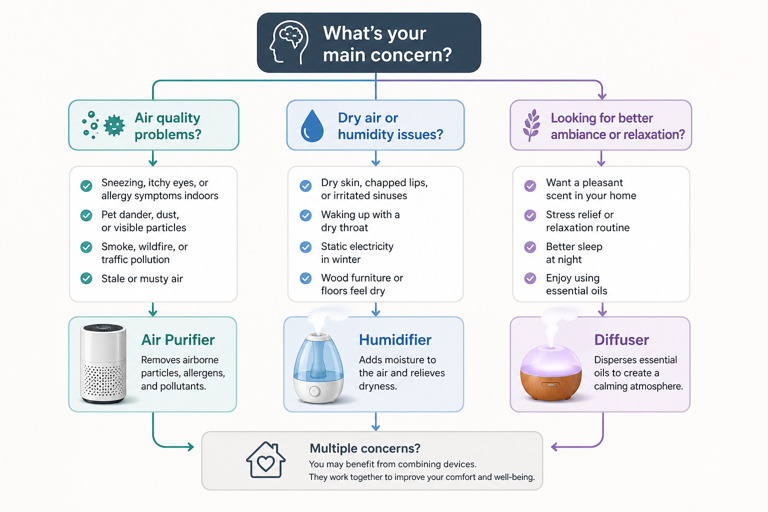
These two are the most commonly compared because both are described as improving indoor air quality, but they address completely different aspects of it. An air purifier removes what’s in the air. A humidifier changes how much moisture is in it. If you’re sneezing, coughing or experiencing itchy eyes, you likely need a purifier. Those are signs of airborne allergens or pollutants. If you’re waking up with a dry throat, cracked lips or dry skin in winter, that’s a humidity problem, and a humidifier is the right option.
In some households, particularly during cold winters when heating systems run constantly and windows stay closed, both conditions exist simultaneously. In that case, both devices are appropriate and can run in the same room without interfering with each other.
Air Purifier vs Diffuser
The distinction here is cleaner. An air purifier improves health outcomes by reducing airborne contaminants. A diffuser improves ambiance through scent. They don’t compete, as they serve fundamentally different purposes. For allergy, asthma or air quality concerns, a purifier is the relevant choice. A diffuser excels when your goal is creating a calming atmosphere for sleep or a morning routine.
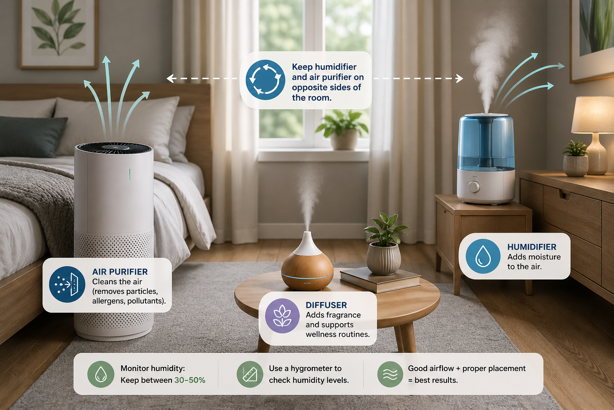
Run both if you want cleaner air and a pleasant scent. One practical note to consider – placing an air purifier immediately next to a running diffuser means the purifier may pull some of the dispersed fragrance particles toward its intake. This isn’t harmful, but your fragrance dissipates faster near the purifier’s intake. Keeping them on opposite sides of the room gives you the best of both worlds.
Humidifier vs Diffuser
These two are often confused because both ultrasonic diffusers and ultrasonic humidifiers produce visible mist. The key difference is volume and purpose. A humidifier is designed to meaningfully raise room humidity. Its 4 to 6 liter tank runs for hours to move the dial on ambient moisture. An ultrasonic diffuser produces mist incidentally as a byproduct of dispersing essential oil, but the water volume involved (typically 100 to 500ml per session) isn’t enough to make a real difference to room humidity.
If your air is dry, use a humidifier. If you want aromatherapy, use a diffuser. Don’t try to solve a humidity problem with a diffuser. The mist output simply isn’t designed for that. Conversely, don’t assume your humidifier’s oil tray delivers the same experience as a purpose-built diffuser. It doesn’t, and as noted above, adding oils directly to most humidifier tanks risks damage.
Can You Use Them Together?
Yes, and in many cases it makes sense. These devices solve different problems, so running two or all three simultaneously isn’t redundant. Each one will still do its own job. The practical considerations are placement and maintenance rather than compatibility.
When running an air purifier and humidifier together, place them on opposite sides of the room. If the humidifier mist is directed into the purifier’s air intake, it can saturate HEPA filters faster and decrease their lifespan. With a few feet of separation and normal airflow, this isn’t an issue. Monitor humidity with an inexpensive hygrometer to stay in the 30-50% range the EPA recommends. Over-humidifying doesn’t cancel out the purifier’s work, but it creates conditions where mold and dust mites can thrive despite cleaner air.
Running a diffuser alongside either or both other devices is equally straightforward. Keep the diffuser and purifier on opposite sides of the room if you want the scent to linger longer, but this is about getting more from your diffuser, not any safety concern.
Which One Do You Really Need?
Start with your symptoms.
If you’re sneezing indoors, have persistent allergy symptoms that worsen at home, live with a pet, or are near a high traffic road or wildfire-prone area, the evidence points to an air purifier.
If you wake up with a dry throat every morning, deal with static shocks all winter, notice your skin tightening in dry weather, or live somewhere that heating systems run most of the year, a humidifier addresses those conditions directly. A smart model with a built-in humidistat maintains a target humidity level automatically without manual adjustment.
For those building a sleep or stress routine, wanting a home that smells intentionally pleasant without candles or sprays, or who already use essential oils and want the habit automated, a diffuser fits that purpose. The health benefits are real but sit in the wellness category instead of the medical category.
If you’re genuinely unsure which problem you have, an inexpensive combination temperature and humidity monitor is the most useful starting point. Homes that regularly fall below 30% humidity are a clear case for a humidifier. A reading within the healthy 30-50% range alongside ongoing respiratory symptoms points more strongly to an air purifier. And if air quality and humidity are both fine but your home still feels flat and uninviting, that’s where a diffuser earns its place.
Frequently Asked Questions
Can I use an air purifier and humidifier together?
Yes — they work on different aspects of indoor air and don’t interfere with each other. The main practical consideration is placement: keep them on opposite sides of the room so the humidifier mist isn’t directed into the purifier’s intake, which can saturate HEPA filters faster. Monitor humidity with a hygrometer to stay within the EPA-recommended 30–50% range. Within those guidelines, running both simultaneously is one of the most effective combinations for winter air quality — the purifier handles indoor pollutants that build up when windows are closed, while the humidifier counteracts the dryness that heating systems cause.
Is an air purifier or humidifier better for allergies?
For most people, an air purifier is the more direct solution. Allergies are triggered by airborne particles — pollen, pet dander, dust mite debris, mold spores — and a HEPA purifier removes those particles from the air. A humidifier doesn’t. That said, dry air can worsen allergy symptoms by irritating nasal passages, so in a home where humidity regularly drops below 30%, running both makes sense. The purifier addresses the cause; the humidifier eases the discomfort.
Does a diffuser help with dry air or sinus problems?
Not meaningfully. Ultrasonic diffusers release mist as a byproduct of oil dispersion, but the water volumes involved — typically 100 to 500ml per session — are too small to raise room humidity noticeably. If dry air or sinus irritation is your main concern, a humidifier is the right tool. A diffuser with eucalyptus or peppermint oil may make breathing feel more comfortable temporarily, but it isn’t treating the underlying dryness.
Which device is best for a bedroom?
It depends on your situation. For allergy sufferers, a bedroom air purifier running continuously — especially overnight — produces the most consistent symptom reduction. You’re breathing the cleaned air for eight hours straight. For people in dry climates or dealing with winter dryness, a smart humidifier set to auto mode maintains comfortable humidity without manual adjustment. A diffuser with a timer set for 30–60 minutes before sleep is a practical way to build a wind-down routine without running it all night. All three can coexist in a bedroom with appropriate placement.
A Breath of Fresh Pair
The easiest mistake is buying the device with the most impressive claims instead of the one that matches the problem in the room. Dry air needs moisture. Dirty air needs filtration. A room that feels flat, stale or unfinished may simply need scent and ritual.
Once you separate those jobs, the choice becomes much simpler. Measure humidity before guessing. Choose filtration when symptoms point to particles. Use fragrance as an atmosphere tool, not an air quality fix. The best setup is rarely the most complicated one. It’s the one you stop noticing, because the room finally feels like home again.
For a broader look at how these devices fit into a complete home wellness setup – alongside smart sleep devices, smart lighting and massage technology – read my smart home wellness guide.