
Imagine walking into your home as the lights automatically adjust to your preferred brightness, your thermostat optimizes the temperature based on your schedule and your coffee maker starts brewing your morning cup, all without you lifting a finger. Welcome to the Internet of Things (IoT), a revolutionary technology that’s transforming how we interact with the world around us.
The Internet of Things refers to the vast network of physical devices embedded with sensors, software and connectivity capabilities that enable them to collect and exchange data over the Internet. From smart refrigerators that monitor your grocery needs to industrial sensors that proactively predict equipment failures, IoT is creating an interconnected ecosystem where devices communicate, learn and respond intelligently to their environment.
How Does IoT Work?
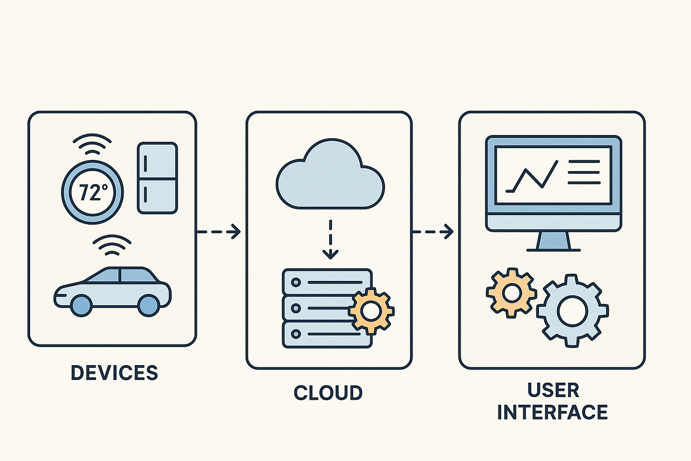
Understanding IoT begins with recognizing its four fundamental components that work in harmony.
Sensors and Devices: Forming the foundation of any IoT system, smart devices are equipped with various sensors that collect real world data. Whether measuring temperature, detecting motion, monitoring air quality or tracking locations, these sensors serve as the eyes and ears of the IoT ecosystem.
Connectivity: Once data is collected, it needs a pathway to reach processing centers. IoT devices communicate using various protocols (think of these like different languages), including Wi-Fi, Bluetooth, cellular networks and other specialized IoT protocols to transmit information to cloud platforms or local data centers.
Data Processing: Raw sensor data undergoes sophisticated analysis in the cloud or edge computing environments. Advanced algorithms, artificial intelligence (AI) and machine learning technologies turn this data into actionable insights, identifying patterns, anomalies and trends that would be virtually impossible for humans to detect manually.
User Interface: The processed information is presented to users through intuitive applications, dashboards or automated responses. This could be a smartphone app showing your home’s energy consumption, an alert about equipment maintenance needs, or an automatic adjustment to your smart thermostat.
Connectivity Technologies
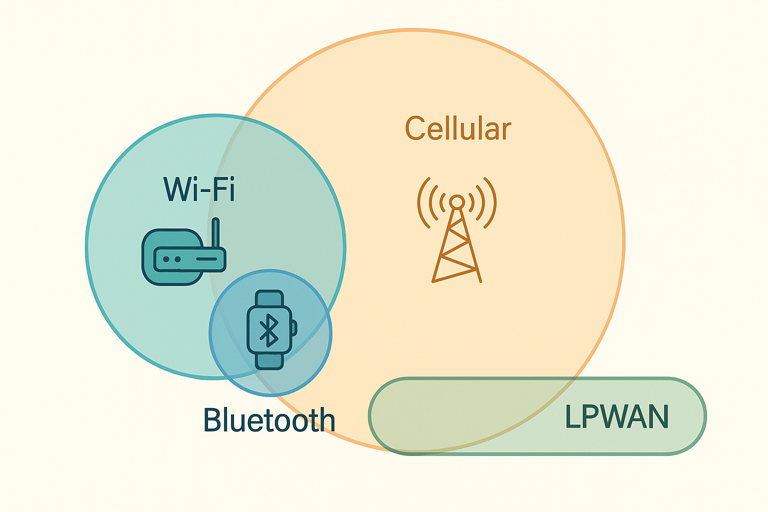
Selecting the appropriate connectivity technology is crucial for IoT success. Each option offers distinct advantages depending on your specific requirements.
Short Range Communications
Wi-Fi: Most of us are very familiar with this one. Ideal for high bandwidth applications requiring larger data transmission. While offering excellent speed and range within buildings, Wi-Fi devices typically consume more power and may face interference in crowded environments. With Wi-Fi 6/6E, speeds can exceed 1 Gbps, but most IoT devices only need a tiny fraction of that.
Bluetooth and Bluetooth Low Energy (BLE): Perfect for personal area networks (PAN) and wearable devices, such as smartwatches. BLE excels in power efficiency, making it ideal for battery powered devices that need to operate for months or years on a single charge. BLE supports data rates up to about 2 Mbps, while Bluetooth Classic supports higher rates.
Zigbee: Designed specifically for the smart home, Zigbee creates mesh networks where devices relay information through each other, extending range and improving reliability. Its low power consumption and self-healing network capabilities make it particularly suited for home automation.
Z-Wave: Another smart home favorite, Z-Wave, operates on a less congested frequency band and allows devices from different manufacturers to work together smoothly. Z-Wave’s robust security features and equally reliable mesh networking make it a trusted choice for security systems like smart locks.
Long Range Communications
Cellular (4G/5G): Provides extensive coverage and high speed data transmission, making it suitable for mobile IoT applications like vehicle tracking and remote monitoring. However, higher costs and power consumption limit its use in some areas.
Low Power Wide Area Networks (LPWAN): Technologies like LoRaWAN and NB-IoT are designed for applications requiring long range communication with minimal power consumption. These networks can support thousands of devices transmitting small amounts of data over distances exceeding 10 kilometers!
Application Protocols
MQTT (Message Queuing Telemetry Transport): A lightweight messaging protocol optimized for IoT applications. MQTT‘s publish-subscribe model and minimal overhead make it ideal for devices with limited processing power and unreliable network connections.
CoAP (Constrained Application Protocol): Designed for simple devices with limited resources, CoAP provides RESTful services similar to HTTP but with significantly reduced overhead and power consumption.
Matter: The newest interoperability standard aimed at unifying smart home ecosystems. Matter enables devices from different manufacturers to work together seamlessly, regardless of their underlying communication technology.
A Quick Connectivity Comparison
| Technology | Range | Data Rate | Power Consumption | Best Use Cases |
|---|---|---|---|---|
| Wi-Fi | 50-100m | High (up to 1 Gbps with Wi-Fi 6/6E) | Moderate-High | Smart home hubs, streaming devices |
| Bluetooth/BLE | 10-100m | Low-Moderate (up to 2 Mbps for BLE) | Very Low | Wearables, sensors, beacons |
| Cellular | Nationwide | High (1-1000+ Mbps) | High | Vehicle tracking, remote monitoring |
| LPWAN | 2-40km | Very Low (0.3-50 kbps) | Very Low | Agricultural sensors, smart meters |
| Zigbee | 10-100m | Low (250 kbps) | Low | Smart home automation |
| Z-Wave | 30-100m | Low (100 kbps) | Low | Home security, lighting control |
Real World Applications of IoT
Smart Homes and Consumer IoT
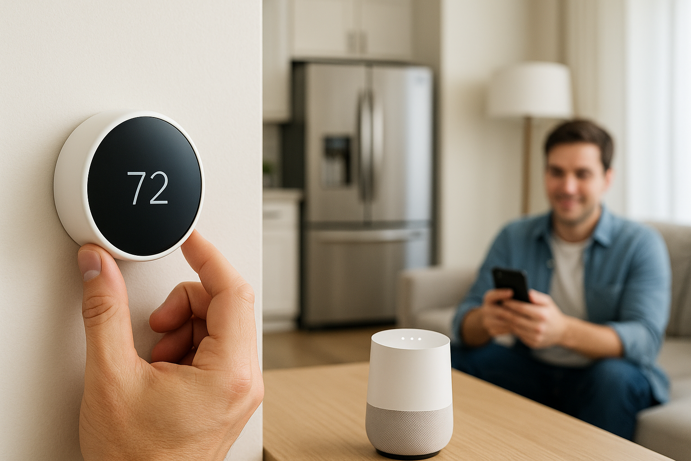
The consumer IoT market has absolutely exploded with devices that improve comfort, security and efficiency in our daily lives.
- Home Automation: Smart thermostats learn your schedule and preferences, reducing energy consumption and saving households an average of about 8% on heating and cooling bills, according to the U.S. EPA’s ENERGY STAR program (actual savings would depend on climate, home size and user behavior)
- Security Systems: Connected cameras, doorbells and sensors provide real-time monitoring and alerts, even when you’re away
- Appliances: Refrigerators that track inventory, washing machines that optimize cycles based on load type, and ovens that can be preheated remotely
- Wearable Technology: Fitness trackers and smartwatches monitor health metrics, detect falls, and some are able to identify irregular heartbeats
Industrial Internet of Things (IIoT)
In industrial settings, IoT delivers measurable business value through:
- Predictive Maintenance: By equipping machines with sensors that track health indicators such as vibration, temperature and energy consumption, companies can anticipate failures before they happen. According to McKinsey, adopting predictive maintenance practices enabled by IoT can reduce maintenance costs by 18-25% and cut unplanned equipment downtime by up to 50%.
- Supply Chain Optimization: RFID tags and GPS trackers provide real-time visibility into inventory levels, shipment locations and delivery times, enabling just-in-time manufacturing and reducing waste.
- Quality Control: By taking advantage of computer vision systems and environmental sensors, companies can ensure products meet quality standards throughout the manufacturing process, reducing defects and recalls.
- Energy Management: Smart meters and building automation systems optimize energy consumption. Studies of building automation show typical whole-building energy savings in the range of 10–25%, depending on building type and existing systems.

Healthcare IoT
Medical IoT devices have redefined patient care in numerous ways. Some examples are shown below:
- Remote patient monitoring systems track vital signs and medication adherence
- Smart hospital beds adjust automatically to prevent pressure sores
- Connected inhalers help asthma patients manage their condition more effectively
- Wearable devices can detect early signs of illness or medical emergencies

Key Components of IoT Systems
Sensors and Data Collection
Sensors that capture environmental data usually form the foundation of an IoT system. The table below shows a quick overview of common sensor types.
| Sensor Type | Applications | Data Collected |
|---|---|---|
| Temperature/Humidity | Climate control, food storage | Environmental conditions |
| Motion/Proximity | Security, automation triggers | Movement detection, occupancy |
| Pressure | Industrial monitoring, weather | Force, altitude, flow rates |
| Chemical | Air quality, industrial safety | Gas concentrations, pollutants |
| Optical | Quality control, security | Light levels, object detection |
| Acoustic | Noise monitoring, predictive maintenance | Sound levels, equipment health |
IoT Gateways and Edge Computing
IoT gateways are the intelligent intermediaries between sensors and cloud platforms. They serve several purposes, including:
- Protocol Translation: Converting between different communication standards
- Data Preprocessing: Filtering and aggregating sensor data before transmitting to the relevant system
- Localized Decision Making: Enabling quick responses without cloud connectivity
- Security: Providing encryption and authentication for device communications
Edge computing brings processing power closer to the data source, which reduces latency and bandwidth requirements while improving response times for critical applications.
Benefits of IoT Implementation
Operational Efficiency
IoT implementations typically deliver significant operational improvements.
- Automation: Decreases the number of manual tasks required and human error
- Resource Optimization: Real-time monitoring can lead to better utilization of assets, energy and materials
- Process Visibility: Complete transparency into operations enables data-driven decision making
- Scalability: IoT systems can grow with business needs without proportional increases in operational complexity
Cost Reduction
Organizations implementing IoT solutions often see:
- Reduction in maintenance costs through predictive approaches
- Decrease in energy consumption via smart monitoring
- Improvement in asset utilization rates
- Significant labor cost savings through automation
Enhanced Customer Experience
IoT helps businesses to:
- Provide proactive service based on product usage data
- Offer personalized experiences tailored to individual preferences
- Ensure higher product reliability through continuous monitoring
- Enable new service models like product-as-a-service offerings
Challenges and Considerations
Security and Privacy
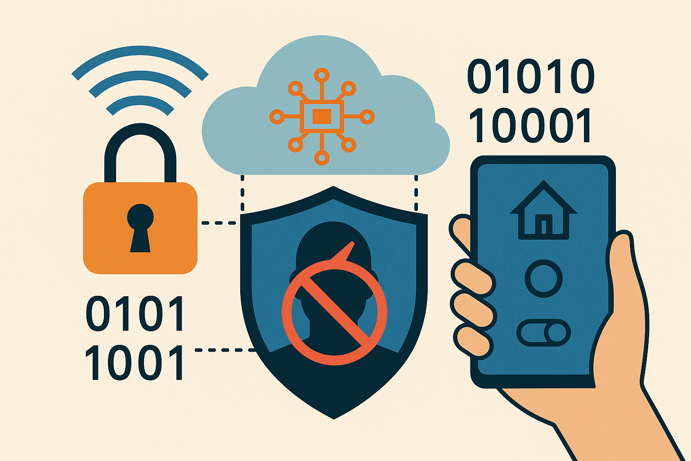
As IoT adoption has grown over the years, security has also become an important concern. The OWASP IoT Top 10 identifies the most common causes of security holes in IoT setups:
- Weak Authentication: Default or hardcoded passwords remain a primary attack vector
- Insecure Network Services: Unprotected communication protocols expose devices to attacks
- Insecure Interfaces: Web, mobile and cloud interfaces require robust security measures
- Inadequate Update Mechanisms: Devices must support secure, automated updates
- Insecure Components: Using outdated or vulnerable software components
- Privacy Protection: Insufficient data protection and user privacy controls
- Insecure Data Storage: Unencrypted data storage and transmission
- Device Management: Lack of proper device lifecycle management
- Insecure Defaults: Devices shipped with insecure default configurations
- Physical Security: Inadequate physical hardening against tampering
Implementation Challenges
Organizations face various hurdles when deploying IoT, such as:
- Integration Complexity: Connecting legacy (older) systems with modern IoT platforms
- Scalability Planning: Designing systems that can handle exponential increase in number of devices
- Data Management: Processing and storing massive volumes of sensor data effectively
- Skill Gaps: Finding personnel with IoT expertise across multiple technology areas
- ROI Measurement: Calculating the business value of IoT investments
The Future of IoT
Market Growth and Adoption
The Internet of Things continues to expand at an astounding pace. According to IoT Analytics, the number of connected devices worldwide is projected to grow significantly over the coming years. And we’re talking billions at a time.
| Year | Connected IoT Devices (Billions) |
|---|---|
| 2024 | 18.8 |
| 2026 | ~25 |
| 2028 | ~32 |
| 2030 | ~40 |
This surge highlights IoT’s increasing role in transforming industries, driving efficiency and offering new digital services across the globe.
Emerging Technologies
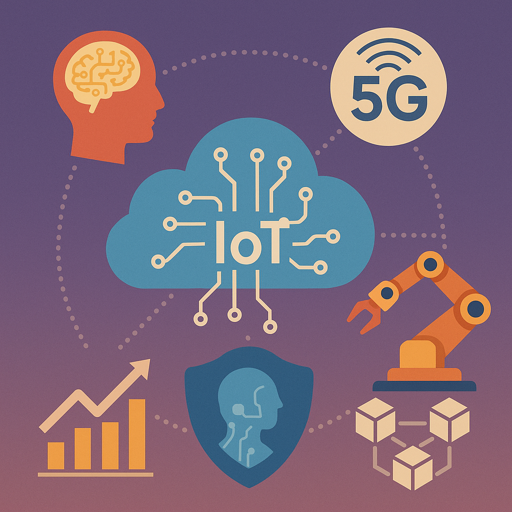
The future of IoT is being reshaped by a wave of breakthrough technologies.
- 5G Networks: Ultra-low latency and high bandwidth will enable new applications like autonomous vehicles and remote surgery.
- Edge AI: Artificial intelligence processing at the device level will deliver real-time decision making without cloud connectivity.
- Digital Twins: Virtual replicas of physical assets will introduce unprecedented simulation and optimization capabilities.
- Quantum Computing: Still in early stages, but could eventually play a role in solving complex optimization problems and enhancing security protocols.
Artificial Intelligence Integration
The convergence of AI and IoT (AIoT) is creating intelligent systems that can:
- Learn and adapt to changing conditions automatically
- Predict failures and maintenance needs with increasing accuracy
- Optimize energy consumption and resource utilization in real-time
- Provide personalized experiences based on usage patterns and preferences
Major cloud platforms like AWS IoT, Microsoft Azure IoT and Google Cloud IoT are integrating advanced AI and machine learning capabilities, making it easier for organizations to extract value from their IoT investments.
Where Everything Connects
The Internet of Things represents a gradual shift toward a smarter, more efficient world. Real success with IoT comes from thoughtful planning, choosing the right technologies and treating security and privacy as first class concerns.
Organizations and individuals that focus on strong fundamentals and clear outcomes are best positioned to unlock its long term value.
Whether you’re a business leader evaluating IoT opportunities or a technology enthusiast curious about connected devices, building a solid understanding of the basics will help you navigate the rapidly evolving IoT landscape with confidence.
The future is connected, intelligent and brimming with possibility – and understanding the fundamentals is your first step into it.
Ready to put IoT to work in your home? Check out our Smart Home 101 guide to get started.