Smart devices are everywhere now. Your thermostat learns your schedule, your doorbell recognizes faces, your fitness tracker monitors your health. These connected devices make life a lot more convenient. But they also create new security risks that many people don’t think about until something goes wrong.
The reality is that many connected devices still create security risks because they rely on passwords, cloud accounts, wireless networks and ongoing software updates. Some ship with weak default settings, use outdated security practices, or stop receiving updates long before people replace them. Without proper attention, attackers may be able to access cameras, compromise accounts, steal personal data, or turn poorly secured devices into tools for attacking others.
Smart home security means protecting connected devices like cameras, locks, thermostats and sensors from unauthorized access, data leaks and network attacks. The good news is you don’t need to be a cybersecurity expert to protect your smart home.
This guide covers the three main security principles that work across all connected devices – authentication (proving devices are legitimate), authorization (controlling what they can access), and encryption (protecting your data). In practice, these show up in everyday things like logging into your app, deciding which devices can unlock your door, and ensuring your camera feed can’t be intercepted. Whether you’re setting up a smart home or using wearables, these fundamentals will help keep your connected home secure.
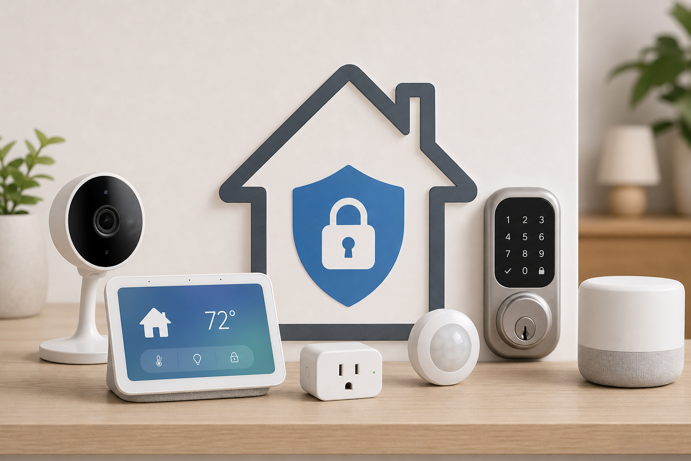
5 Security Fixes You Can Do Today
- Change default passwords on every connected device
- Use WPA2 or WPA3 Wi-Fi security, and enable HTTPS/TLS where available
- Update firmware on routers and smart devices
- Separate smart devices onto a guest network
- Disable unused features and services
Understanding IoT Security Challenges
Smart devices face unique security challenges that traditional computers don’t deal with.
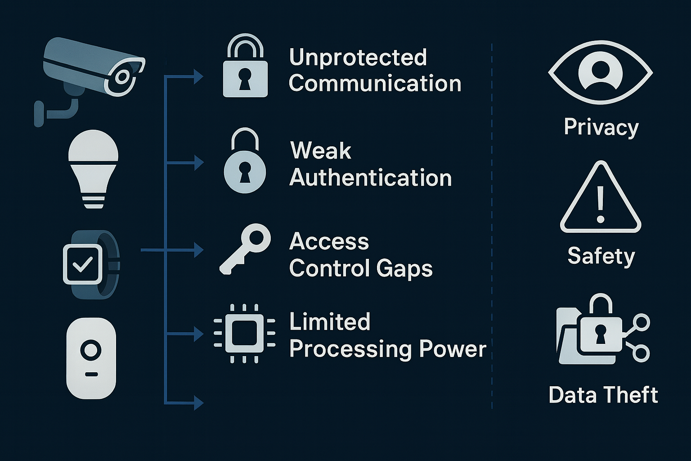
- Unprotected Communication: Budget or poorly maintained devices may transmit data insecurely or use outdated encryption, exposing sensitive information like security codes, daily routines or health data to anyone monitoring your network.
- Weak Authentication: Weak passwords, reused credentials, or default logins that never get changed make it easy for attackers to gain access – even on devices with otherwise solid security features.
- Access Control Gaps: Managing permissions across dozens of devices gets complicated quickly. You need clear rules about which devices can access what information and perform which actions.
- Limited Processing Power: Unlike phones or computers, many IoT devices have minimal computing resources, making it harder to implement strong security measures without impacting performance.
Effective smart home security requires a layered approach. No single measure provides complete protection, but combining multiple security practices creates defense in depth. When one layer fails, others remain to protect your devices and data.
Authentication: Proving Devices Are Legitimate
Authentication is your first line of defense. It ensures only authorized devices can join your network and communicate with your systems. Just like you might show ID to prove who you are, smart devices need reliable ways to verify their identity.
Common Authentication Methods
Different authentication approaches offer varying levels of security and complexity. Choose based on your security needs and technical comfort level.
| Method | How It Works | Security Level | Best For |
|---|---|---|---|
| Username/Password | Device enters credentials to connect | Basic | Simple home setups, testing environments |
| API Keys/Tokens | Special temporary keys that rotate regularly | Medium | Cloud connected devices, business systems |
| Digital Certificates | Cryptographic ID cards that are very hard to fake | High | Critical systems, professional installations |
| Multi-Factor Authentication | Combines multiple verification methods | Highest | User access to dashboards, admin consoles |
Certificate Based Authentication
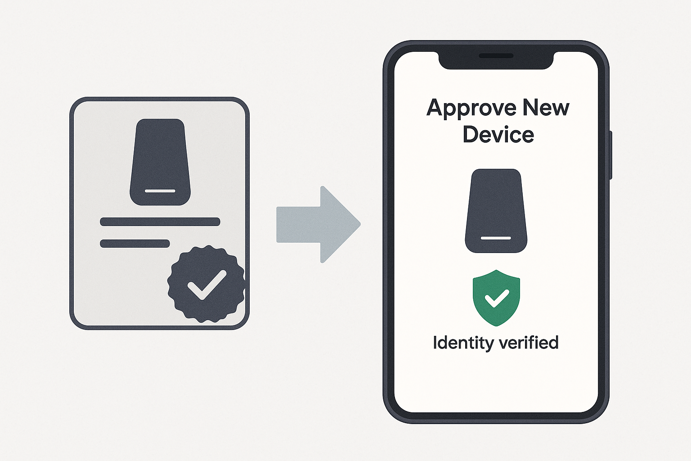
Digital certificates are among the strongest widely used authentication methods available. Think of them as high-tech ID cards that are nearly impossible to counterfeit. Each device gets a unique certificate from a trusted Certificate Authority (CA). When connecting, the device presents its certificate and your system verifies it’s valid and hasn’t been revoked.
This method requires more setup than simple passwords, but it’s worth the effort for critical systems. Certificates prevent impersonation attacks and provide strong proof of identity that can’t be easily stolen or guessed.
Authorization: Controlling Device Permissions
Once devices prove they’re legitimate, you need to control what they can access. Authorization works like giving different people different access levels in your home. Family members get full access, babysitters can enter certain rooms, delivery drivers can only access the front porch.
Access Control Lists (ACLs)
ACLs are simply rules that define exactly what each device is allowed to do. For example:
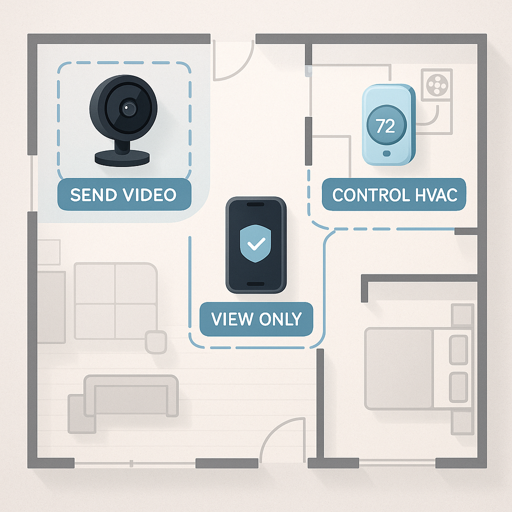
- Temperature sensors can only send readings
- Displays and dashboards can receive data but not control devices
- Smart thermostats can read temperatures and control heating/cooling
- Phone apps can both monitor and control devices
Let’s see how these three principles connect in real life. If someone guesses your smart lock password, authentication has failed. If a guest account can unlock your front door when it should only control lights, authorization has failed. Someone intercepts your camera feed over Wi-Fi – encryption has failed. Each principle addresses a different point of failure.
Role Based Access Control (RBAC)
RBAC simplifies permission management by grouping similar devices together. Instead of configuring every device individually, create roles and assign permissions to each role.
| Role | Permissions | Example Devices |
|---|---|---|
| Sensors | Send data only | Temperature sensors, motion detectors, door sensors |
| Controllers | Send and receive, make changes | Thermostats, lighting controls, smart locks |
| Monitors | Receive data only | Wall displays, dashboards, alert systems |
| Administrators | Full system access | Primary control apps, security systems |
When you add a new temperature sensor, just assign it to the “sensors” role and it automatically gets the right permissions. This scales much better as your device count grows.
Encryption: Protecting Your Data
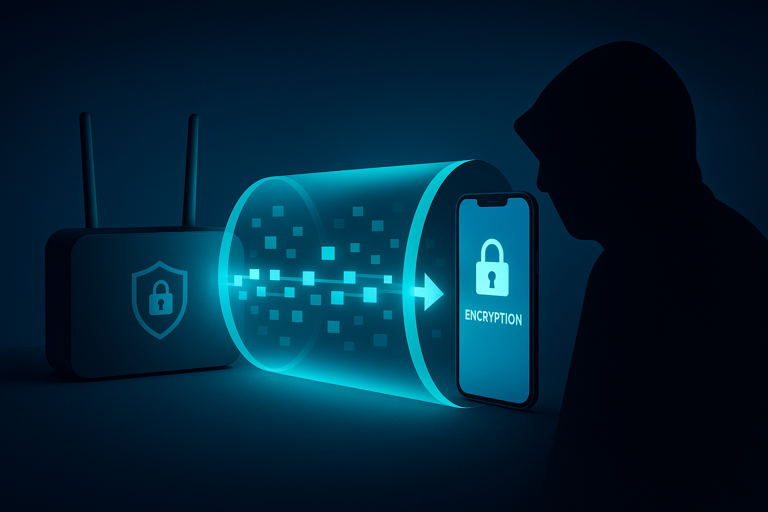
Encryption scrambles your data so interceptors can’t understand it. This protection is crucial for all smart device communications, whether they use MQTT, Zigbee, Wi-Fi or other protocols.
Transport Layer Security (TLS)
Transport encryption protects data as it travels between devices. TLS (Transport Layer Security) is the industry standard, creating secure “tunnels” for your data that prevent:
- Eavesdropping: Outsiders can’t read your private data
- Tampering: Attackers can’t modify messages in transit
- Impersonation: Confirms you’re communicating with real devices, not imposters
Most smart home protocols support encrypted versions. MQTT is a good example. It can run with or without encryption, and enabling TLS is one of the simplest steps you can take to protect data traveling across your home network.
End-to-End Encryption
For extra security, encrypt message content itself, not just the connection. This provides defense in depth. If connection security fails, your actual data remains protected. End-to-end encryption ensures messages stay secure when passing through multiple systems and provides backup protection if other security measures fail.
Note that true end-to-end encryption is still limited in many consumer smart home ecosystems. Most systems use hop-by-hop TLS encryption, which protects data between individual connection points but not across the entire communication chain. That said, platforms like Apple Home and newer standards like Matter are actively expanding its use, so coverage is improving.
Common Security Vulnerabilities
Understanding common weaknesses helps you protect devices more effectively. These vulnerabilities affect many types of connected devices across different manufacturers and protocols.
Dangerous Default Settings
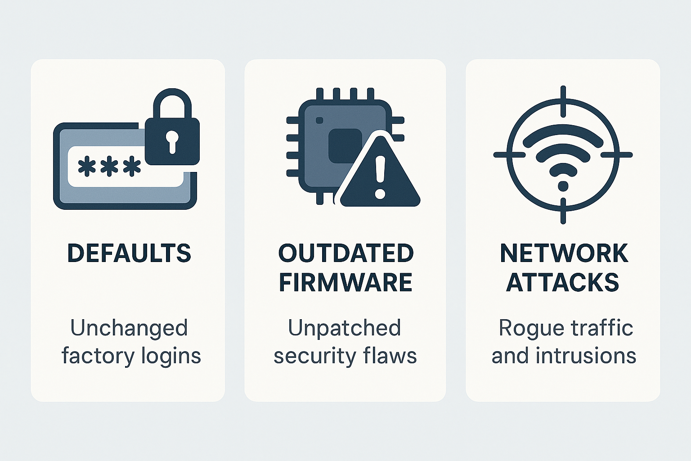
The biggest security risk comes from using factory default settings. Many devices ship with security features disabled to simplify initial setup.
Common risky defaults
- Easy to guess passwords like “admin” or “12345”
- Encryption disabled by default
- Open access until you set restrictions
- Unnecessary services running
Essential first steps
- Change default passwords immediately
- Enable all available security features
- Disable unused services and features
- Check for and install security updates
Software Vulnerabilities
Even well designed devices can have security flaws discovered over time. Outdated firmware may contain vulnerabilities that allow attackers to take control of a device or access data it has collected.
Stay protected
- Enable automatic updates when available
- Check manufacturer sites regularly for security announcements
- Replace devices that no longer receive security updates
- Consider a manufacturer’s security track record before buying
Network Based Attacks
Attackers can target devices through network connections by flooding them with requests, setting up fake services or intercepting traffic.
Protection strategies
- Use strong network passwords and modern security protocols
- Separate smart devices from computers with sensitive data
- Monitor network traffic for unusual patterns
- Keep routers and access points updated
Real World Security Failures
These examples show how security problems can have serious real consequences, and why the basics matter even for home users.
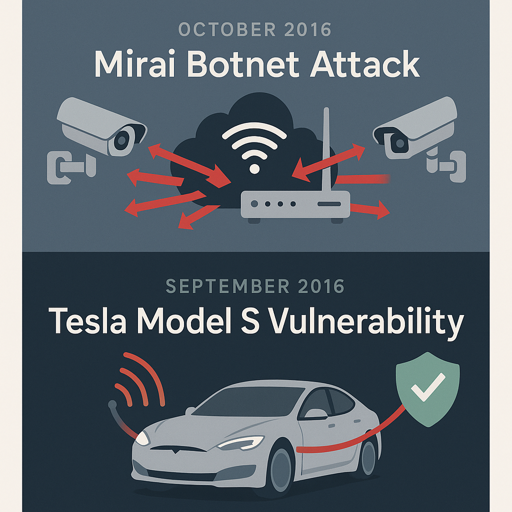
Mirai Botnet Attack (2016)
In 2016, hackers compromised hundreds of thousands to millions of smart devices (cameras, routers, DVRs) using default passwords that owners never changed. These devices formed the Mirai botnet, which overwhelmed major Internet services, causing Twitter, Netflix and Reddit to go offline for hours.
Each infected device contributed to flooding Internet infrastructure with fake traffic. The attack succeeded because most device owners never changed simple default passwords like “admin” or “12345”.
Key lessons
- Always change default passwords on any connected device
- One unsecured device can contribute to problems affecting millions
- Good security practices protect everyone, not just yourself
Tesla Model S Vulnerability (2016)
Security researchers from Keen Security Lab discovered vulnerabilities that allowed remote control of a Tesla Model S. In a controlled research demonstration, they showed they could apply brakes, manipulate displays and access critical functions from miles away by exploiting weaknesses in the vehicle’s internal communication systems. Tesla responded quickly with security patches, but the demonstration highlighted how connected systems require robust security at every level.
Key lessons
- Multiple security layers provide backup when one measure fails
- Security problems can have real physical consequences
- Strong encryption and device verification prevent remote attacks
- Regular security audits are crucial for connected systems
The Future of Smart Home Security
As smart devices become more common, security measures continue evolving to meet new challenges.
Emerging Technologies
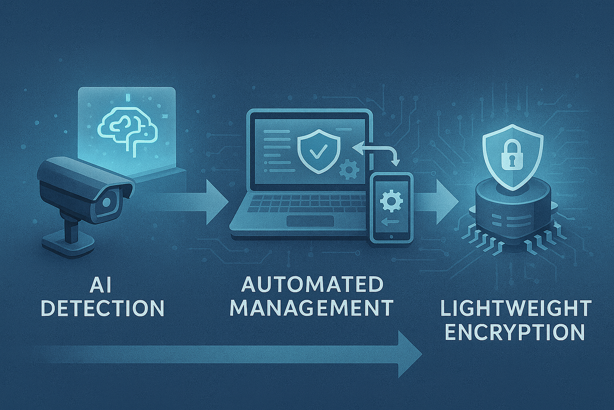
- AI-Powered Security: Machine learning systems detect unusual device behavior and identify threats before they cause damage, learning what’s normal and alerting you to anomalies
- Automated Security Management: Future systems will automatically update security settings, manage credentials and respond to threats without constant human oversight
- Lightweight Encryption: New encryption methods offer strong security while using less processing power, making advanced protection available even on resource-constrained devices
Industry Collaboration
- Universal Standards: Technology companies are creating common security standards that work across different brands and device types
- Security by Design: Manufacturers increasingly build security into devices from the ground up rather than adding it as an afterthought
- Simplified User Experience: Security tools are becoming easier to use, making strong protection accessible regardless of technical expertise
Protecting Your Connected Home
Smart home security matters for everyone, whether you have a handful of devices or a fully automated home. By implementing strong authentication, appropriate authorization controls and reliable encryption, you can dramatically reduce risks and protect your data.
Start with the basics – change default passwords, enable encryption, keep firmware updated and segment your network. These fundamental practices create a solid security foundation that protects your entire connected home. As you add more devices, maintain these core principles and they’ll serve you well for years to come.