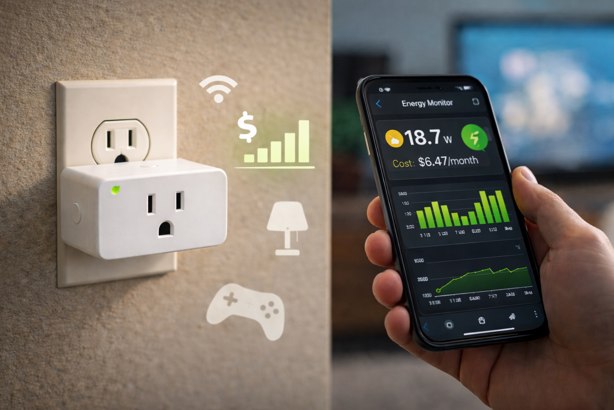
Most smart plugs give you simple on/off control. Matter smart plugs with energy monitoring give you something more useful – real-time power data, cross-platform compatibility, and visibility into exactly what your devices cost to run. Many households discover that game consoles, streaming boxes, and older appliances quietly draw power even when not in active use, and a smart plug with energy monitoring reveals that standby consumption in minutes.
This guide covers three of the strongest options currently available in the US, what separates them, and which one makes sense for your setup.
Quick Picks: Best Matter Smart Plugs with Energy Monitoring
🏆 Best Overall: Kasa KP125M – $22-30 (2-pack)
Matter certified, hardware energy monitoring
💎 Best Premium Pick: Eve Energy – $30-45
Matter over Thread, acts as a Thread mesh node, best-in-class privacy, Apple Home favorite
💰 Best Budget Pick: meross Matter Smart Plug – $36-52 (4-pack)
Solid energy monitoring, works across all major platforms
30 Second Selector: Which Matter Smart Plug Should You Buy?
Answer these 3 questions to find your match
1. What’s your budget?
- Under $15 per plug → meross 4-pack or Kasa KP125M 2-pack
- $30+ for a single plug → Eve Energy (premium features)
2. Which smart home ecosystem do you use?
- Apple Home (HomeKit) → Eve Energy (Thread support, privacy-first design)
- Amazon Alexa → Kasa KP125M or meross (both work seamlessly)
- Google Home → Kasa KP125M or meross (both confirmed compatible)
- Samsung SmartThings → Kasa KP125M (strongest SmartThings track record)
3. How many plugs do you need?
- 1-2 plugs → Kasa KP125M 2-pack or Eve Energy
- 3-4 plugs → meross 4-pack
- Whole home rollout → meross 4-pack combined with Kasa 2-pack
Matter Smart Plug Energy Monitoring Comparison
| Model | Price | Protocol | Energy Monitoring | Max Load | Works With | Best For |
|---|---|---|---|---|---|---|
| Kasa KP125M | $22-30 (2-pack) | Matter over Wi-Fi | ✅ Real-time + history | 15A / 1800W | Alexa, Google, Apple, SmartThings | Best overall value |
| Eve Energy | $30-45 (1-pack) | Matter over Thread | ✅ Real-time + history | 15A / 1800W | Alexa, Google, Apple, SmartThings | Premium / Apple Home users |
| meross | $36-52 (4-pack) | Matter over Wi-Fi | ✅ Real-time + history | 15A / 1800W | Alexa, Google, Apple, SmartThings | Best per-unit price |
Energy monitoring data is accessed through each manufacturer’s app. Most smart home platforms do not yet expose detailed energy monitoring through Matter.
Best Matter Smart Plugs with Energy Monitoring for 2026
Matter certification and energy monitoring are two separate features that happen to pair exceptionally well. Matter allows compatible plugs to work across the major smart home platforms without relying on brand-specific ecosystems. Energy monitoring tells you what your connected devices consume, useful for identifying energy hogs, automating based on power draw, and keeping a closer eye on your electricity bill. The three plugs below are the strongest widely available US options I found that combine native Matter certification with built-in energy monitoring.
Kasa KP125M Matter Smart Plug
Best Overall | $22-30 (2-pack) | View on Amazon
Our Rating: 4.7/5
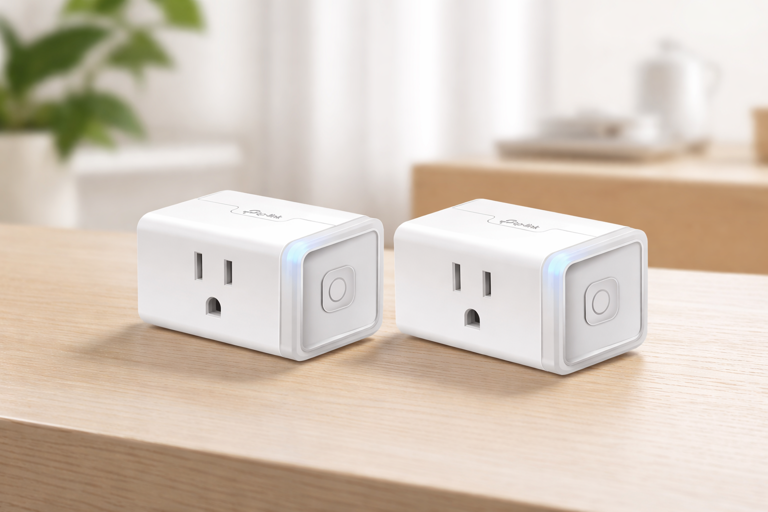
The Kasa KP125M is the most straightforward answer to the question of which Matter smart plug with energy monitoring to buy. It delivers what most people actually need – reliable Matter connectivity, real-time power monitoring, and compatibility with every major smart home platform. TP-Link built energy monitoring into the KP125M at the hardware level, not as an afterthought, which means the Kasa app gives you daily usage data, runtime tracking and monthly cost estimates based on your utility rate, all without a subscription.
Key Features
- Matter over Wi-Fi: Native Matter certification works with Apple Home, Alexa, Google Home and SmartThings without a hub or bridge
- Hardware Energy Monitoring: Real-time wattage, daily and monthly usage history, cost estimation with custom kWh rate input
- 15A / 1800W Max Load: Handles lamps, fans, coffee makers and other standard household devices
- Compact Design: Single-plug footprint that doesn’t block the adjacent outlet
- Kasa App: Scheduling, away mode, energy dashboard and automation support (no subscription required)
- UL Certified: Safety certified for the US market
What Customers Love
Reviewers consistently highlight setup speed. Many report being up and running via the Matter QR code in just a few minutes. The energy monitoring dashboard in the Kasa app draws particular praise for showing not just current wattage but estimated monthly costs once you input your utility rate. Users upgrading from non-Matter Kasa plugs note that the cross-platform compatibility is a genuine improvement, especially for households running a mix of Alexa and Google Home devices.
Worth Knowing
The KP125M runs on Wi-Fi rather than Thread, which means it won’t extend your Thread mesh network the way the Eve Energy does. Full energy monitoring history is only accessible through the Kasa app. Matter-paired platforms like Apple Home or Alexa see basic on/off and power state, but not the detailed usage dashboard. The 2.4GHz-only Wi-Fi connection is standard for smart plugs at this price point but worth noting if your router setup is complex.
Best For
Anyone who wants a reliable, widely reviewed Matter plug with solid energy monitoring at a price that makes buying two or more easy to justify. Particularly well suited to Alexa, Google Home and SmartThings users.
Eve Energy (Matter) Smart Plug
Best Premium Pick | $30-45 | View on Amazon
Our Rating: 4.6/5
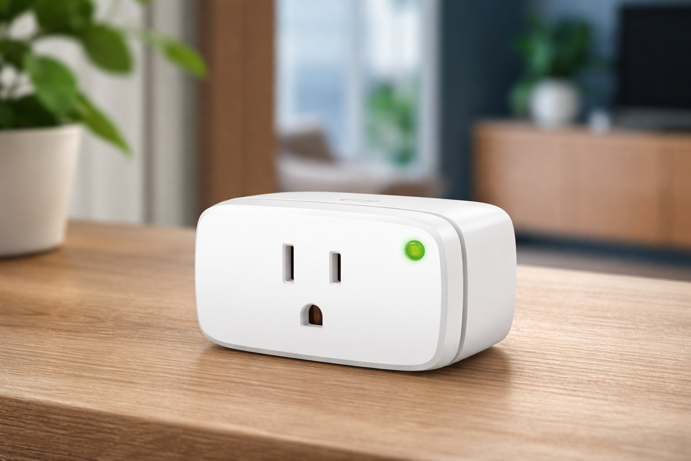
The Eve Energy stands apart from every other plug in this guide by running Matter over Thread rather than Wi-Fi. Thread is a low power mesh networking protocol that forms the backbone of the Matter ecosystem. The Eve Energy acts as a Thread router node, meaning it relays traffic for other Thread devices and helps strengthen the mesh network in your home. For Apple Home users in particular, this makes the Eve Energy more than a smart plug – it’s infrastructure. Add in Eve’s strong privacy stance (no Eve account required, no cloud dependency for local control) and you have the most technically sophisticated option in this category.
Key Features
- Matter over Thread: More responsive local control with mesh based networking that can improve reach and stability compared with relying on Wi-Fi signal strength alone
- Thread Router Node: Extends your Thread mesh network as a mesh node, improving coverage and reliability for other Thread devices in your home
- Hardware Energy Monitoring: Real-time wattage, consumption history, and projected cost tracking via the Eve app
- 100% Privacy: No Eve account required, no cloud dependency, all data stays local
- 15A / 1800W Max Load: Full compatibility with standard household appliances
- Works with Apple Home, Alexa, Google Home and SmartThings: Full Matter cross-platform compatibility
What Customers Love
Apple Home users consistently rate the Eve Energy as the most responsive smart plug they’ve used, with local Thread communication delivering near-instant response times compared to cloud-dependent Wi-Fi plugs. The privacy-first design resonates strongly with reviewers who prefer keeping their home data off third-party servers. Users building out Thread networks particularly appreciate that each Eve Energy acts as a Thread mesh node, improving coverage and signal reliability for other Thread devices like door sensors and smart locks.
Worth Knowing
At ~$30-45 for a single plug, the Eve Energy costs roughly three times the per-unit price of the meross 4-pack. Because the Eve Energy uses Matter over Thread, you’ll need a Thread border router in your home (such as an Apple TV 4K, HomePod mini, or compatible Echo device like the Echo Dot Max) for the plug to connect to your smart home platform. Users primarily using Alexa or Google Home as their main platform may see less benefit from Thread than Apple Home users. As with the other plugs here, detailed energy history lives in the manufacturer app rather than your smart home platform of choice.
Best For
Apple Home users who want the best possible Matter experience, privacy-conscious buyers who prefer local control over cloud dependency, and anyone actively building out a Thread mesh network in their home.
meross Matter Smart Plug
Best Budget Pick | $36-52 (4-pack) | View on Amazon
Our Rating: 4.4/5
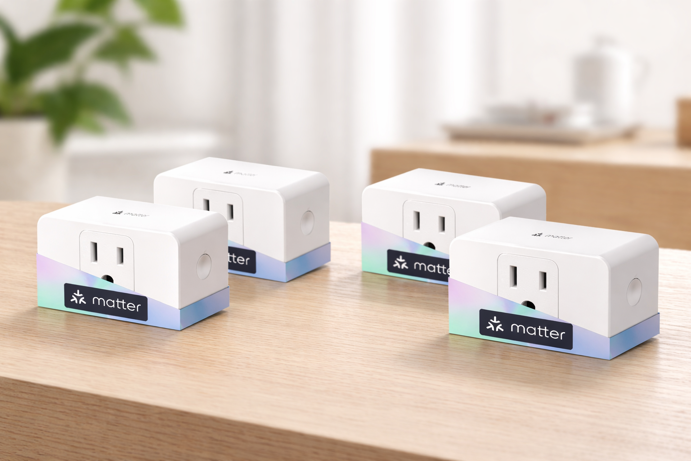
If you need to outfit multiple outlets with Matter and energy monitoring without spending a fortune, the meross 4-pack is the answer. At roughly $9-13 per plug, it’s potentially the lowest per-unit cost of any Matter plug with hardware energy monitoring currently available in the US. The meross app covers real-time power draw, scheduling and usage history, while the plug itself works natively with all four major smart home platforms. It won’t win on raw features compared to the Eve Energy, but for a whole room or multi-room rollout where value per unit matters, few other plugs in this category compete at this price.
Key Features
- Matter over Wi-Fi: Native Matter certification across Apple Home, Alexa, Google Home and SmartThings
- Hardware Energy Monitoring: Real-time wattage and usage history via the meross app
- 15A / 1800W Max Load: Standard capacity for household appliance use
- 100% Privacy: No cloud dependency required for local Matter control
- Schedule and Timer Support: Built-in scheduling via app or voice
What Customers Love
Reviewers highlight the ease of setup across multiple platforms. Several note successfully adding meross plugs to both Apple Home and Alexa in the same household without issues. The 4-pack value proposition draws consistent praise from buyers equipping home offices, entertainment centers, or multiple rooms at once.
Worth Knowing
The meross app is functional but less polished than the Kasa app’s energy monitoring interface. Cost estimation and detailed historical breakdowns are more limited. As a Wi-Fi based plug, it doesn’t contribute to a Thread mesh network the way the Eve Energy does. Customer support has received mixed feedback in reviews.
Best For
Buyers equipping three or four outlets at once who want Matter certification and energy monitoring without paying premium per-unit prices. Also a strong choice for anyone experimenting with Matter for the first time before committing to a larger smart home investment.
What Makes a Matter Smart Plug with Energy Monitoring Different?
The smart plug market is crowded, and most products look identical on the surface. Understanding what Matter actually changes – and why energy monitoring matters beyond the spec sheet – will help you choose the right plug rather than the most marketed one.
Why Matter Certification Matters
Before Matter, a smart plug from one brand often only worked reliably within that brand’s ecosystem. A Kasa plug worked well with Alexa but required workarounds for Apple Home. A HomeKit certified plug wouldn’t integrate cleanly with Google Home. Matter changes this by creating a common language that all certified devices and platforms speak natively. A Matter certified plug pairs directly with Apple Home, Amazon Alexa, Google Home and Samsung SmartThings without bridges, third-party integrations or manufacturer accounts. Just scan the QR code in your preferred app and you’re done.
This also future-proofs your purchase. As more smart home platforms adopt Matter (and all major ones already have), your plug remains compatible regardless of which direction your ecosystem grows. If you switch from Alexa to Google Home, or add Apple Home to your setup, a Matter plug moves with you.
Wi-Fi vs. Thread: What’s the Difference?
Two of the three plugs in this guide (the Kasa KP125M and meross) run Matter over Wi-Fi. The Eve Energy runs Matter over Thread. Both deliver the same cross-platform Matter compatibility, but the underlying network behaves differently.
Wi-Fi Matter plugs connect directly to your home router. They’re straightforward to set up and work with any 2.4GHz Wi-Fi network, but each plug is an independent device on your network. Thread plugs operate differently. They form a self-healing mesh network where each Thread device acts as a node, passing signals between devices and back to a Thread border router (typically an Apple TV 4K, HomePod mini, Google Nest Hub, or compatible Echo device like the Echo Dot Max). This mesh design makes Thread more reliable over distance and less dependent on your router’s signal strength. The Eve Energy helps extend that mesh as a Thread router node, improving reach and stability for other Thread devices in your home.
For most people, a Wi-Fi Matter plug is perfectly sufficient. Thread becomes a meaningful upgrade if you’re building a larger smart home with multiple Matter devices, have a large home where Wi-Fi signal degrades at the edges, or are primarily using Apple Home where Thread integration is deepest.
What Energy Monitoring Tells You
Energy monitoring on a smart plug reports real-time wattage draw and accumulates usage data over time. In practice this has several useful applications. You can identify devices that consume significant standby power (televisions, game consoles and older appliances are common culprits) and decide whether to put them on schedules that cut power when not in use. You can estimate the actual monthly cost of running a certain device by inputting your utility rate into the plug’s app. And you can set automations that trigger based on power state – for example, a “washing machine finished” notification when the plug detects power draw dropping to near zero.
Matter Smart Plug Buying Guide
Check Your Hub Compatibility First
All three plugs work with Alexa, Google Home, Apple Home and SmartThings via Matter. But there are nuances worth knowing before you buy. For Thread based devices like the Eve Energy, you need a Thread border router in your home – an Apple TV 4K (3rd gen or later), HomePod mini, HomePod (2nd gen), Google Nest Hub (2nd gen) or Echo Dot Max all qualify. Wi-Fi-based Matter plugs like the Kasa and meross require only a 2.4GHz Wi-Fi network, which any modern router provides. If you’re unsure whether your setup supports Thread, the Wi-Fi options are the safe choice.
Consider the Energy Monitoring App Experience
All three plugs collect real-time wattage and usage data at the hardware level, but in practice that data is accessed most reliably through the manufacturer’s app. The richer energy data – daily and monthly history, cost projections, and usage trends – also lives there. The Kasa app has the most developed energy monitoring interface of the three, with per-device cost estimation once you input your kWh rate. The Eve app offers clean historical data with a strong privacy-first approach. The meross app covers the basics but is the least feature-rich of the three on the energy side. If detailed energy analytics is a priority, Kasa has the edge.
Think About Scale From the Start
If you’re buying one plug to monitor a specific appliance, any of the three works well. If you’re equipping an entire home office, entertainment center or multiple rooms, per-unit cost becomes a real factor. The meross 4-pack at between $9 and $13 per plug is hard to beat for multi-outlet deployments. Mixing brands is also a reasonable approach, where you use Eve Energy on the devices where Thread performance and privacy matter most, and Kasa or meross on the rest.
Appliance Load Ratings
All three plugs are rated for 15A and 1800W, which covers the vast majority of household devices, including lamps, fans, coffee makers, phone chargers, televisions, game consoles and small kitchen appliances. They are not rated for high draw appliances like space heaters over 1500W, air conditioners or tumble dryers. Those require dedicated circuits and should not be connected to standard smart plugs, regardless of brand.
Frequently Asked Questions
Can I use a Matter smart plug without a Matter controller?
Yes, through each manufacturer’s own app. The Kasa KP125M and meross plug can be used through their native apps without Matter. Eve Energy can also be used through the Eve app, but Matter over Thread setup requires a compatible hub / Thread border router for your chosen platform.
Will Matter smart plugs work during Internet outages?
Yes, for local control. Matter over Thread operates entirely on your local network and continues functioning without Internet connectivity. Matter over Wi-Fi plugs require your router to work but maintain local control through your Matter controller once initially configured. Cloud dependent features like remote access require Internet, but in-home control remains functional during outages.
Making Your Decision
The right Matter smart plug with energy monitoring comes down to three variables – your ecosystem, your budget, and how many outlets you need to cover.
- For most people: The Kasa KP125M is the straightforward choice – proven reliability, the best energy monitoring app interface, and a price point that makes buying two easy.
- For Apple Home and Thread users: The Eve Energy justifies its premium price with Thread mesh support, local-first control, and the strongest privacy story in the category.
- For multi-outlet deployments: The meross 4-pack at ~$9-13 per plug is the only way to get native Matter and energy monitoring across four outlets without spending considerably more.
Matter is still relatively new, and the product pool for plugs that combine it with energy monitoring at the hardware level is genuinely small right now. That’s actually useful information. It means the three options above represent the best the category has to offer, and choosing between them is a matter of matching features to your individual setup rather than navigating a crowded field.
Monitor What Matters
Energy monitoring turns a smart plug into something genuinely useful. Instead of guessing which devices quietly draw power throughout the day, you can see what’s actually happening, and make smarter decisions about how your home runs.
Matter support adds another advantage – flexibility. As smart home ecosystems evolve, devices that work across multiple platforms are far easier to live with than ones tied to a single app or hub.
Choose the plug that fits your setup and budget. Once it’s in place, the real value shows up quickly – small insights about how your home uses electricity, and a few simple opportunities to use a little less of it every day.