Imagine controlling your lights, unlocking your door and adjusting your thermostat with a simple voice command, even if mobility challenges once made flipping a light switch difficult. Or navigating through a crowded space in a wheelchair that detects obstacles and assists with route planning. For millions of people with disabilities, these are very real technologies available today.
The Internet of Things is reshaping how we interact with technology. For individuals with accessibility needs, this shift has been particularly profound. Adaptive technology powered by IoT promotes independence, safety and improved quality of life. Connected devices are increasingly helping to reduce barriers that have existed for decades.
In this guide, we’ll explore how connected assistive devices work today, where the technology is heading, and what to consider before getting started.
Disclaimer: This article is educational and not medical advice. Consult with healthcare professionals and assistive technology specialists for personalized recommendations.
What Is Adaptive Technology?
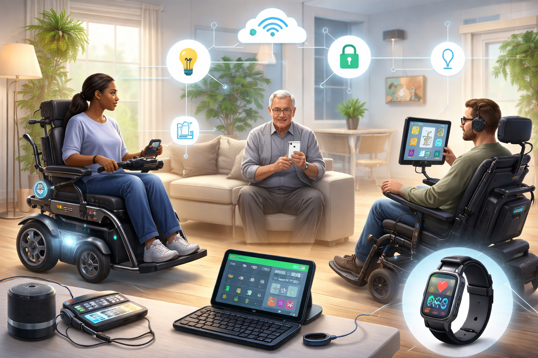
Adaptive technology (also called assistive technology) refers to devices, software and systems designed to help people with disabilities perform tasks that might otherwise be challenging or impossible. Disabilities can be physical, sensory, cognitive or communication based, and adaptive technology is increasingly designed to support this wide range of needs. This includes everything from screen readers for the visually impaired to specialized keyboards for people with limited mobility.
When you combine adaptive technology with IoT capabilities, you get devices that communicate with each other, learn from user behavior and collect health data. These devices can also be controlled remotely by caregivers or healthcare providers. This connectivity turns standalone assistive devices into integrated systems that deliver comprehensive support.
The IoT Advantage in Accessibility
Traditional assistive devices work in isolation. IoT connectivity changes this. Connected devices can track vital signs and daily activities, sending alerts to caregivers when intervention is needed. Family members and healthcare providers can monitor device usage and adjust settings from anywhere in the world. Some IoT-enabled assistive devices use AI algorithms to learn user preferences, automatically adjusting to offer more personalized support over time. Rather than managing multiple separate devices, users can control their entire environment through a unified interface using voice commands or a smartphone app.
Who Benefits Most From Adaptive IoT?
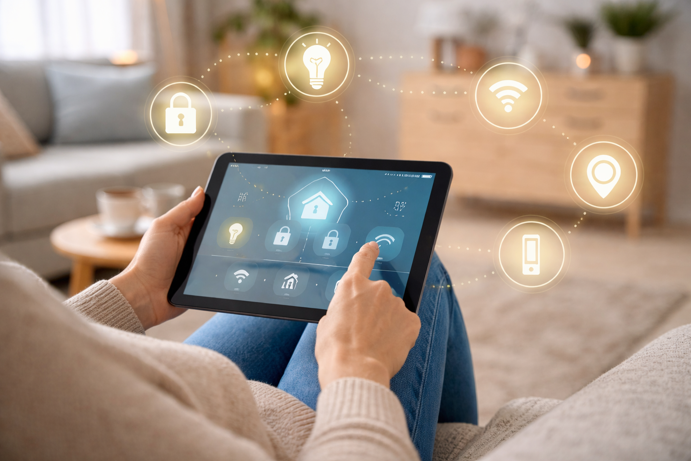
Adaptive IoT technology serves diverse needs across the disability community. People with limited mobility gain environmental control without physical interaction. Visually impaired users benefit from connected navigation aids and voice controlled systems. Individuals managing chronic illnesses can share health data with medical teams remotely. Older adults aging in place maintain independence through safety monitoring and automated assistance. Family caregivers gain peace of mind through remote monitoring capabilities, even when separated by distance.
Smart Wheelchairs: The Future of Mobility
Smart wheelchair technology represents one of the fastest evolving areas in adaptive IoT, though it’s important to understand what’s available today versus what’s still in development. While advanced autonomous navigation systems remain largely in research settings and pilot programs, the wheelchair industry is actively integrating IoT capabilities in meaningful ways.
What’s Available Now
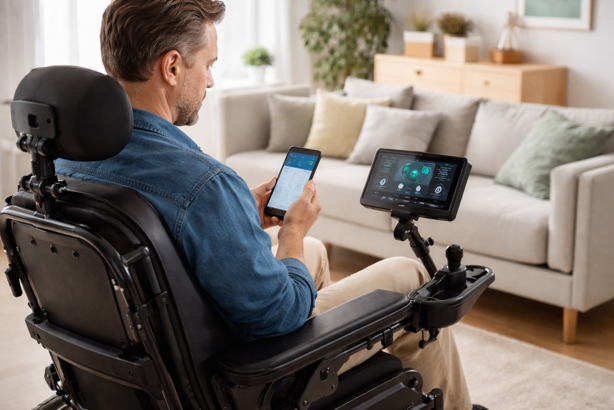
Current commercially available smart wheelchairs offer smartphone connectivity for diagnostics, seat adjustments and performance tracking. Companies like Permobil provide apps that monitor battery life, usage patterns and maintenance needs. Retrofit systems like LUCI add obstacle detection and collision avoidance to existing powered wheelchairs. Some systems can integrate indirectly with smart home platforms through companion apps or voice assistants, allowing users to interact with connected lights or thermostats.
Emerging Technology in Development
Advanced research driven models like the CoNav Chair use sensors, cameras and AI to assist with autonomous navigation and obstacle detection, though these are currently limited to controlled environments or specialized clinical programs. Fully autonomous mobility features are still subject to strict regulatory approval and are currently designed as assistive rather than fully self-driving systems.
Experimental systems are exploring integration with biophysical sensors that continuously track heart rate, blood oxygen levels, ECG data and other vital signs. This data would transmit to cloud platforms for remote monitoring, allowing healthcare providers to track patients in near real-time without requiring in-person visits.
For users with severe disabilities, researchers are developing multiple control methods including joystick, head movement tracking, eye gaze control and emerging options such as EEG based brain-computer interfaces, though these remain limited to research and specialized clinical use. Some prototype systems include fall detection or emergency alert features that automatically notify caregivers and provide location data if something goes wrong.
While these advanced capabilities aren’t yet widely available to consumers, the rapid pace of development suggests that many may transition from research labs to market in the coming years. That said, regulatory and safety requirements will likely slow down the adoption process.
For now, individuals seeking smart wheelchair features should consult with assistive technology specialists about currently available retrofit solutions and commercially available models with basic IoT connectivity.
Voice Controlled Smart Homes
For people with mobility impairments, simple tasks like turning on lights or adjusting the thermostat can be a challenge. Voice controlled smart home systems powered by Amazon Alexa and Google Assistant are transforming home accessibility. They enable complete environmental control of lighting, temperature, door locks, window shades, appliances and entertainment systems through voice commands.
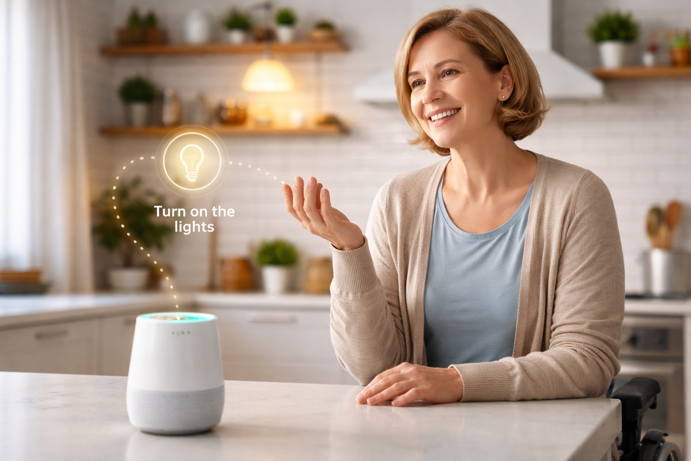
Reliability can depend on factors like Internet stability, microphone placement and ambient noise levels, which means setup quality plays an important role in day-to-day usability.
Some platforms, particularly Alexa, offer additional accessibility features such as:
- Tap to Alexa (screen based interfaces for users who are deaf or hard of hearing)
- Eye Gaze on Alexa (control through eye movement on Fire Max 11 tablets)
- VoiceView Screen Reader (audio feedback for visually impaired users)
- Real-Time Text that creates live chat feeds during calls for those with hearing impairments
Devices like the tecla-e enable people with speech impairments to control Alexa using assistive switches such as sip-and-puff, buddy buttons or joysticks. This makes smart home technology accessible to people with quadriplegia and others who cannot use voice commands.
Solutions like Voiceitt use specialized speech recognition trained on atypical speech patterns. This means people with cerebral palsy, stroke or other speech impairments can interact with voice assistants that usually struggle to understand them.
Smart Medication Management
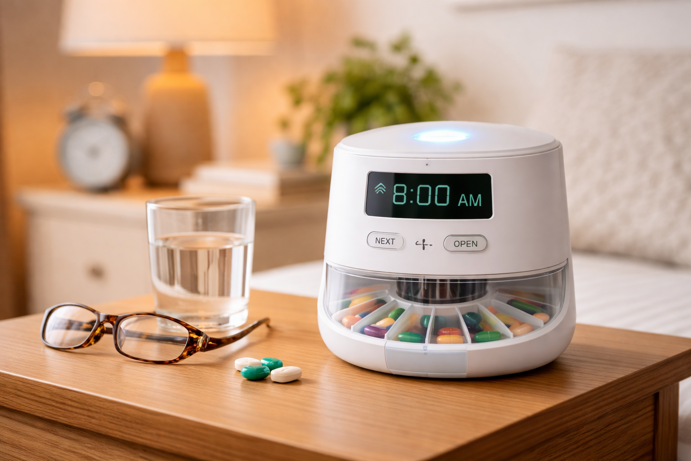
Medication non-adherence is a critical healthcare issue, especially among elderly patients and those with cognitive impairments. IoT-enabled medication dispensers address this through intelligent automation.
Modern smart pill dispensers can store up to 28 days of medication with multiple daily doses. They provide audio and visual alerts when it’s time to take medication, with repeating alarms until pills are retrieved. Family members and healthcare providers receive notifications through smartphone apps when medications are taken or missed, offering peace of mind. Some advanced systems adapt reminder timing based on usage patterns and can detect anomalies that might indicate health changes.
Note: Smart dispensers support medication adherence but should not replace advice from healthcare professionals.
Popular options include:
- LiveFine Smart Wi-Fi Automatic Pill Dispenser (28 day capacity with up to 9 doses per day and family monitoring)
- KLIM Smart Pill Dispenser (fast Wi-Fi connectivity with backup battery)
IoT technology is redefining mobility for people with visual impairments. Wearable navigation devices (including bands or harness style systems) use cameras and sensors to analyze surroundings, recognize obstacles and deliver feedback through sound or vibration. Research and early prototypes are exploring features such as face recognition, object identification and advanced mapping capabilities.
Products like Lechal offer smart insoles that sync with GPS navigation apps and vibrate to provide turn-by-turn directions. These are essentially shoes that tell you where to go. Smart canes equipped with ultrasonic sensors detect objects in the path and generate tactile output through different vibratory patterns. AI-powered vision assistance apps combine smartphone cameras with IoT and AI software to describe surroundings, identify objects, read text aloud and recognize faces.

Wearable Health Monitors
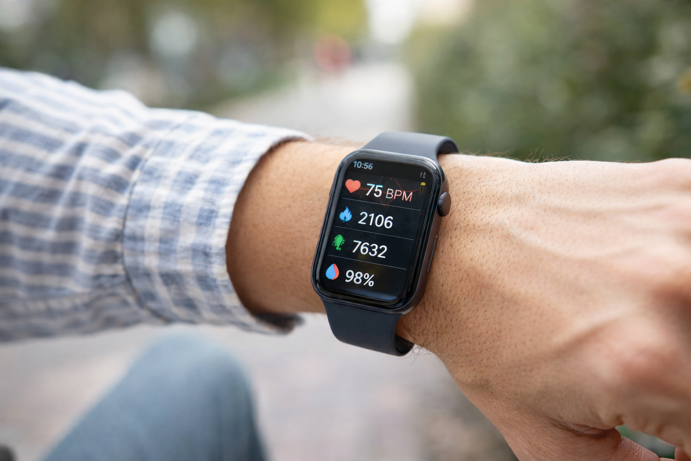
Wearable IoT devices have become crucial tools for people with chronic conditions or disabilities. Smartwatches and fitness trackers adapted for medical use monitor heart rate, activity levels, blood oxygen levels and temperature. Many wearables now include fall detection that automatically alerts emergency contacts and provides location data.
Specialized wearables can detect seizure activity and alert caregivers, potentially life saving for people with epilepsy. Some devices remind users to take medications. Experimental systems can confirm medication ingestion using ingestible or motion based sensors, though these are not yet widely available.
Communication Aids: Finding Your Voice
For people with speech impairments, IoT-enabled communication devices offer new ways to express themselves. Modern AAC (augmentative and alternative communication) devices use AI to predict what users want to say, speeding up communication considerably. AAC devices that connect to smartphones, smart home systems and other IoT devices allow users to control their environment and communicate across platforms.
Challenges and Considerations
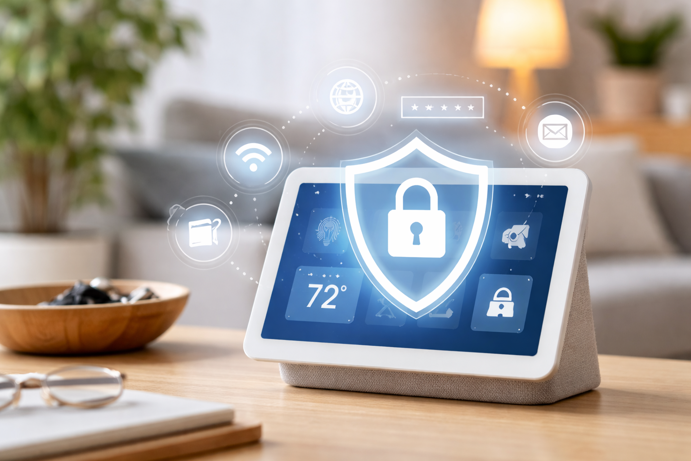
While IoT powered adaptive technology offers tremendous potential, several challenges remain. Not all IoT devices follow universal design principles. Apps and interfaces must be accessible to screen readers, work with alternative input methods, and be usable by people with cognitive impairments. Health monitoring and location tracking raise legitimate privacy concerns, requiring users to have control over their data and understand how it’s being used.
Many advanced IoT adaptive devices remain expensive, and while some insurance plans cover assistive technology, coverage varies widely. When people depend on these devices for safety and independence, connectivity issues or device failures can have serious consequences. Backup systems and offline functionality are crucial for this reason. Different IoT devices often use incompatible standards, making it difficult to create truly integrated systems, though frameworks like Matter and Web of Things aim to improve interoperability.
Getting Started With Adaptive IoT Technology
If you’re interested in exploring IoT for disability support for yourself or a loved one, start by assessing individual needs with occupational therapists or assistive technology specialists. This will identify the most appropriate devices. Begin with basic smart home devices like voice assistants or smart plugs before investing in more complex systems.
In most cases, starting with a single pain point (lighting, medication reminders or communication) leads to better outcomes than trying to automate everything at once.
Research whether your health insurance, Medicare, Medicaid or other programs cover assistive technology. Many providers offer trial periods or demonstrations, so test before buying. Choose adaptive smart home devices that work together within the same ecosystem. For example, selecting smart home products that all work with the same voice assistant platform. Prioritize security by using strong passwords, enabling two-factor authentication, keeping devices updated, and understanding privacy policies. Finally, ensure you or your caregivers understand how to troubleshoot devices and have easy access to customer support.
From Smart to Supportive
Adaptive IoT works best when it quietly removes friction from everyday life. The most effective setups focus on practical support – reliable controls, accessible interfaces and technology that fits naturally into existing routines rather than demanding constant attention.
Starting with one meaningful challenge and expanding gradually often leads to better long term results than trying to automate everything at once. As these systems evolve, success will increasingly depend on flexibility, privacy protections and devices that work together without adding complexity.
When technology adapts to people instead of expecting people to adapt to it, accessibility stops feeling like a feature and starts feeling like freedom.