You’re scrolling through your phone at a coffee shop when your ring vibrates twice. You recognize the pattern. It’s your spouse texting, not just another work notification you can ignore. No fumbling for your phone, no obvious checking. Just a slim metal band that keeps you connected without keeping you tethered to a screen.
Unlike smartwatches that demand attention with bright displays and daily charging, smart rings focus on background monitoring and discreet alerts. They track heart rate variability (HRV), sleep stages, activity levels and body temperature using sensors smaller than a pencil eraser, storing days of data before needing a charge. The appeal goes beyond miniaturization, though. Smart rings move health tracking from something you actively wear to something that just happens, sitting on your finger like any other ring while collecting data continuously.

What Do Smart Rings Do?
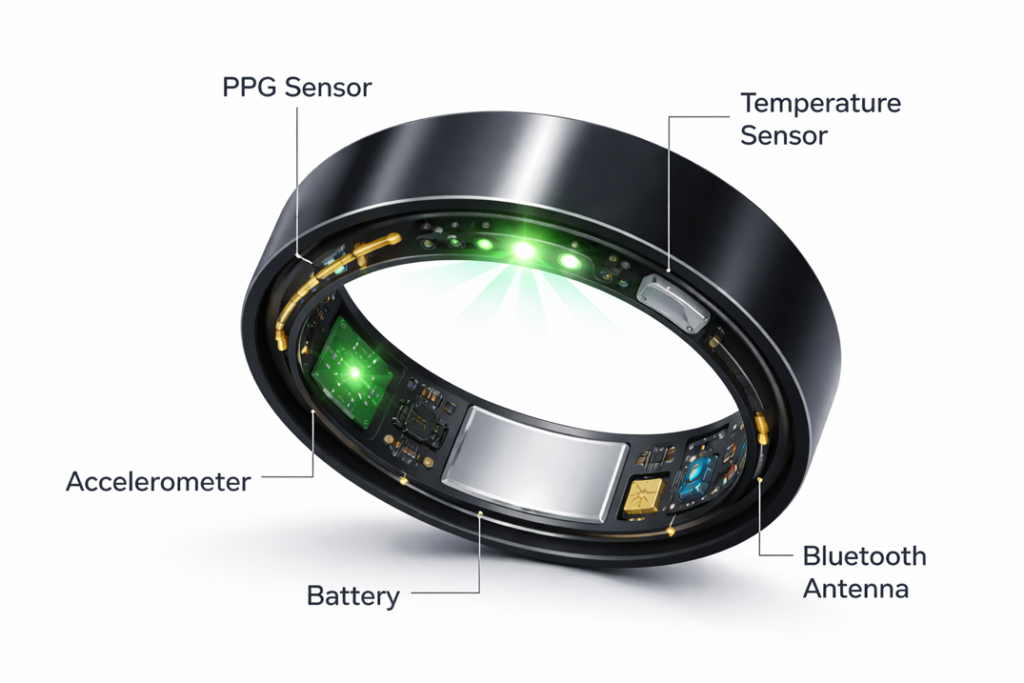
Smart rings pack sensors, processors and wireless connectivity into devices shaped like traditional rings. Most measure 7-8mm wide and weigh 2-6 grams (depending on model and size), comparable to a typical wedding band. Photoplethysmography (PPG) sensors shine light through your finger to measure blood flow, calculating heart rate, and often heart rate variability. Infrared temperature sensors track body temperature fluctuations. Three-axis accelerometers detect movement patterns to count steps, identify activity types and analyze sleep stages. Some rings also handle contactless payments through NFC chips, store credentials for door locks or computers, and deliver notifications via LED lights or vibration motors.
Data syncs to your smartphone via Bluetooth throughout the day, with comprehensive syncs overnight. Battery life ranges from 3-12 days depending on features and usage. Water resistance typically hits 5-10 ATM, enough for showering and swimming.
Best for: People wanting continuous health tracking without wearing a watch, professionals in fields where watches aren’t practical (healthcare workers, mechanics, chefs), anyone prioritizing sleep tracking accuracy, users seeking discreet notifications without constant screen time.
Not ideal for: Users wanting visual displays to check data on-device, athletes needing real-time workout metrics during exercise, anyone uncomfortable wearing rings continuously, people requiring advanced smartwatch features like GPS tracking or music storage.
How Smart Rings Track Your Health
Heart Rate and HRV Monitoring
Smart rings measure heart rate through PPG sensors positioned against the underside of your finger. These sensors emit green or infrared light that penetrates skin and reflects off blood cells flowing through capillaries. As your heart beats, blood volume changes, altering how much light reflects back. The ring’s processor analyzes these variations to calculate beats per minute.
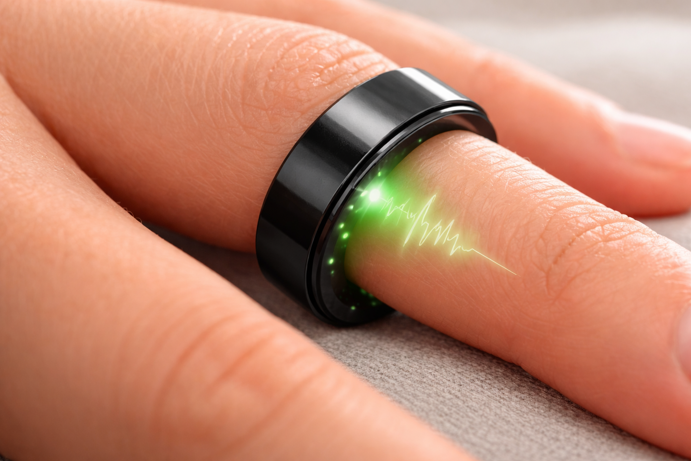
Heart rate variability tracking uses the same sensor but measures time intervals between individual heartbeats rather than just counting the total beats per minute. Higher HRV generally indicates better cardiovascular fitness and recovery, while lower HRV can signal stress, fatigue or potential illness. Rings measure HRV primarily during sleep when you’re still and signals are cleanest, providing daily readiness scores based on overnight recovery patterns. Finger based sensors deliver cleaner resting heart rate and HRV data than wrist trackers due to denser capillary networks in the fingers, though they lag during intense exercise when blood flow shifts away from extremities.
Sleep Stage Analysis
Sleep tracking combines heart rate data, HRV patterns, body temperature and motion detection to estimate sleep stages throughout the night. During light sleep, heart rate decreases slightly with occasional movement. Deep sleep shows further heart rate reduction, minimal movement and distinctive HRV patterns. REM sleep produces elevated heart rate closer to waking levels, higher HRV and muscle atonia (very limited movement), except for small twitches.
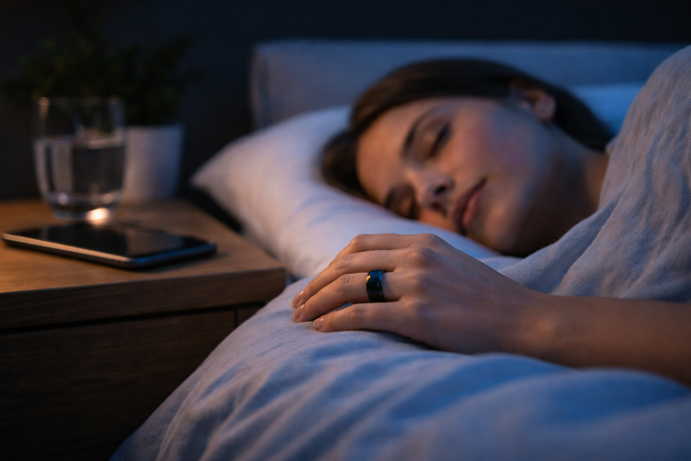
Body temperature monitoring adds another data layer. Your core temperature naturally drops during sleep, reaching its lowest point in early morning. Smart rings track this pattern through temperature sensors, identifying deviations that might indicate illness, hormonal changes or sleep disturbances. Some rings use temperature trends to flag potential deviations that may precede illness. The algorithms processing this data involve machine learning models often informed by polysomnography (PSG) datasets from clinical sleep studies. While smart rings can’t match medical grade precision, research suggests they identify major sleep stages with reasonable accuracy compared to PSG.
Activity and Movement Tracking
Three-axis accelerometers detect movement along three perpendicular planes, capturing forward-backward, side-to-side and up-down motion. The ring’s processor analyzes these patterns to identify different activities. Walking produces distinctive repetitive signals as your arm swings. Running shows similar but higher intensity patterns. Sedentary periods show minimal movement except occasional gestures.

Step counting relies on detecting characteristic acceleration patterns of walking or running. Finger placement means smart rings sometimes miss steps when hands stay still (pushing shopping carts, walking with hands in pockets) and may overcount during repetitive hand movements. Unlike smartwatches with built-in GPS, smart rings track movement but not location. They can tell you moved around for 45 minutes but not that you walked two miles or what route you took. For distance estimates, rings use standard stride length calculations or connect to your smartphone’s GPS when the companion app runs in the background.
Smart Ring Features Beyond Health Tracking
Contactless Payments
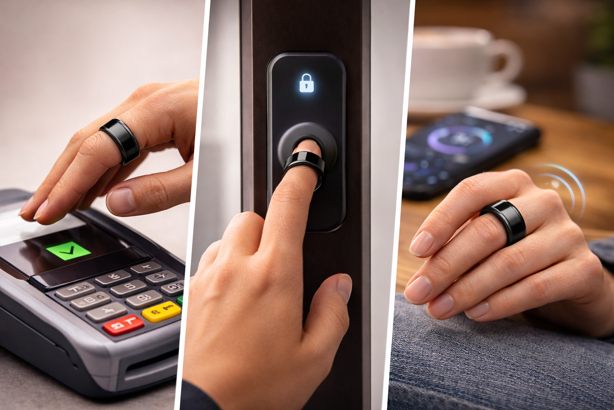
Some NFC focused smart rings enable tap-to-pay functionality similar to contactless credit cards. You link a credit or debit card through the companion app, then tap the ring against payment terminals to complete transactions. Payment capable rings support major networks like Visa, Mastercard and American Express through proprietary tokenization platforms rather than Apple Pay or Google Pay, with transaction limits around $50-100 USD without additional authentication. Note that most health tracking smart rings like Oura, Ultrahuman and Samsung Galaxy Ring don’t include payment features.
Security comes from tokenization. The ring stores a unique digital token rather than actual card numbers. Each transaction generates a one-time code that can’t be reused if intercepted. Lost or stolen rings can usually be deactivated remotely through the companion app.
Access Control and Authentication
NFC enabled smart rings can store digital credentials for access control systems, functioning like keyless entry cards. This works with compatible smart locks, office access systems, car proximity sensors or computer login systems supporting NFC authentication. Some rings support multiple credentials, letting you store your office badge, home smart lock access and gym membership on one device. Compatibility is the main limitation. Access control features only work with systems specifically designed to accept NFC credentials. Verify your locks or other systems support NFC authentication before purchasing for access control.
Notifications and Alerts
Smart rings with notification features connect to your smartphone and alert you about incoming calls, messages or app notifications through small LED lights, vibration or both. You filter which notifications trigger alerts through the companion app, preventing constant interruptions from every little email or social media update.
The discreet nature of ring notifications is both an advantage and a limitation. A brief vibration or colored LED visible only to you lets you know something needs attention without obviously checking your phone during meetings or social situations. However, you can’t read message content, see caller ID details or interact with notifications directly. You still need your phone to be able to respond. Some rings allow different vibration patterns or LED colors to be assigned to certain contacts or notification types. This provides basic context without checking your phone.
Smart Rings vs Smartwatches vs Fitness Trackers
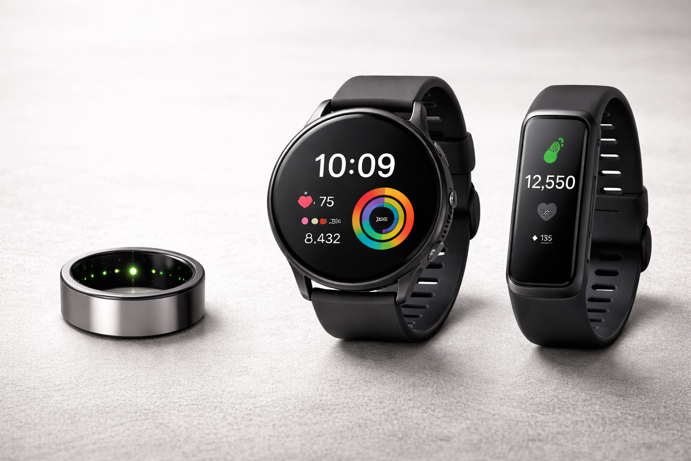
Smart rings prioritize passive health monitoring and discreet form factor over active interaction and visual displays. Smartwatches offer screens for checking data, responding to messages, controlling music or running apps directly on your wrist. Fitness trackers fall somewhere in between, with basic displays showing time and activity stats but limited interactive features.
During exercise, smartwatches excel with real-time metrics visible on-screen, built-in GPS for route tracking and workout modes for specific activities. Smart rings track general activity and heart rate but offer no real-time feedback, no GPS tracking, and no on-screen workout data. For workouts requiring pace monitoring or immediate heart rate feedback, watches win. For daily activity summaries and overnight recovery analysis without actively thinking about tracking, rings make more sense.
Cost varies considerably. Basic fitness trackers start around $50-100, entry level smartwatches run $150-300, while smart rings begin around $200-300 for basic models and $349-499 for premium options like the Oura Ring. The higher ring prices reflect miniaturization challenges and specialized market positioning.
Key Considerations Before Buying
Sizing and Fit
Unlike watches with adjustable bands, smart rings require precise sizing. Most manufacturers offer sizing kits with plastic or metal samples to test fit before ordering. You’ll wear the sizing ring for 24-48 hours to account for finger size fluctuations throughout the day due to temperature changes, physical activity and water retention.
Fingers swell slightly during sleep and exercise, shrink in cold weather and change size with weight fluctuations or hormonal cycles. The ideal fit feels comfortable when your hands are warm and slightly loose when cold, without spinning freely. Most people wear smart rings on their index or middle finger for optimal sensor contact and comfort. Sizing mistakes are expensive and most manufacturers don’t accept returns on opened rings due to hygiene concerns. Resizing isn’t possible since electronics are integrated throughout the ring structure.
Material and Durability
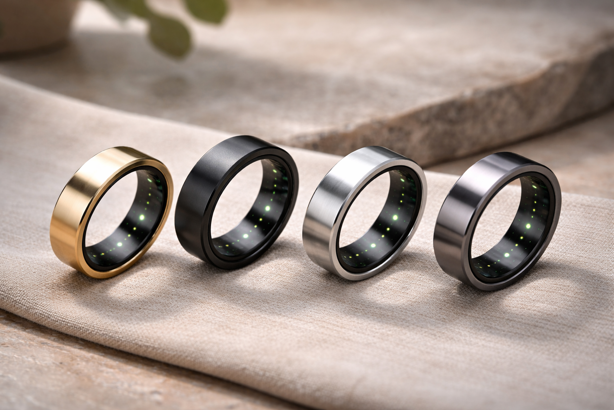
Smart rings use materials that naturally balance durability, weight, signal transparency for wireless connectivity and biocompatibility for continuous skin contact. Titanium is most common, offering excellent strength-to-weight ratio, natural corrosion resistance and hypoallergenic properties. Some premium models use ceramic or tungsten carbide for scratch resistance and distinctive aesthetics.
Water resistance ratings range from 5 ATM to 10 ATM (50-100 meters depth equivalent), sufficient for swimming, showering and most water sports. These ratings measure static pressure resistance, not dynamic water pressure from activities like surfing or water skiing. Scratch resistance varies by material. Titanium scratches more easily than tungsten carbide or ceramic but can be refinished, while ceramic resists scratches better but can crack from sharp impacts. Consider your lifestyle when choosing materials.
Subscription Costs
Many smart ring manufacturers charge monthly or annual subscriptions for full access to health insights, detailed analytics and trend analysis. Basic data collection and syncing remain free, but advanced features like readiness scores, personalized recommendations or long term trend analysis require paid memberships ranging from $6-10 monthly, or $60-100 if paid on an annual basis.
The Oura Ring requires a $5.99/month membership for accessing most features beyond basic data viewing. Without the subscription, you see raw data like sleep duration, heart rate and activity counts, but lose access to Sleep Score, Readiness Score, detailed insights and long term trends that make the data actionable.
App Quality and Ecosystem
The companion smartphone app determines how useful your collected health data actually is. Good apps present data clearly, provide actionable insights and integrate smoothly with other health platforms like Apple Health, Google Fit or third-party fitness apps. Poor apps make data difficult to interpret, crash frequently or isolate your health information in proprietary silos.
Before purchasing, download and explore the companion app. Check recent app store reviews for complaints about bugs, poor updates or connectivity problems. Look for features like data export capabilities, third-party integrations and customization options. Company longevity matters too. Smart rings depend on manufacturer support for firmware updates, app maintenance and cloud services. Smaller startups may discontinue support if the company fails or shifts focus.
Privacy and Data Security
Smart rings collect intimate health data including heart rate patterns, sleep habits, activity levels and body temperature fluctuations. Understanding how manufacturers handle this data matters as much as (if not more than) the ring’s tracking capabilities.
Most smart rings store minimal data locally, instead uploading information to manufacturer cloud servers for processing and long term storage. This allows sophisticated analysis but means your health data exists on third-party systems you don’t control. Review manufacturer privacy policies before purchasing, especially looking for statements about data sharing with third parties, advertising partners or health insurance companies. Some manufacturers explicitly commit to never selling health data or sharing it without consent. Others use vague language, leaving room for monetization of your precious data.

Data encryption is standard for transmission between ring and phone, and phone to cloud servers. However, how data is stored on cloud servers and who can access it varies by company. End-to-end encryption where only you can decrypt your data offers the strongest privacy protection but is less common since it prevents manufacturers from analyzing aggregate data to improve algorithms.
The Accuracy Question
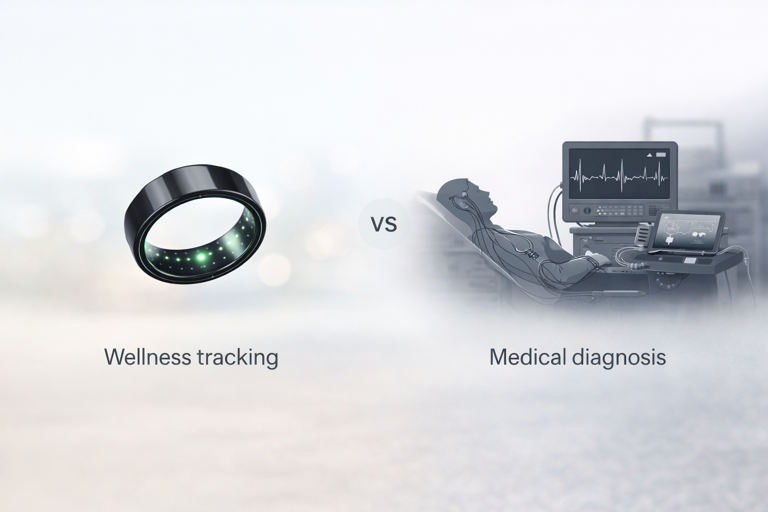
Smart rings are not medical devices. They provide wellness tracking and general health insights, not clinical measurements intended for diagnosing or treating medical conditions. Accuracy varies by metric, manufacturer and individual physiology.
Resting heart rate measurements from quality smart rings fall within 2-5 beats per minute of clinical grade monitors when users are still and properly positioned. HRV measurements show reasonable correlation with medical equipment for overnight tracking, though research comparing Oura Ring to ECG monitors found strong correlation for relative changes, but less precision for absolute millisecond values.
Step counting from finger-worn devices tends to undercount compared to wrist-worn trackers, particularly when hands stay relatively still. But for tracking relative activity levels and identifying trends, this suffices. Body temperature tracking shows good precision for detecting relative changes in your baseline but shouldn’t substitute for thermometer readings when you suspect fever. Rings track skin temperature, which is lower and more variable than core body temperature.
Individual variation affects accuracy significantly. Finger size, skin tone, circulation patterns, ring fit and how you wear the ring all influence sensor performance. Dark skin tones sometimes reduce PPG sensor accuracy due to increased light absorption, though manufacturers have improved algorithms to compensate. A poor ring fit that lets the device shift around degrades all measurements.
Who Benefits from Smart Rings?
Smart rings serve particular use cases better than general purpose wearables. Healthcare workers, chefs, mechanics and others in professions where watches are impractical, uncomfortable or prohibited benefit from continuous health tracking without wrist jewelry. The discreet form factor doesn’t interfere with gloves, get caught on equipment or violate dress codes.
People prioritizing sleep optimization find rings especially valuable since they’re comfortable for overnight wear and work extremely well for sleep tracking. Minimalists who want health insights without constant digital interruption appreciate smart rings’ passive monitoring approach. Athletes focused on recovery metrics and training readiness rather than real-time workout data often prefer rings for HRV trends, resting heart rate changes and sleep quality analysis.

Conversely, smart rings don’t suit people wanting comprehensive fitness tracking with GPS routes, music control, on-screen workout metrics or extensive app ecosystems. If you want a device that replaces your phone for morning runs or gives you real-time pace and heart rate feedback during intervals, a smartwatch still remains the better choice.
Popular Smart Ring Options
The Oura Ring (latest generation) dominates the premium market with comprehensive sleep tracking, detailed HRV analysis and polished app experience, though it requires a $5.99/month subscription for full feature access. Pricing starts around $349-499, depending on finish.
Ultrahuman Ring Air positions itself as a lighter, subscription-free alternative at 2.4-3.6 grams (versus Oura’s 4-6 grams). All features are included without monthly fees, though the app provides less detailed insights. Pricing runs $299-349.
RingConn Smart Ring offers budget friendly entry at around $299 with no subscription requirements and acceptable accuracy for the price point, though the app is less polished than premium options.
Samsung Galaxy Ring integrates deeply with Samsung’s ecosystem and includes no subscription fees, but features are limited when paired with non-Samsung Android phones or iPhones. Pricing starts around $299.
Circular Ring focuses on actionable wellness insights with features similar to Oura but no subscription requirement. The app provides good insights without recurring fees, though the ring itself is slightly bulkier than competitors. Pricing runs approximately $290-350.
For current pricing and detailed comparisons of the best smart rings available, see our comprehensive smart ring buying guide.
Small Ring, Big Picture
Smart rings appeal to a specific kind of user – someone who wants to understand their health better without constantly having to interact with a device. They collect useful data in the background, then step aside, letting patterns emerge over days and weeks rather than minutes.
That approach won’t suit everyone. If you rely on live metrics, maps or on-screen feedback, a smartwatch still makes more sense. But if your priority is sleep quality, recovery and long term trends, a smart ring offers a calmer, more sustainable way to track them.
By staying subtle and unobtrusive, smart rings fit into daily life instead of competing with it. And for many people, that balance is exactly what makes them worth wearing.