Your dog destroys the couch cushions every time you leave for work. Your cat yowls for hours when you’re gone. The guilt follows you through every errand, every meeting, every moment away from home. You’ve tried calming treats, pheromone diffusers and background music playlists. Nothing stops the anxiety that grips your pet the second you reach for your keys.
Smart pet technology won’t cure separation anxiety, but there are some devices that can reduce distress when combined with proper training and environmental management. This guide explains which connected devices actually help anxious pets, which ones waste money and how to build an approach that addresses real behavioral needs rather than just easing your guilt.
The Separation Anxiety Surge Nobody Saw Coming
The numbers tell a story most pet owners already know from lived experience. Reports and survey based analyses suggest dog separation anxiety rose sharply between 2020 and 2022. A 2023 survey conducted by OnePoll revealed that 44% of pet owners worry about their pets when away from home.
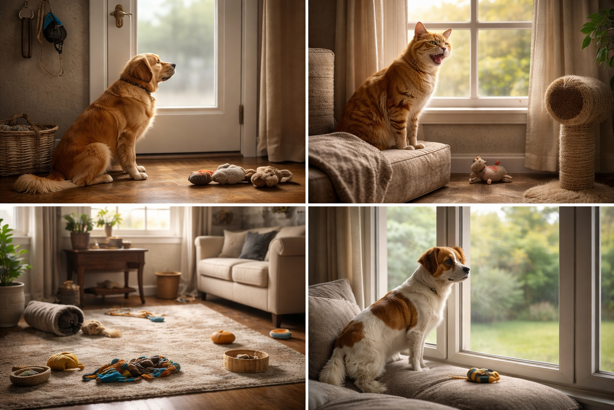
This isn’t just about pandemic puppies adjusting to empty houses for the first time. Millions of American households adopted pets during COVID, creating a generation of animals who’ve never learned that being alone is normal and safe. When those pets finally experienced regular separation, their distress manifested in destroyed furniture, excessive barking, indoor accidents and self-injury from escape attempts.
The pet tech market responded with a flood of products promising anxiety relief. Some deliver genuine help. Many offer false hope wrapped in Wi-Fi connectivity. Understanding the difference requires knowing what drives separation anxiety in the first place.
What Causes Separation Anxiety in Pets
Veterinary behaviorists consistently emphasize that separation anxiety is a behavioral disorder triggered when pets become distressed due to being away from their primary caregivers. It’s not stubbornness, spite or poor training. It’s genuine panic that overwhelms an animal’s ability to self-soothe.
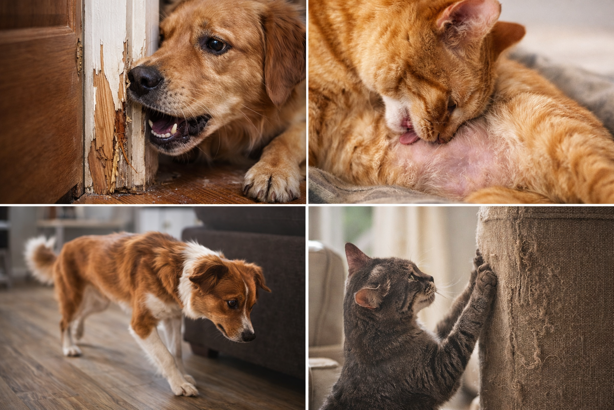
The condition manifests differently across species and individuals. Dogs typically show excessive barking or howling, destructive chewing focused on exit points like doors and windows, indoor urination or defecation despite being house trained, pacing or repetitive movement patterns and escape attempts that can result in broken teeth or torn nails. Cats display excessive vocalization (particularly meowing or yowling), inappropriate bathroom habits outside the litter box, excessive grooming leading to bald patches, loss of appetite when alone and destructive scratching of furniture or walls.
Several factors increase separation anxiety risk. Some studies suggest male dogs show higher rates than females, though findings are mixed across research. Dogs from shelters or those found as strays experience it more frequently than dogs from breeders. Some environments like apartments or homes without other animals may show elevated risk, particularly when combined with inadequate exercise or mental stimulation. Changes in household circumstances like a new family member, different work schedule or recent move can trigger or worsen symptoms.
What Smart Technology Can Do
Smart pet devices serve three legitimate purposes for anxious pets when used correctly. One benefit is remote monitoring so you can verify your pet’s actual state rather than constantly imagining worst case scenarios. They enable remote interaction through voice contact and treat rewards that can interrupt anxiety spirals before they escalate. They also maintain consistent routines through automated feeding and play schedules that reduce uncertainty.
These capabilities address specific aspects of separation anxiety but they don’t cure the underlying condition. A camera lets you see that your dog settled down ten minutes after you left, countering the assumption they’re panicking for hours. Two-way audio allows you to use your voice for reassurance during brief anxiety spikes. Automated feeders maintain meal schedules that offer structure and predictability.
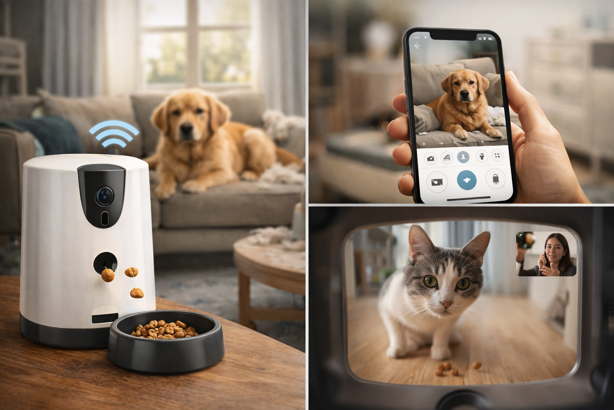
The key limitation is that technology provides management tools, not behavioral modification. An anxious dog needs desensitization training to learn that your departure doesn’t mean abandonment. A camera won’t teach that lesson, but it can support the training process by letting you monitor progress and intervene at appropriate moments.
What Smart Technology Cannot Do
Smart devices cannot replace the fundamental work of teaching pets to tolerate being alone. They won’t address underlying anxiety disorders that require veterinary intervention and can’t substitute for adequate exercise, mental stimulation and environmental enrichment. They don’t compensate for inconsistent routines or chaotic household dynamics that fuel anxiety.
Most importantly, technology cannot provide the one thing anxious pets actually need, which is proof through repeated experience that you always come back. That learning happens through gradual exposure to alone time starting with seconds, then minutes, then longer periods while anxiety remains manageable. No device can accelerate that timeline.
Reality check: If your pet won’t eat when you leave, anxiety has already crossed into panic territory. At that point, smart feeders and toys won’t help much on their own until the underlying anxiety is addressed through proper behavior modification or veterinary intervention.
Pet owners facing serious separation anxiety often turn to technology hoping for a quick fix. The dog destroying furniture needs desensitization training, not a treat dispensing camera. The cat having accidents outside the litter box requires veterinary evaluation for medical issues and behavioral assessment, not automated entertainment toys. Simply put, technology supports these interventions but never replaces them.
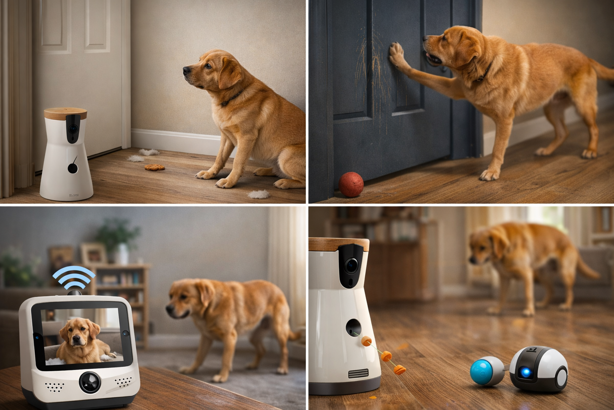
How Severe Is Your Pet’s Anxiety?
Before exploring technology solutions, understanding the severity of your pet’s anxiety will help determine which tools might be useful.
This isn’t a diagnosis, just a quick guide to help choose the right next step.
Mild anxiety typically means your pet whines or paces briefly when you leave but settles fairly quickly, usually within 10-20 minutes. They eat normally when alone and show excitement but not panic when you return. Mild cases respond well to cameras, automated feeders and interactive toys.
Moderate anxiety involves prolonged distress lasting 30+ minutes, some destructive behavior focused on exit areas, occasional indoor accidents despite being house trained (after ruling out medical causes) and refusal to eat high value treats when alone. Moderate cases need technology combined with consistent desensitization training.
Severe anxiety shows as immediate panic upon departure, self-injury from escape attempts, complete refusal of food when alone and sustained distress throughout your absence. Severe cases require professional intervention including veterinary behaviorist consultation and often prescription medication. Technology alone won’t help here.
If your pet’s anxiety crosses into the severe category, skip the smart device shopping and schedule a veterinary behaviorist appointment first. The tools below support mild to moderate cases when combined with proper training.
What to do today:
- Mild anxiety: Start with a smart camera to observe behavior patterns + maintain consistent feeding routines + practice short absences
- Moderate anxiety: Combine monitoring technology with a structured desensitization plan + work with a certified trainer
- Severe anxiety: Contact a veterinary behaviorist first and try to avoid leaving anxious pets to “cry it out”, as this can worsen the condition
Smart Cameras: Your Eyes When You’re Away
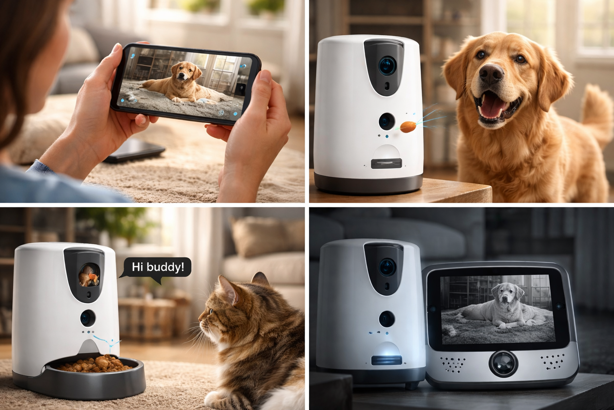
Smart pet cameras serve two critical functions for separation anxiety. They let you observe your pet’s behavior while also enabling real-time interaction through two-way audio and treat dispensing that can interrupt anxiety before it becomes worse.
The observation component matters more than most people realize. Many pet owners assume their dog or cat panics constantly during absences when the reality can be much less severe. A camera may reveal that your dog whines for five minutes after you leave, then settles on the couch for a nap. That knowledge reduces your anxiety, which in turn affects how you behave during departures and returns. Calmer owners create calmer pets.
Two-way audio allows pets to be reassured by the sound of your voice during brief anxiety spikes. Your dog starts pacing and whining. You speak through the camera in your normal voice. The familiar sound interrupts the anxiety spiral. This works for short duration anxiety but fails if your pet experiences sustained panic. Hearing your voice without your presence can worsen anxiety in severely affected animals.
Treat dispensing cameras like the Furbo 360° offer positive reinforcement opportunities. Your dog exhibits calm behavior like lying quietly. You dispense a treat remotely. Over time, this rewards the behaviors you want to encourage. The limitation is that treat rewards work best for mild anxiety. Severely anxious dogs often refuse food altogether when distressed.
Camera selection for anxious pets should prioritize clear audio quality for voice reassurance, reliable connectivity to prevent missed interactions, wide field of view or pan-tilt capability to track movement throughout rooms, and night vision if your pet’s anxiety manifests in dark spaces. Treat dispensing is optional for mild cases, less useful for severe anxiety where food motivation disappears.
Automated Feeders: The Power of Predictable Routines
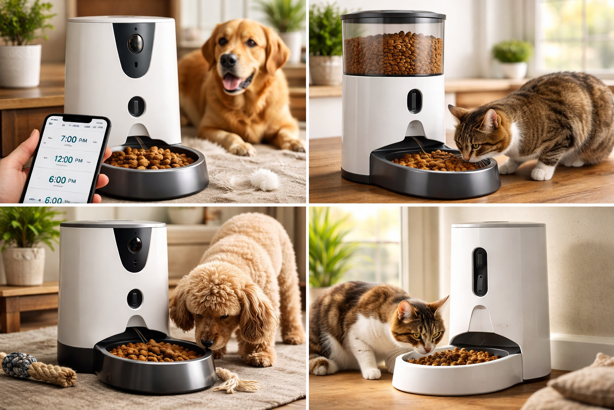
Smart feeders address separation anxiety indirectly through routine consistency rather than direct anxiety reduction. Anxious pets benefit enormously from predictable schedules. Meals arriving at exact times every day provide structure and certainty that counters the uncertainty contributing to anxiety.
Automated feeding helps most when your work schedule varies. A dog fed at 6 PM some days and 8 PM others never knows when to expect dinner. That uncertainty compounds separation anxiety. A smart feeder delivering meals at precisely 6 PM regardless of your location eliminates one variable in your pet’s day.
Multiple small meals throughout the day can reduce anxiety for some pets by providing frequent positive events to anticipate. Instead of one large dinner, four smaller portions dispensed at intervals give your dog or cat something to look forward to every few hours. This works particularly well for food motivated animals.
The limitation is that a feeder dispensing meals to an animal too stressed to eat provides no benefit. Start by determining whether your pet eats normally when you’re gone before investing in feeding automation.
Feeder features that benefit anxious pets include reliable dispensing mechanisms that won’t jam and miss scheduled meals, backup power to maintain feeding during outages and quiet operation that won’t startle nervous animals. Camera integration adds value by letting you verify your pet actually ate.
Interactive Toys and Treat Dispensers
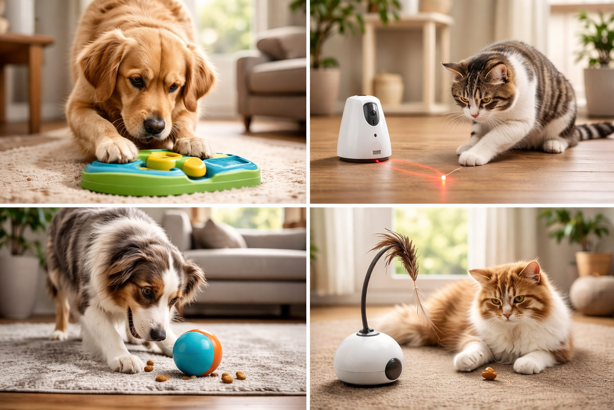
Interactive devices attempt to reduce anxiety through distraction and mental engagement. Automated laser toys for cats, puzzle feeders requiring problem solving for food access and motion activated toys responding to your pet’s movement all aim to redirect anxious energy into productive, playful activity.
The effectiveness varies considerably based on anxiety severity. Mild anxiety responds well to distraction. A slightly anxious cat might engage with a laser toy, burning energy that would otherwise fuel pacing or vocalization. A moderately anxious dog might work at a puzzle feeder, redirecting destructive chewing toward appropriate objects.
Severe anxiety overwhelms distraction. A truly panicked animal ignores toys entirely, fixated instead on escape or reuniting with their owner. Interactive devices become expensive clutter rather than helpful tools in these cases.
Smart interactive toys work best when introduced during calm periods, not crisis moments. Your dog learns to engage with the puzzle feeder while you’re home. That positive association carries over when you leave. Trying to introduce new toys during active anxiety episodes usually fails.
What Doesn’t Work Despite Marketing Claims
The pet anxiety market is overflowing with products making bold claims backed by minimal evidence. Understanding what doesn’t work saves money and prevents delayed treatment of genuine behavioral problems.
Calming collars and diffusers releasing synthetic pheromones show mixed research results. Some studies suggest modest benefits for mild anxiety when combined with behavior modification, but evidence does not support them as standalone treatments. Even positive studies only show small improvements, not dramatic anxiety reduction.
Anxiety wraps and pressure vests claim to reduce stress through gentle compression similar to swaddling anxious infants. Research on their effectiveness for separation anxiety specifically remains limited. Some dogs show reduced anxiety during thunderstorms or fireworks when wearing these products. That doesn’t necessarily translate to separation anxiety relief where the trigger is your absence rather than environmental stimuli.
Background music and television left playing for entertainment may reduce anxiety but this is usually minimal. Most pets don’t engage with TV like humans do, though background sound may help mask outside triggers.
Over-the-counter calming supplements containing ingredients like chamomile, valerian root or L-theanine rarely produce a significant reduction in anxiety. Severe separation anxiety often requires prescription anti-anxiety medication prescribed by a veterinarian. Mild supplements might take the edge off minor nervousness but they won’t address clinical anxiety disorders.
Smart devices monitoring heart rate or activity levels can identify anxiety patterns but they don’t reduce anxiety themselves. Knowing your dog’s heart rate spikes when you leave gives you useful data, but this doesn’t offer nearly the same benefits as treatment would.
Building a Complete Approach That Works
Effective separation anxiety management requires multiple components working together. Smart technology fits into this larger framework as support tools, not primary solutions.
Gradually increase separation times while keeping anxiety below panic levels. You leave for thirty seconds, return before your pet becomes distressed, then repeat with slightly longer absences. Progress happens over weeks or months, not days.
Smart cameras support this training by letting you monitor your pet’s anxiety level during practice sessions. You leave the house and watch through the camera. Your dog starts showing distress signals. You return before panic sets in. Over time, you identify the duration your pet can handle comfortably and build from there.
Adequate exercise before departures helps. A tired dog experiences less anxiety than a bored, energetic one. Mental stimulation through training, puzzle toys and novel experiences builds confidence that generalizes to alone time.
Anxious pets need predictable patterns. Meals at the same times, walks following the same routes, departures using calm goodbye rituals rather than emotional farewells. Smart feeders with automated schedules support this consistency when your human schedule varies.
Create a safe, comfortable space your pet associates with relaxation. This might be a crate for dogs who find enclosed spaces calming, a room with familiar scents and comfortable bedding, or a window perch for cats who enjoy watching what’s going on outdoors.
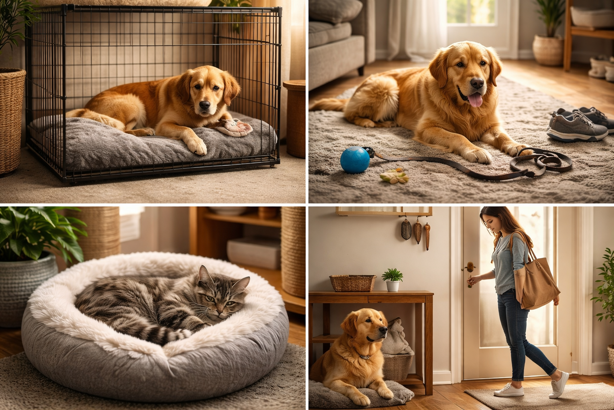
Consider your departure and arrival behavior. Owner stress can unintentionally reinforce anxiety patterns in some pets. Long, emotional goodbyes tell your pet that leaving is a big deal worth worrying about. Similarly, excited greetings when you return reinforce that your absence was abnormal. Calm, matter-of-fact departures and returns teach that your comings and goings are routine, not events.
For moderate to severe cases, consult a veterinary behaviorist rather than relying on technology alone.
When to Seek Professional Help
Some separation anxiety cases need professional intervention beyond what smart technology and home training can address. Recognize these warning signs.
Self-injury from escape attempts including broken teeth, torn nails or injuries from jumping through windows demands immediate veterinary attention. This level of panic indicates severe anxiety that won’t respond to management tools alone.
Anxiety that doesn’t improve after several weeks of consistent training suggests the need for professional guidance. Desensitization should show gradual progress. If your pet tolerates no more alone time after a month of training than at the start, something’s wrong with the approach or the anxiety is too severe for basic protocols.
Destructive behavior causing significant property damage or safety risks warrants professional help. A dog destroying a couch cushion differs from one chewing through drywall to reach exit doors. Severe destruction often indicates panic level anxiety requiring medication alongside behavior modification.
Anxiety affecting your pet’s quality of life through appetite loss, weight changes or depression symptoms needs veterinary evaluation.
Board certified veterinary behaviorists (Diplomates of the American College of Veterinary Behaviorists) have specialized training in anxiety disorders. Certified Applied Animal Behaviorists (CAABs) also offer expert guidance. These professionals design treatment plans including medication when appropriate, behavior modification protocols and environmental management.
Frequently Asked Questions
Can smart cameras make separation anxiety worse?
Yes, in some cases. Pets with severe anxiety may become more distressed hearing their owner’s voice without physical presence. Additionally, anxious owners constantly checking cameras and intervening can prevent pets from learning to self-soothe. Use cameras for observation and strategic intervention, not constant interaction.
How long does it take for separation anxiety to improve?
Mild cases might show improvement in a few weeks with consistent training. Moderate to severe cases often require months of gradual desensitization. Severe anxiety may need 6-12 months of professional treatment including medication and behavior modification. Technology supports this timeline but doesn’t accelerate it.
Will getting another pet help my anxious dog or cat?
This rarely helps and often creates additional problems. Separation anxiety stems from attachment to specific humans, not loneliness for other animals. A second pet won’t reduce anxiety and may develop anxiety themselves by learning from the first pet’s behavior. Focus on addressing the existing pet’s anxiety before considering additions to the household.
Should I leave treats when I go?
Treats work for mild anxiety where food motivation remains intact. Severely anxious pets often ignore food entirely when distressed. Test this by leaving a high value treat and checking whether your pet ate it. If treats consistently go uneaten, they’re not helping. Smart feeders can time treat delivery for after your pet calms down rather than during active anxiety.
Do puppies and kittens outgrow separation anxiety?
Some young animals with mild separation distress improve as they mature and gain confidence. However, true separation anxiety normally worsens without intervention rather than resolving itself spontaneously. Early training to prevent anxiety development is far easier than treating established cases. Don’t wait for your pet to outgrow it.
Technology Supports, Training Heals
Smart pet technology offers genuinely helpful tools for dealing with separation anxiety when used correctly as part of comprehensive treatment. Cameras deliver observation and interaction capabilities that support desensitization training. Automated feeders maintain the consistent routines anxious pets need. Interactive toys offer distraction for mild cases.
But technology never replaces the fundamental work of teaching your pet that your departures are temporary and safe. That learning happens through patient, gradual exposure starting at durations your pet can handle and building slowly over weeks or months. Professional guidance is crucial for severe cases that don’t respond to home training alone.
Choose tools that fit your pet’s anxiety pattern and severity level. A camera with two-way audio helps mild cases where brief reassurance prevents escalation. An automated feeder supports moderate anxiety by maintaining regular meal schedules.
The market will continue to be flooded with anxiety focused pet products making bold claims. Evaluate them against the fundamental question: does this device address a genuine behavioral need or does it just ease my guilt about leaving? Guilt relief has its place, but it doesn’t help your anxious pet learn the skills they need.
Start with one camera and one feeder. See what reduces anxiety indicators in your pet. Build from there based on results, not marketing promises. And remember that the best smart technology is the kind that eventually makes itself unnecessary because your pet learned that being alone for now doesn’t mean being abandoned forever.
For more ways to improve pet care through connected technology, explore our complete guide to smart pet tech devices and how they integrate with your home.