If you’re tired of scooping litter twice a day but skeptical about spending $300+ on a robot that promises to do it for you, this guide breaks down what smart litter boxes actually deliver versus what the marketing claims suggest. Do automatic litter boxes work? Below you’ll find an honest assessment of how these devices function, what they cost long term, why some cats reject them and whether the convenience justifies the investment in your situation.
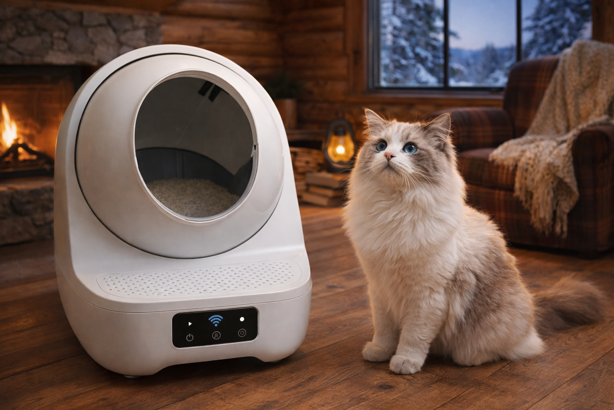
How Automatic Litter Boxes Work
Automatic litter boxes detect when your cat uses the box and automatically separate waste from clean litter. Sensors trigger a cleaning cycle that rakes, sifts, rotates or flushes waste into a sealed compartment.
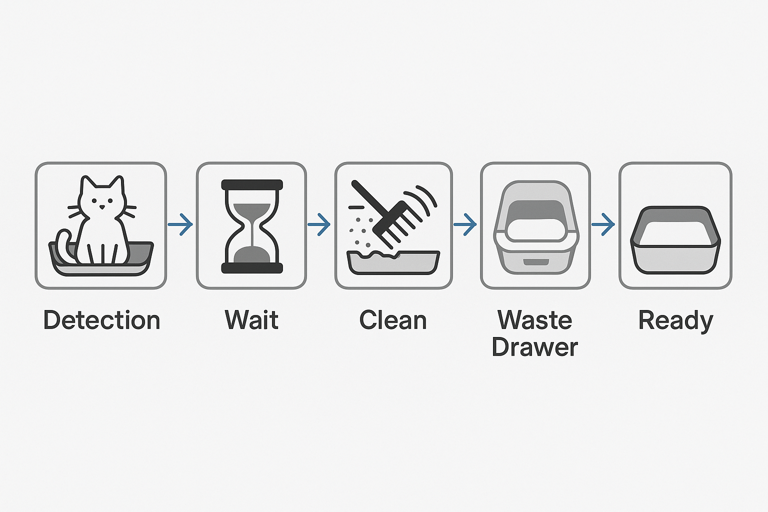
The process follows five steps:
- Detection through weight sensors or motion detectors
- A 3-30 minute wait period for clumping
- The cleaning cycle activation
- Waste moving into sealed storage
- Reset to ready state
This happens without any action from you, though you still need to empty the waste compartment and refill litter periodically.
Weight sensors are most common, triggering when your cat enters and exits. Infrared motion sensors detect movement instead. Budget models use fixed timers that can waste litter and trigger while a cat is still nearby, since they don’t detect entry or exit.
The Real Pros and Cons
What Actually Works Well
- Reduces Daily Scooping: Empty a waste drawer every 3-7 days instead of scooping twice daily. Single cat households can go 10-14 days between empties.
- Improves Odor Control: Sealed waste compartments with carbon filters contain smell better than open litter boxes. Your home will likely smell better, especially in smaller spaces.
- Provides Usage Data: Connected models track bathroom frequency and alert you to changes that may indicate urinary discomfort, constipation or other issues. This is useful information to share with your vet before symptoms become obvious.
- Maintains Cleaner Litter: Automatic cleaning after each use means your cat always encounters fresh litter, which may reduce litter box avoidance in finicky cats.
What Doesn’t Work As Advertised
- Not Maintenance Free: You still empty waste drawers, refill litter, clean sensors, replace filters and deep clean the unit. Maintenance intervals are longer but tasks can be messier and more time consuming.
- Litter Costs Often Increase: Many boxes require specific litter types or proprietary formulas costing significantly more than standard clumping clay. Some mechanisms waste litter by removing clean granules with clumps. Monthly expenses may double or triple.
- Noise Can Be Noticeable: Cleaning cycles produce mechanical sounds from soft whirring to loud grinding, which can be disruptive at night or in small spaces.
- Requires Reliable Power: Power outages mean no automatic cleaning. Battery backup on some models typically only maintains basic functions, not full cleaning cycles.
- Takes Up More Space: Automatic boxes are significantly larger than standard boxes due to mechanisms, waste storage and safety clearances. Tight spaces may not accommodate them comfortably.
Cost Breakdown: What You’ll Actually Spend
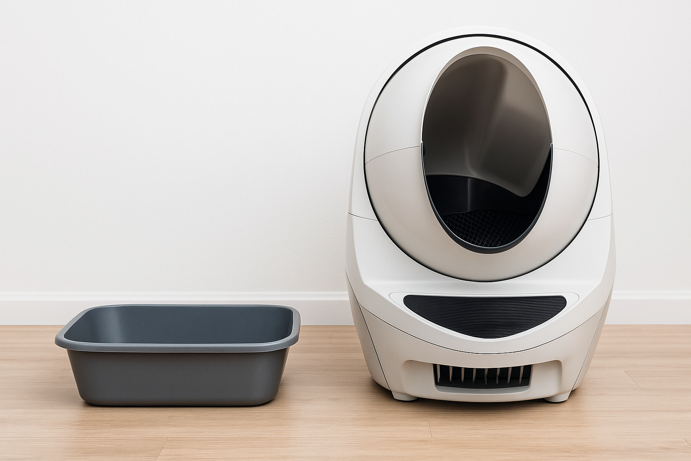
Entry level smart litter boxes start around $150-250. Mid-range models with Wi-Fi run $300-450. Premium systems cost $500-700. Budget another $50-100 for initial setup supplies.
Ongoing Expenses
- Subscription Fees: Some Wi-Fi models require $5-15 monthly subscriptions ($50-150 annually) for full app functionality and health tracking. Basic cleaning usually continues without subscriptions, but you lose remote monitoring and usage alerts.
- Litter Costs: This is where expenses escalate. Clumping clay runs $15-30 monthly, crystal/silica $20-40 and proprietary litter $25-50. Some mechanisms waste 20-40% of litter during cycles. Compare this to $10-20 monthly for traditional boxes.
- Replacement Parts: Waste liners ($10-25 monthly), carbon filters ($5-15 each, replaced monthly or quarterly), rake assemblies ($30-80 when worn) and sensors ($40-150 if malfunctioning outside warranty).
Total First Year Cost
Conservative estimate for mid-range automatic box: hardware ($400), initial supplies ($75), litter ($300), subscription ($100), waste bags and filters ($180) = $1,055 first year. Subsequent years cost $600-700.
Traditional litter box first year: box ($15-30), litter ($150), supplies ($20) = $200 total.
Costs vary widely by model and litter preference. Heavy usage or proprietary litter requirements can increase expenses considerably.
The convenience premium is $800+ annually. Whether it’s worth it depends entirely on how much you value the time and hassle saved.
Will Your Cat Actually Use It?
Some cats transition immediately. Others may refuse entirely, even with a careful introduction. Understanding what influences acceptance helps set realistic expectations.
Improving Acceptance
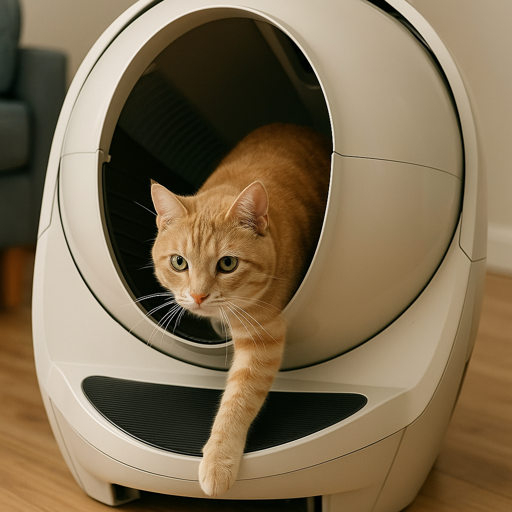
- Gradual Introduction: Place the automatic box next to the familiar one for several days or weeks. Keep both available during transition. Only remove the old box once your cat consistently uses the new one.
- Familiar Litter: Use the same litter brand your cat prefers if possible. Once accepted, gradually transition to required litter types, if necessary.
- Proper Size: Large cats (over 12 pounds) may feel cramped. Check interior dimensions against your cat’s size. Cats need room to turn around comfortably.
- Initial Unplugged Period: Run the box unplugged initially so it functions like a regular box without mechanical sounds. Once comfortable, activate automatic cleaning.
Why Cats Reject Automatic Boxes
- Noise Sensitivity: Mechanical sounds quiet to humans can be alarming to cats. If your cat startles at vacuums or blenders, an automatic box might trigger similar anxiety.
- Motion Fear: Cats instinctively avoid moving objects in their space. If the box starts moving while your cat is nearby, they may decide the device is unsafe.
- Entry Design: High thresholds, narrow openings or enclosed designs differ significantly from open boxes. Senior cats with arthritis struggle with high entries. Anxious cats avoid enclosed spaces.
- Litter Changes: Required litter types might have different textures or depths than your cat prefers. Cats with strong preferences may refuse based solely on how litter feels.
Multi-Cat Households
Smart litter boxes work differently in multi-cat homes. Some cats may guard the automatic box, especially if they already exhibit territorial behavior, preventing other cats from approaching. Most manufacturers rate boxes for 2-4 cats based on waste capacity, but this doesn’t account for veterinary recommendations of one box per cat plus one extra. A box handling four cats may require emptying every 2-3 days, reducing convenience.
Noise Levels and Placement
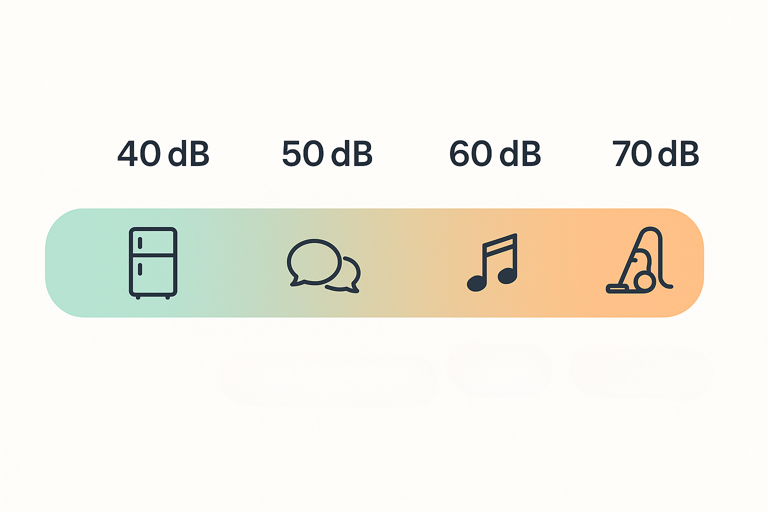
Cleaning cycles typically range 40-70 decibels. Sifting mechanisms tend to be quieter (40-50 dB, like quiet conversation). Rotating globes fall mid-range (50-60 dB, like background music). Flushing systems hit higher end (60-70 dB, like vacuum cleaners). Cycle duration matters as much as volume, since some run for 2 minutes while others run 5-8 minutes.
Smart Placement
- Avoid Bedrooms: Cleaning cycles at 2 AM wake light sleepers.
- Consider Ventilation: Place in areas with air circulation like bathrooms, laundry rooms or mudrooms rather than enclosed closets.
- Maintain Clearance: Moving mechanisms need space. Don’t squeeze into tight spaces where walls interfere with operation.
- Electrical Access: Need a nearby outlet for dedicated use. GFI outlets recommended for water based models.
- Floor Stability: Hard floors provide most stable surface. Very plush carpet may interfere with weight sensors.
For odor control, replace carbon filters monthly, empty waste drawers before full, use ventilated areas and consider air purifiers in multi-cat households. Avoid masking problems with air fresheners near the box.
The Maintenance Reality
Automatic boxes reduce maintenance frequency but not complexity.
Weekly Tasks
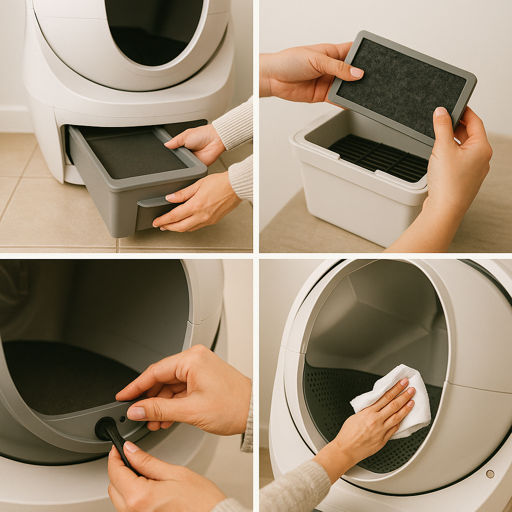
Empty waste drawer (single cat weekly, multi-cat twice weekly), check and refill litter levels, wipe surfaces to prevent dust buildup. Expect 5-10 minutes including waste disposal.
Monthly Tasks
Replace carbon filters ($5-15 each), clean sensors with soft dry cloth to prevent false triggers, inspect moving parts for litter buildup or obstructions.
Quarterly Deep Cleaning
Every 2-3 months, completely disassemble and clean. Empty all litter, remove assemblies, wash interior surfaces, thoroughly clean waste drawer, wipe motors (avoid wetting electronics), reassemble and test. Plan 45-60 minutes.
Mechanical Failures
Common issues include sensor malfunctions, motor failures, gear stripping, waste drawer sensor problems and control board failures. Warranties typically cover 1 year. Outside warranty, repairs could cost $100-300. Sometimes replacement makes more sense than repair. If you’re troubleshooting weekly or spending more time than traditional scooping, convenience has evaporated. If you want to compare specific models with better track records for reliability and lower maintenance needs, why not check our comprehensive smart litter box buyer’s guide?
Quick Self Assessment
☐ Do I travel frequently or work irregular hours?
☐ Do I have mobility issues making daily scooping painful?
☐ Can I comfortably afford $600-1000 annually?
☐ Do I have 1-2 cats (not 3+)?
☐ Is my cat adaptable and not overly anxious?
☐ Do I have adequate space for a larger device?
☐ Does daily scooping genuinely burden me?
Scoring: 5-7 yes = strong candidate, 3-4 yes = possible fit, 0-2 yes = probably skip automatic boxes.
When Smart Litter Boxes Make Sense (And Are Worth It)
You’re an Ideal Candidate If
✅ You Travel Frequently: Pet sitters only need to check waste levels every few days instead of daily scooping, reducing visits and costs.
✅ You Have Mobility Issues: Less frequent bending, waste drawer at more accessible height than floor scooping.
✅ You Work Long Irregular Hours: Ensures clean litter regardless of unpredictable schedules.
✅ You Have One Well Adjusted Cat: Single cat households get maximum value with weekly or less emptying.
✅ You Value Time Over Money: If you can comfortably afford $600-1000 annually and your time is genuinely constrained, automatic boxes deliver meaningful value.
You Should Probably Skip If
❌ Tight Budget: If $400-700 upfront or $50-70 monthly feels like too much, stick with traditional boxes.
❌ Multiple Cats with Behavioral Issues: Existing litter box avoidance or anxiety rarely improves with automatic boxes.
❌ Very Senior or Sick Cat: Cats 12+ years or with medical conditions struggle to adapt. Stress of new routines can worsen existing medical conditions, so vets often recommend sticking with familiar routines for senior or medically fragile cats.
❌ You Rent and Move Frequently: Bulky, heavy (20-30 pounds) and awkward to transport. Moving hassle may exceed scooping time saved.
❌ You Don’t Mind Scooping: If 10-15 minutes daily isn’t burdensome, no reason to fix what’s not broken.
❌ Very Limited Space: Studio apartments or tiny bathrooms may not accommodate these larger devices.
Technology Types Explained
| Mechanism | Cost | Noise (dB) | Maintenance | Best For |
|---|---|---|---|---|
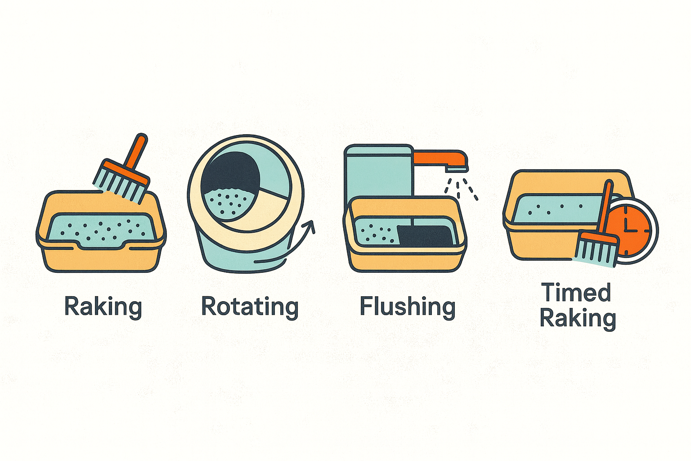
| Raking | $150-350 | Low (40-50 dB) | Medium | Open top preference |
| Rotating Globe | $300-700 | Medium (50-60 dB) | Low | Odor control, enclosed OK |
| Flushing | $400-800 | High (60-70 dB) | Very Low | Never buying litter again |
| Timer Based | $100-200 | Low-Medium | High | Budget conscious |
Raking Systems
Motorized rake pulls through litter, dragging clumps into sealed compartment. Generally quieter, works with standard litter, simpler mechanism.
Disadvantages: rake can jam on large clumps, doesn’t self-level litter, smaller waste capacity, visible movement startles nervous cats.
Rotating Globe Systems
Globe rotates to sift clean litter from clumps. Excellent waste separation, self-levels litter, larger capacity, enclosed design contains odors.
Disadvantages: noisier operation, enclosed design intimidates some cats, smaller entry opening, more complex mechanism.
Flushing Systems
Connected to water and drainage, washes waste away using washable granules instead of litter. No waste disposal or litter refilling needed, lowest long term costs, eliminates tracking.
Disadvantages: most expensive upfront, requires plumbing hook-up, installation complexity, unusable during outages, granules feel different causing acceptance issues (Note: Many experts advise against flushing cat waste due to parasite and plumbing risks).
Timer Based Systems
Budget models raking on fixed schedules rather than responding to use. Lower cost, no sensors to malfunction, predictable operation.
Disadvantages: wastes clean litter, can activate while a cat is still nearby because they don’t detect entry or exit, and can’t adapt to actual usage patterns.
The Final Scoop
If after honest assessment, automatic litter boxes align with your needs, budget and cat’s personality, they can genuinely improve quality of life for both you and your pet. If any of those factors don’t align, there’s absolutely nothing wrong with traditional litter boxes that have worked perfectly well for decades.
At the end of the day, the “best” litter box is simply the one your cat uses reliably and you can maintain without stress. Sometimes that’s a $700 robot. Sometimes it’s a $20 plastic tub. There’s no wrong choice, only the choice that keeps both you and your cat happier.
Ready to see which automatic models actually live up to the promise? Explore our comprehensive smart litter box buyer’s guide to compare today’s top options and find the right fit for your home.