Winter is here, and while most of us have embraced smart thermostats and connected lighting, there’s one cozy corner of home automation that’s just starting to heat up – smart heated blankets.
Imagine slipping into a perfectly warm bed without waiting, or avoiding the need to heat your entire home just to stay comfortable at night. If you’ve ever wished you could pre-heat your bed from the comfort of your couch (or better yet, on your commute home), you’re not alone. The combination of IoT technology and heated blankets has created a surprisingly practical, energy efficient addition to smart homes.
This guide covers everything you need to know about smart heated blankets, from how they work to whether they’re actually worth the investment.
Smart heated blankets are ideal if you live in a colder climate, share a bed with different temperature preferences, or want to lower your thermostat overnight without sacrificing comfort. They’re also perfect for anyone who wants the convenience of pre-heating their bed before arrival home or creating automated heating schedules. Because they use far less energy than heating an entire room, they often provide a lot of comfort for minimal operating cost.
What Makes a Heated Blanket “Smart”?
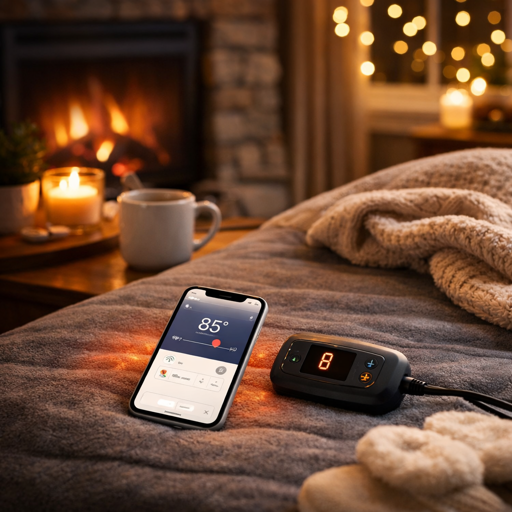
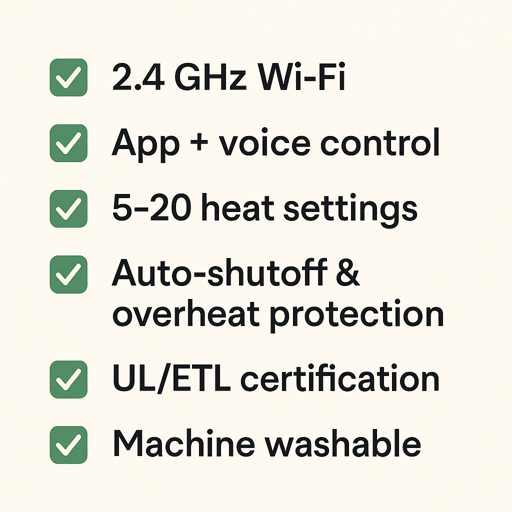
Traditional heated blankets feature simple dial controls and basic safety timers. Smart heated blankets add connectivity and intelligence, usually through built-in Wi-Fi (usually 2.4GHz) or Bluetooth, smartphone apps for iOS and Android, and voice assistant integration with Alexa, Google Assistant or Apple HomeKit.
The key capabilities include scheduling based on your routine, remote access from anywhere with Internet (on Wi-Fi models), and multi-zone heating that lets each side of the bed maintain different temperatures. Some models offer 5-20 heat levels for precise control.
The crucial difference from using a smart plug with a traditional blanket is granular remote heat level control. While a smart plug only offers on/off functionality, native smart blankets let you adjust heat levels remotely, create detailed schedules and integrate seamlessly with other smart home devices.
How Do Smart Heated Blankets Work?
Smart heated blankets use thin, flexible heating wires embedded throughout the fabric. Modern models feature ultra-thin wires (sometimes called “Invisiwire”) that are hard to feel through the fabric for most sleepers. The heating element typically draws 75-150 watts – far more efficient than space heaters or running central heating all night. A 100 watt blanket running 8 hours uses about 0.8 kWh, costing roughly 14-18 cents based on average U.S. electricity rates.
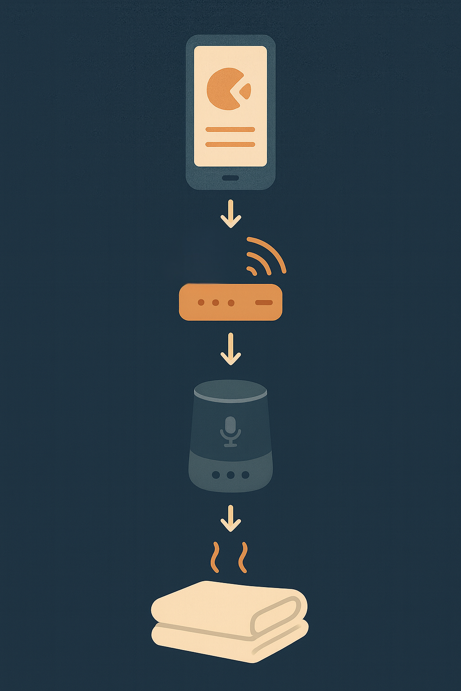
The smart functionality comes from a control module connecting to your home Wi-Fi, communicating with cloud servers to enable remote access, voice commands, smart home integration and firmware updates. Many use protocols like Tuya or proprietary platforms. Advanced users can sometimes achieve local control through platforms like Home Assistant.
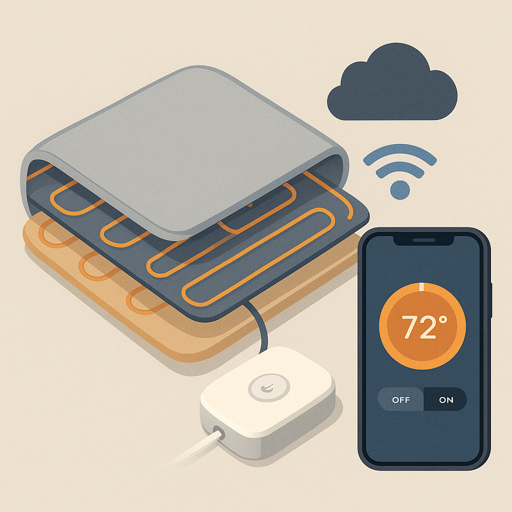
Safety features include auto-shutoff timers (1-10 hours), overheat protection, certified testing (UL 964/ETL) and app alerts on some models. Some brands also market “low EMF” designs intended to minimize electromagnetic field exposure.
Smart Heated Blankets vs. Smart Plugs: Which Approach is Better?
The most common question from smart home enthusiasts: “Can’t I just use a smart plug with a regular heated blanket?”
Sometimes, but it’s not ideal.
The Smart Plug Approach
Smart plugs cost $10-25 versus $100+ for smart blankets and work with any heated blanket that has a mechanical switch. They’re simple to set up and integrate easily into existing systems.
However, you cannot adjust heat levels remotely and many modern blankets have digital controls requiring manual button presses after power loss. If you’ve ever turned a blanket on with a smart plug and found it didn’t resume heating, that’s why. The blanket needs you to physically press buttons to reactivate after losing power.
You’re also limited to on/off control with no temperature profiles or gradual heating patterns.
The Native Smart Blanket Approach
Native smart blankets provide full temperature control from your phone or voice, detailed scheduling with different temperature levels throughout the night and 5-20 heat settings versus simple on/off. They include safety features designed for remote operation, dual zone control on larger sizes and energy monitoring through apps or third-party platforms on some models.
The downsides: 2-4x the price of traditional blankets, dependence on Wi-Fi and manufacturer cloud services, potential connectivity issues and more limited model selection.
Our Recommendation
If you’re invested in smart home ecosystems and want seamless integration with room-by-room heating strategies, native smart heated blankets offer the best experience. The ability to set different temperatures throughout the night and pre-heat before leaving work is genuinely useful.
For basic automation of an existing quality blanket with a mechanical toggle switch, a smart plug may suffice. Advanced users can also use smart plugs with Home Assistant for complex automations, though this requires technical expertise.
Features to Look for in a Smart Heated Blanket
Not all smart heated blankets are created equal. Here are the main features to consider.
Connectivity & Control
- Wi-Fi standard: Ensure 2.4GHz support, as some routers with separate networks can cause setup issues
- Smart home integration: Most support only Alexa and Google Assistant, however HomeKit and Matter protocol support remains rare
- App quality: Check recent app store reviews. Connectivity problems are common with lesser known brands
- Offline functionality: Verify manual control availability if Wi-Fi fails
Heating Performance
- Heat settings: 5-20 levels depending on model. More settings provide finer control
- Dual zone control: Essential for couples with different temperature preferences
- Pre-heat capability: Warm the bed before you’re ready to sleep
- Heat distribution: Look for reviews mentioning consistent warmth without cold spots
Safety & Certifications
- Safety certification: Look for UL 964 (the standard for electric heating pads and blankets), ETL or equivalent testing marks
- Auto-shutoff timer: Programmable shutdown (1-10 hours standard)
- Overheat protection: Multiple temperature sensors throughout
- Warranty: 3-5 years is standard for quality brands
Physical Quality
- Wire detectability: Quality blankets minimize feeling heating wires through fabric
- Fabric options: Microplush, fleece or sherpa are common
- Washability: Should be machine washable after removing controllers
- Cord length: 8-10 feet provides bedroom placement flexibility
Energy Efficiency: Are Smart Heated Blankets Worth It?
One of the most compelling arguments for smart heated blankets is energy savings, though results depend on your heating situation and usage patterns.
The Numbers
A typical smart heated blanket uses 75-150 watts. Running it 8 hours nightly at 100 watts consumes 0.8 kWh per night (24 kWh monthly). Compare this to a 1,500 watt space heater using about 12 kWh over 8 hours. The heated blanket is far more efficient because you’re warming yourself, not the entire room.
At $0.17 per kWh (average U.S. rate), that 24 kWh monthly costs about $4.08. If using a heated blanket lets you lower your thermostat even 2-3 degrees overnight, savings accumulate quickly.
The Energy Saving Strategy
Smart heated blankets work best as part of zone heating. Lower your whole home temperature by 2-4 degrees while sleeping, use scheduling to heat only 30 minutes before bedtime and during sleep hours, and leverage dual zone efficiency so each person controls their temperature without overheating shared spaces. Some users integrate with presence detection to avoid heating empty beds.
In colder climates or homes using electric resistance, oil or propane heating, some households report annual savings of $150-400 when combining heated blankets with lowered thermostat settings. Actual savings vary significantly based on current heating costs, climate, insulation quality, system efficiency and how much you can realistically lower the thermostat. Smart features specifically contribute by ensuring the blanket runs only when needed at optimal temperatures, rather than on high all night.
Integration with Smart Home Platforms
Smart heated blankets fit naturally into broader home automation systems.
Amazon Alexa
Most Wi-Fi heated blankets support Alexa through dedicated skills. Basic commands include “Alexa, turn on the heated blanket”, “Alexa, set the heated blanket to level 5” and “Alexa, turn off the bedroom blanket in 2 hours”.
You can create routines combining multiple actions. A “Goodnight” routine might lock doors, turn off lights and start the heated blanket on low, while a “Wake up” routine turns off the blanket, starts coffee and reads weather.
Google Assistant
Similar functionality with natural commands like “Hey Google, pre-heat my bed”, “Hey Google, set the heated blanket to level 5” and “Hey Google, warm up the bed in 30 minutes”.
Apple HomeKit and Home Assistant
Very few heated blankets have native HomeKit support, though some users bridge them using Homebridge with technical knowledge.
For advanced users, Home Assistant offers maximum flexibility. Many Tuya based blankets integrate using Tuya or LocalTuya integrations, enabling complex automations with multiple sensors, energy monitoring, local control without cloud dependency, weather based adjustments and presence detection to avoid heating empty rooms.
With IFTTT or similar services (when supported by the brand and app), you can build automations like turning on when temperature drops below 60°F, pre-heating when you leave work based on phone location, adjusting based on weather forecast or sending notifications if the blanket runs more than 10 hours.
Safety Considerations for IoT Heated Blankets
Modern smart heated blankets are safe when used properly, but IoT connectivity requires attention to both physical safety and cybersecurity.
While modern smart heated blankets include numerous safety features, connecting heating elements to the Internet introduces certain considerations.
Physical Safety
Never bunch or fold a heated blanket while powered on. This creates dangerous hot spots even with smart monitoring. Inspect regularly for frayed cords, damaged fabric or exposed wires, replacing immediately if damage appears. Follow washing instructions carefully, always removing controllers before washing and ensuring complete drying before reconnection.
Always enable timer functions for extra protection beyond automatic safety shutoffs and never use in areas where the blanket could get wet.
Cybersecurity and Cloud Dependency
Use strong Wi-Fi passwords to prevent unauthorized network access through IoT devices. Enable two-factor authentication when available, keep firmware updated for security patches, review app permissions to ensure only necessary access and consider network segmentation for advanced users.
Most smart heated blankets rely on manufacturer cloud services. Important questions here are:
- What happens if the company discontinues the product line?
- Can you use basic functions without Internet?
- Is there manual controller backup? How does the device handle Wi-Fi outages?
Some IoT manufacturers have discontinued cloud services for older products, effectively “orphaning” purchased devices. Research brand track records and long term support commitment. Before relying on automations, test that manual controllers fully operate heat levels and timers during Wi-Fi outages. Quality brands design products to fall back to manual control when cloud services are unavailable.
When Cozy Meets Connected
Smart heated blankets bridge comfort and technology in genuinely useful ways. While not essential for everyone, the combination of energy efficiency, convenience and smart home integration makes them worth considering for connected home enthusiasts.
The key is choosing a model fitting your lifestyle, whether you want full smart home orchestration, simple app control or just the luxury of pre-heating your bed while finishing evening tea on the sofa.
Next up, we’ll compare the best Wi-Fi heated blankets to help you find the perfect one for your setup in our best smart heated blankets and mattress pads review.
Stay tuned – things are about to get heated.