You’ve arranged your plants perfectly, positioned your smart diffuser on the shelf and still something feels off. The lavender scent competes with the humidity your ferns need. The mist from your ultrasonic diffuser leaves water spots on plant leaves. And you’re running both an air purifier and a diffuser in the same small bedroom, wondering if they’re working against each other.
To create a genuinely fresh and calm home, we need to understand how smart diffusers and indoor plants actually work together, where to place each for maximum benefit, and which combinations create the atmosphere you’re after without the maintenance headaches.
This guide covers the practical side of pairing smart diffusers with indoor plants, from placement strategies that prevent damage to automation routines that simplify care, helping you build a space that feels intentionally calm rather than accidentally cluttered.
Do Smart Diffusers Harm Indoor Plants?
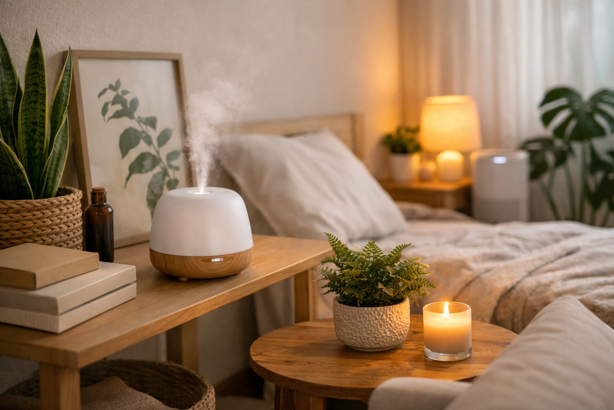
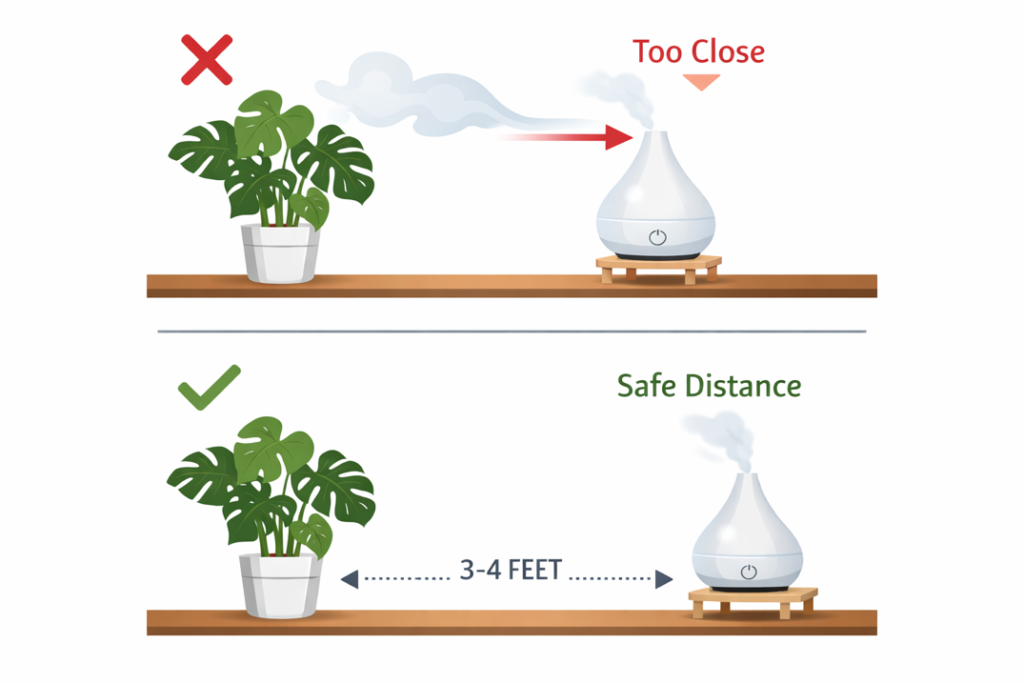
Smart diffusers typically won’t harm indoor plants when positioned correctly. The main concern is ultrasonic diffusers that produce mist. When placed too close to plants, the constant fine mist settles on leaves and creates conditions for fungal growth or water spots. Plants have evolved to handle rain that drains off quickly, not persistent mist sitting on foliage for hours.
Waterless diffusers like Pura and Aera pose no risk to plants since they produce no moisture. For ultrasonic models, maintain at least 3-4 feet of distance, elevate the diffuser slightly so mist disperses upward, and avoid directing output toward plant leaves. With proper placement, smart diffusers and indoor plants work together without issues.
Why This Combination Works
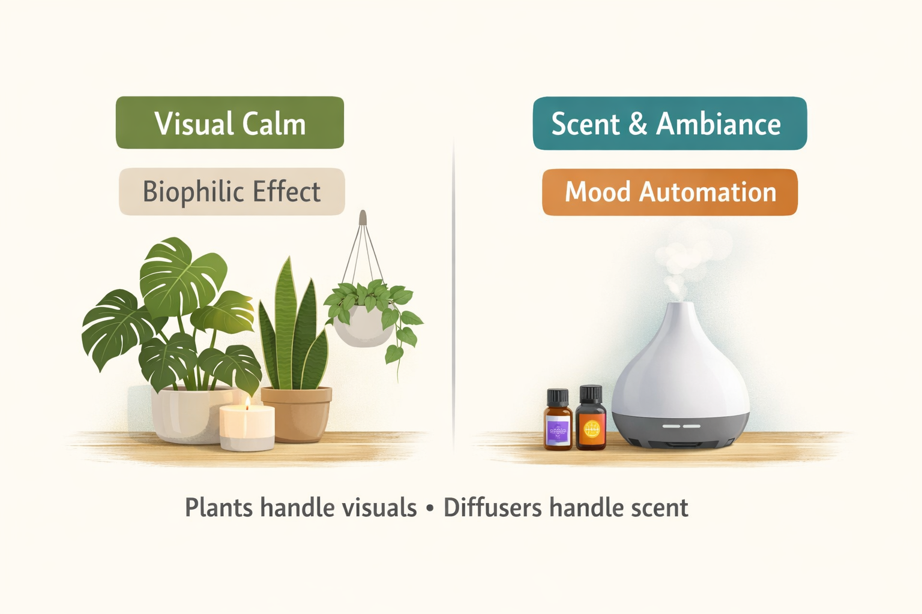
Smart diffusers and indoor plants address different aspects of your indoor environment, which is exactly why they complement each other when used thoughtfully. Plants contribute to your space through photosynthesis, releasing oxygen during daylight hours, while their soil and leaves naturally interact with indoor air. Smart diffusers deliver immediate scent and can add humidity (if using ultrasonic models), creating an ambiance that plants alone cannot deliver.
The often repeated claim that houseplants “purify the air” stems from a 1989 NASA study conducted in sealed chambers with high plant density. In typical homes with normal ventilation, the air quality impact from a few houseplants is minimal compared to proper ventilation or actual air purifiers. What plants do provide reliably is the biophilic effect, where the presence of living greenery reduces stress and improves mood. This psychological benefit is measurable and well documented.
Smart diffusers offer scent therapy based on your schedule. Certain essential oils like lavender, chamomile and bergamot have demonstrated calming effects in research settings, while citrus and peppermint scents can increase alertness. The automation aspect of smart diffusers removes the hassle of maintaining these routines, whether that’s morning energizing scents or evening wind down aromatherapy.
Together, plants create the visual foundation of a calm space while diffusers layer in scent that reinforces whatever mood you’re going for. The key is making sure they complement rather than interfere with each other.
Smart Placement Strategy
Placement determines whether your diffuser and plants work in harmony or create problems. Distance and airflow are the deciding factors.
General Placement Guidelines
Place ultrasonic diffusers at an appropriate distance away from plants (as covered in the section above) to prevent direct mist contact. Elevate diffusers on shelves or tables so the mist disperses into the air rather than settling on nearby surfaces. For waterless diffusers like Pura or Aera, proximity matters less since there’s no moisture output, though you’ll still want to consider airflow patterns to ensure scent distributes evenly throughout the room.
Position plants where they’ll receive appropriate light for their species, then work diffusers around that requirement rather than the reverse. Plants can’t relocate easily once established, but diffusers move in seconds. A snake plant thriving in a low light corner doesn’t care if the diffuser is on the opposite shelf, but moving that snake plant to a sunny window just to accommodate your diffuser placement will stress the plant unnecessarily.
Consider air circulation patterns in your room. Diffusers work best with some airflow to distribute scent, while most houseplants appreciate gentle air movement that prevents stagnant humidity around leaves. Avoid placing either directly in the path of heating vents, air conditioning returns or ceiling fans on high speed.
Room-Specific Arrangements
Bedrooms: Position plants on dressers or nightstands where they’ll get morning light from windows, then place your smart diffuser on the opposite side of the room. This creates visual balance while preventing mist from settling on plant leaves overnight. Schedule calming scents like lavender or chamomile for 30-60 minutes before bedtime rather than running continuously all night, which wastes fragrance and can oversaturate the space.
Living Rooms: Corner plants create focal points, while diffusers work well on coffee tables or entertainment centers where they’re elevated and central to the seating area. In open floor plans, you might need multiple diffusers or a more powerful model to achieve better coverage, but one or two substantial plants will provide visual impact throughout the space.
Home Offices: Desk plants improve mood during work hours but shouldn’t sit directly beside your diffuser where mist might create humidity issues for electronics. Place the diffuser on a bookshelf or side table, schedule energizing scents like peppermint or citrus for morning focus sessions and save the misting for when you’re actively in the room rather than running continuously while you’re in meetings or away from your keyboard.
Bathrooms: High humidity environments mean you should prioritize plants that actually thrive in moisture (ferns, pothos) while using waterless diffusers to avoid adding extra humidity to an already damp space. If you do use an ultrasonic diffuser in a bathroom, run it only during showers or baths when ventilation is active.
Pairing Plants with Diffuser Types
Different diffuser technologies suit different plant arrangements, primarily based on humidity output and maintenance requirements.
Waterless Diffusers with All Plant Types
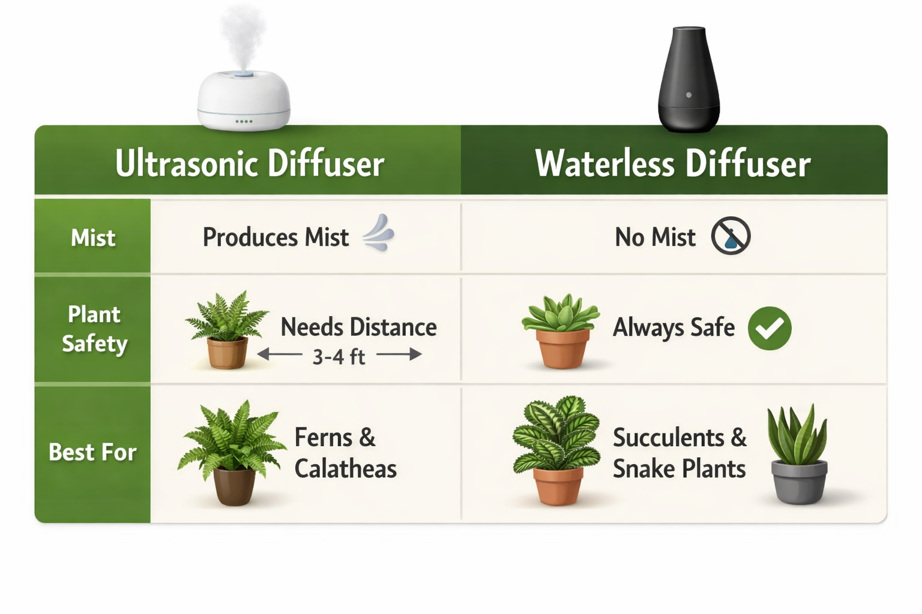
Waterless diffusers using dry diffusion technology (Pura, Aera) work universally well with any plants since they add zero humidity and produce no mist. These systems suit people who want aromatherapy benefits without affecting their carefully balanced plant care routines, or anyone dealing with plants sensitive to humidity fluctuations like succulents, cacti and snake plants.
The fragrance vials in waterless systems last considerably longer than their water based counterparts (often 30-60 days) versus weekly refills. This extended duration means fewer trips to check levels and less routine maintenance, freeing up time for other aspects of your smart home routine.
Ultrasonic Diffusers with Humidity Loving Plants
Ultrasonic diffusers add small but measurable humidity to rooms through their mist output. The impact varies by room size, runtime and ventilation, so a hygrometer is the best way to confirm humidity changes. Models like the ASAKUKI 500ml can run for 16 hours, releasing steady moisture into dry indoor air. This incidental humidification benefits tropical plants that struggle in typical heated homes during winter months.
Pair ultrasonic diffusers with ferns, calatheas, fittonias or other humidity appreciating species, but remember to maintain that 3-4 foot distance. The ambient humidity rise in the room helps these plants, while direct spray creates the fungal problems mentioned earlier.
For extremely dry climates or winter heating seasons, you might run an ultrasonic diffuser primarily for humidity rather than scent. In these cases, dedicated smart humidifiers offer larger tanks, better humidity monitoring and more precise control than diffusers with essential oils as a secondary function.
Scent Selection for Plant Filled Spaces
Some essential oils complement the natural earthy scent of soil and greenery, while others clash or overwhelm. Herbal scents like eucalyptus (avoid if you have pets), rosemary, sage and mint feel cohesive in plant heavy rooms because they echo the botanical theme. Woody scents like cedarwood, sandalwood and pine create a forest-like atmosphere that enhances rather than competes with living plants.
Citrus scents bring brightness to green spaces without conflicting, though heavily sweet fragrances like vanilla or artificial food scents can feel jarring next to natural plant aromas. Clean, simple scents work better than complex fragrance blends when plants already offer sensory input through their natural presence.

Automation Routines That Simplify Both
Smart diffusers excel at automation, and the scheduling features work particularly well when coordinated with plant care routines.
Morning and Evening Routines
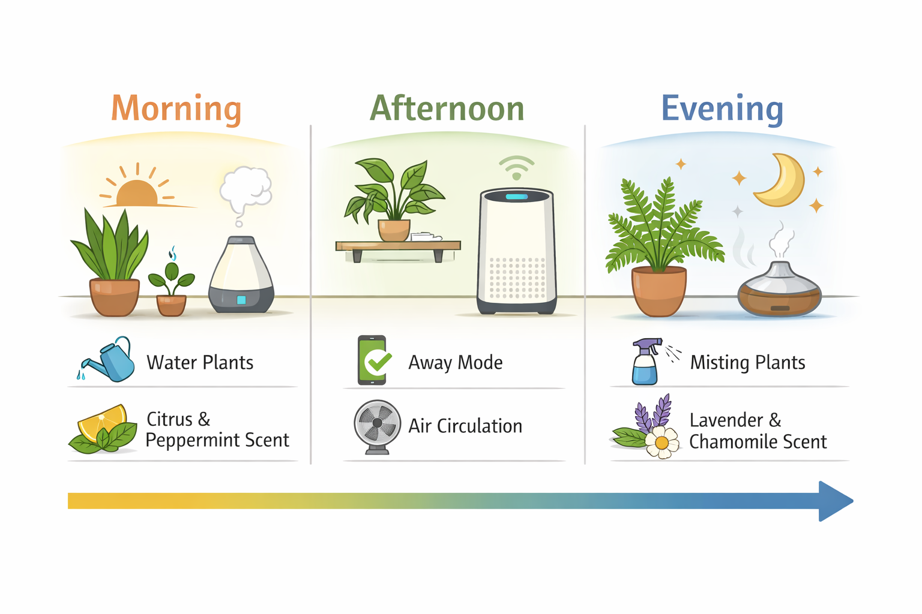
Schedule your diffuser to start 15-30 minutes before you normally water plants in the morning. Energizing scents like peppermint or citrus signal the start of your day while you check soil moisture, remove dead leaves and assess plant health. This creates a pleasant sensory association with plant care rather than experiencing it as a chore.
Evening routines work similarly but in reverse. Set calming scents to begin as natural light fades, coinciding with when you might mist humidity loving plants or check water levels. The diffuser creates atmosphere while you’re already moving through your home attending to plants, making both tasks feel like part of a cohesive wind down ritual.
Seasonal Adjustments
Winter heating dries indoor air, stressing both plants and human respiratory systems. Increase ultrasonic diffuser runtime during these months to add humidity while delivering scent, or switch to warming fragrances like cinnamon and clove that feel seasonally appropriate. Your tropical plants will appreciate the extra moisture, even if it’s incidental to your aromatherapy routine.
Summer often brings higher baseline humidity, making waterless diffusers the better choice to avoid oversaturating areas where plants are already receiving adequate moisture from ambient conditions. Lighter, fresher scents like mint or lemon suit warmer months better than heavy winter fragrances.
Away Mode and Plant Safety
Modern smart diffusers include away mode features that pause operation when your phone leaves the home network. This conserves fragrance when nobody’s around to enjoy it, but also prevents continuous misting that could create excess humidity around plants during multi-day absences. Returning home to healthy plants and a welcoming scent that starts automatically as you arrive will always beat walking into a stale space or finding fungal issues from a diffuser that ran unattended for days.
Troubleshooting Common Issues
If you notice water spots on plant leaves, wipe them gently with a soft cloth and increase the distance between your diffuser and plants. For persistent issues, switch to waterless diffusion or reduce ultrasonic runtime to short intervals when you’re actively in the room.
Plants showing signs of stress (yellowing leaves, wilting or unusual leaf drop) near your diffuser might be reacting to either excess humidity or concentrated essential oil exposure. Move the plant to a completely different location for a week and monitor for improvement. If the plant recovers, the diffuser placement was the issue.
Use a hygrometer to verify whether your ultrasonic diffuser is raising room humidity. In well ventilated spaces or large rooms, the impact may be negligible. If humidity remains below 40% despite running your diffuser, your plants might need a dedicated humidifier rather than relying on incidental moisture from aromatherapy.
Common Mistakes to Avoid
Certain combinations and practices can create more problems than benefits.
Over-humidifying Small Spaces
Running an ultrasonic diffuser continuously in a small bedroom filled with plants can push humidity past comfortable levels, particularly in already humid climates or during summer months. While your ferns might tolerate this, you’ll wake up to condensation on windows, musty odors and potential mold growth in corners. Monitor humidity with an air quality monitor and keep levels between 40-60% for optimal comfort and plant health.
Using Harsh Oils Near Sensitive Plants
Some essential oils contain compounds that can stress plants when diffused in high concentrations in poorly ventilated spaces. Tea tree oil, oregano and thyme are potent antimicrobials. In enclosed rooms with heavy misting, highly antimicrobial oils may also disrupt the micro-environment around soil and leaves. Stick to gentler oils like lavender, chamomile or citrus, and always ensure adequate ventilation.
Forgetting About Pets
Many common houseplants are toxic to cats and dogs, while certain essential oils (particularly tea tree, eucalyptus and some citrus oils) can cause respiratory issues or toxicity in pets when diffused continuously. Cats are generally more sensitive than dogs to many essential oils. If you have animals, research both plant and oil safety before building your fresh and calm home setup. Pet-safe plants like spider plants, Boston ferns and prayer plants pair well with pet-safe diffuser scents, but this requires intentional planning rather than assuming everything botanical is automatically safe.

Building Your Fresh and Calm Space
The most effective approach starts small and expands based on what works in your specific environment and lifestyle.
Start with One Room
Choose your bedroom or home office as a testing ground. Position two to three low maintenance plants (pothos, snake plant, ZZ plant) where they’ll receive appropriate light, then add a smart diffuser on the opposite side of the room. Run the diffuser for one hour in the morning and one hour in the evening for a week, noting how the room feels and whether plants show any signs of stress.
This contained experiment lets you adjust placement, timing and scent intensity without committing to a whole home transformation yet. You’ll quickly learn whether you prefer energizing morning scents or if you’d rather save diffusion for evening relaxation, whether your plants need more humidity than the diffuser provides, or if you actually need to reduce misting frequency.
Match Diffuser to Room Size and Plant Density
A small bedroom with three plants works perfectly with a basic Pura 4 or Sierra Modern Home diffuser. A large living room filled with a dozen plants might need the Pura Plus or Aera to achieve even scent distribution without overwhelming individual plant zones with concentrated mist. Think about coverage area for the diffuser relative to total square footage, not just plant count.
Consider Your Lifestyle
If you travel frequently, waterless diffusers and drought tolerant plants reduce the anxiety of leaving home for extended periods. Away mode pauses scent diffusion automatically while cacti and succulents tolerate inconsistent watering far better than ferns or calatheas. Conversely, if you’re home most days and enjoy hands-on care routines, ultrasonic diffusers with humidity loving plants create more opportunities for daily interaction and adjustment.
The Pinterest aesthetic of perfectly arranged plants with strategically placed diffusers looks appealing, but only works long term if it matches how you actually live. Build a system that minimizes friction rather than adding another set of tasks to optimize and maintain.
No Stress, Just Fresh
A calm home doesn’t come from forcing plants and diffusers to coexist. Sometimes one does the job better than two. If scents overwhelm you, let greenery lead. When plant care feels like a chore, a smart diffuser can deliver instant atmosphere on its own.
If you do combine them, keep it simple. Match your setup to your habits, not your aspirations. Start small, see how it feels, and only add more if it genuinely improves your space.
When calm becomes the default, not the goal, you know you’ve got it right.
Ready to choose a smart diffuser for your plant filled space? Our complete smart diffuser buyer’s guide breaks down the best options for different room sizes, budgets and smart home setups.