You wake up feeling exhausted after what seemed like a full night’s sleep. Your fitness tracker claims you slept for seven hours, but something feels off. The truth is, duration only tells half the story. Sleep trackers measure far more than time spent in bed, using sensors smaller than a pencil eraser to detect heart rate patterns, body movement, and in some cases, respiratory signals throughout the night. Understanding how these devices work can help you interpret the data they provide and decide whether the insights justify wearing one.
This guide explains the technology behind sleep tracking, what the metrics actually mean, and the limitations worth knowing before you trust your device’s sleep score.
The Technology Behind Sleep Tracking
Sleep trackers rely on various physiological signals that change predictably across sleep stages to monitor what happens while you’re unconscious.
Accelerometers: Detecting Movement
Accelerometers measure movement along three axes, capturing every shift, turn and restless moment throughout the night. These sensors detect acceleration forces, similar to how your phone knows when you’ve rotated it from portrait to landscape. In sleep tracking, they reveal movement patterns that distinguish light sleep (frequent small movements) from deep sleep (minimal movement) and REM sleep (muscle atonia with occasional twitches).
Early sleep trackers relied almost entirely on accelerometers, operating on a simple premise – less movement equals deeper sleep. While crude, this correlation holds up reasonably well for basic sleep versus wake detection. Modern devices combine accelerometer data with heart rate and other sensors for substantially better accuracy.
Optical Heart Rate Sensors (PPG)
Photoplethysmography (PPG) sensors shine LED light (usually green or infrared) through your skin and measure how much reflects back. Blood absorbs more light than surrounding tissue, so as your heart pumps blood through capillaries, the amount of reflected light fluctuates. By analyzing these variations, the sensor calculates your heart rate.
Heart rate naturally decreases as you progress from wakefulness through light and deep sleep, then increases during REM periods. These patterns provide crucial information that movement data alone can’t capture. Your heart rate often drops roughly 20-30% from waking levels during deep sleep, depending on individual fitness and baseline heart rate, while heart rate variability increases as your parasympathetic nervous system takes over.
Additional Sensors in Advanced Devices
Premium sleep trackers incorporate additional sensors that refine accuracy. Temperature sensors track skin temperature changes that reflect the normal drop in core body temperature during sleep. Some devices measure blood oxygen saturation (SpO2) to identify potential breathing disruptions. Smart rings position sensors on the finger (as opposed to the wrist), where temperature and blood flow signals are often cleaner during sleep.
How Sleep Trackers Identify Sleep Stages
Sleep follows a predictable pattern across the night, cycling through distinct stages that serve different restorative functions. Sleep trackers attempt to identify these stages by recognizing their characteristic physiological signals.
Light Sleep Detection
Light sleep (N1 and N2 in clinical terminology) accounts for around half of total sleep time. During light sleep, your heart rate decreases moderately, movement still occurs but becomes less frequent, and you drift in and out of consciousness easily. Sleep trackers identify light sleep through moderate heart rate reduction combined with intermittent small movements detected by accelerometers.
Deep Sleep Recognition
Deep sleep (N3 or slow wave sleep) represents the most restorative phase, comprising about 20–25% of sleep in younger adults, with levels declining steadily with age. Your heart rate drops to its lowest point, movement becomes minimal or absent, and waking you becomes difficult. Trackers identify deep sleep primarily through sustained periods of very low heart rate combined with near-complete stillness.
REM Sleep Identification
REM (rapid eye movement) sleep presents a physiological paradox. Your brain becomes highly active, your eyes move rapidly behind closed lids, but your major voluntary muscles experience temporary paralysis (atonia), though small twitches can still occur. Heart rate and breathing become more variable, approaching waking levels. In adults, REM often makes up roughly 20-25% of total sleep, usually increasing in the second half of the night. Sleep trackers detect REM through elevated heart rate compared to deep sleep, increased heart rate variability and minimal large movements despite the elevated heart rate.
This combination of active cardiovascular patterns with physical stillness creates a distinctive signature that algorithms can recognize. However, REM detection accuracy varies considerably between devices, as the signals overlap somewhat with light sleep patterns.
The Algorithms: Making Sense of Sensor Data
Raw sensor data alone doesn’t tell you whether you’re in REM or deep sleep. Sleep trackers run algorithms trained on thousands of nights of data comparing consumer device readings against clinical polysomnography (PSG), the gold standard for sleep measurement. These machine learning models are trained to recognize patterns in heart rate, movement and other signals that correlate with specific sleep stages.
The algorithms also account for individual variation. Your typical heart rate during deep sleep might differ from someone else’s, so devices establish personal baselines over the first week or two of use. They track when you normally go to bed, how long you usually sleep and what your normal heart rate patterns look like. This personalization improves accuracy as the device learns your individual patterns.
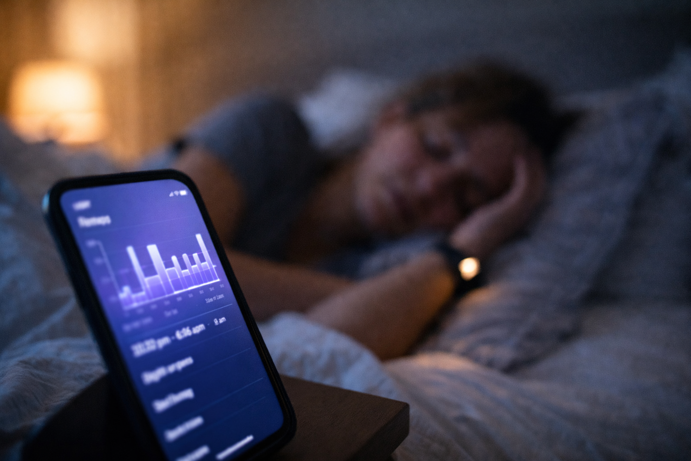
Manufacturers rarely disclose algorithm details, as these represent proprietary competitive advantages. However, independent research comparing consumer devices to clinical sleep studies suggests accuracy varies by stage. Across studies, multi-stage sleep classification with common consumer wearables is generally in the ~60–75% range overall, while sleep vs wake is often around ~90%.
Types of Sleep Tracking Devices
Sleep tracking appears in various form factors, each with distinct advantages and limitations.
Wrist-Worn Trackers and Smartwatches
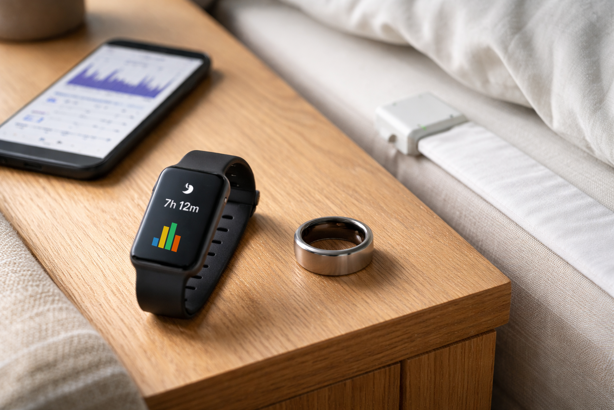
Most people track sleep using fitness trackers or smartwatches they already wear during the day. The convenience of 24/7 wear without switching devices makes wrist trackers the default choice. Modern devices like the Apple Watch, Fitbit and Garmin trackers combine accelerometers with optical heart rate sensors for stage detection.
Comfort during sleep varies by device size and weight. Larger smartwatches can feel intrusive on your wrist overnight, while slimmer fitness bands may become nearly unnoticeable. Battery life is also important when it comes to sleep tracking, as daily charging creates large gaps in data. Devices with multi-day battery life reduce the need to choose between charging and tracking.
Smart Rings
Smart rings like the Oura Ring position sensors on your finger rather than wrist, where signals are often cleaner during sleep due to better blood flow and less movement interference. The small form factor appeals to people who find wrist devices uncomfortable overnight. Many users report forgetting they’re wearing a ring entirely, while watches create more awareness.
Rings sacrifice real-time display capability and interactive features that smartwatches offer, focusing exclusively on passive health monitoring. Battery life typically spans 4-7 days. The finger placement may deliver more accurate overnight heart rate and temperature readings, though this advantage matters primarily for sleep tracking rather than active workout monitoring.
Under-Mattress and Bedside Sensors
Non-wearable sleep trackers eliminate the need to wear any device. Under-mattress sensors like the Withings Sleep Analyzer slide beneath your mattress and detect movement, heart rate and breathing through ballistocardiography (sensing micro-movements from your heartbeat and breathing). Bedside radar devices, like the Google Nest Hub (2nd gen), track breathing patterns and movement during sleep without any physical contact.
These options work well for people who don’t like to wear anything to bed, or who find the data from wearables unreliable due to frequent tossing and turning at night. They typically track only one person in a shared bed, can’t accompany you when traveling, and may lack the additional health metrics that wearable devices provide throughout the day.
What Do The Sleep Metrics Mean?
Sleep trackers report various metrics beyond simple stage detection.
Total Sleep Time vs. Time in Bed
Time in bed measures how long you spend lying down, while total sleep time subtracts periods of wakefulness. The difference reveals your sleep efficiency. If you’re in bed for eight hours but only sleep seven, your sleep efficiency is 87.5%. Healthy sleep efficiency typically exceeds 85%, though this naturally declines with age.
Sleep Latency
Sleep latency measures how long it takes you to fall asleep after getting into bed. Most people fall asleep within 10-20 minutes. Considerably longer latency might indicate difficulty falling asleep, while extremely short latency (under 5 minutes) can be a sign of sleep debt. Sleep trackers estimate latency by detecting when movement patterns and heart rate show you’ve transitioned from wakefulness to sleep.
Wake After Sleep Onset (WASO)
WASO tracks total time spent awake after initially falling asleep, including both brief awakenings you won’t remember and longer conscious periods. Everyone wakes briefly throughout the night during stage transitions, often without any recollection. Trackers identify these micro-awakenings through sudden movement or heart rate spikes. Prolonged or frequent WASO episodes suggest sleep maintenance difficulties.
Sleep Scores
Many devices condense multiple metrics into a single sleep score, usually ranging from 0-100. While convenient, these proprietary scores combine factors using algorithms that vary between manufacturers. An 85 on one device might not equal an 85 on another. The score typically weighs total sleep time, sleep efficiency, time in each stage, restfulness and consistency. Focus on trends in your own score over time rather than comparing absolute numbers to other people or devices.
How Accurate Are Sleep Trackers?
Consumer sleep trackers are not medical devices. They provide estimates based on indirect measurements, with performance varying significantly based on what they’re measuring and which device you’re using.
Wake Detection
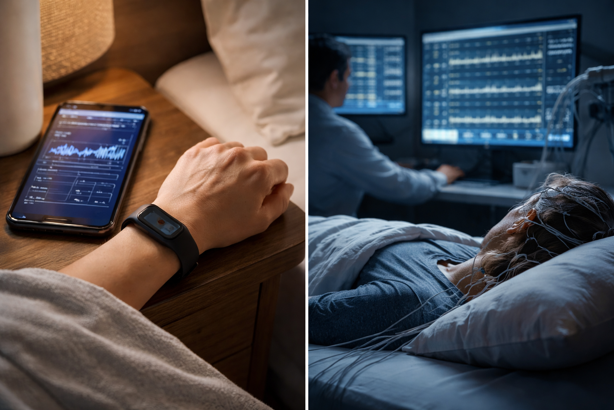
Trackers excel at detecting when you’re asleep, often achieving over 90% sensitivity in validation studies comparing devices to clinical polysomnography (PSG). However, they struggle more with identifying wake periods – particularly quiet wakefulness, when you’re lying still but conscious. This asymmetry means trackers commonly overestimate total sleep time and underestimate time spent awake after initially falling asleep.
For many people who sleep well, the total sleep time estimate will be reasonably close. But if you have insomnia, frequent awakenings, or spend a lot of time lying awake quietly, your tracker may report substantially more sleep than you actually got.
Sleep Stage Detection
Stage detection becomes less reliable as you get more specific. Across validation studies, consumer devices generally show moderate agreement with clinical sleep staging (distinguishing light, deep and REM sleep). However, performance varies considerably between brands, firmware versions and individual users.
Deep sleep and REM tend to be the weakest stages for detection. The physiological signals that define REM (elevated heart rate with physical stillness) can overlap with light sleep patterns, creating confusion for algorithms. This is why a single night showing unusually low REM shouldn’t cause alarm. The measurement itself carries more uncertainty than other metrics.
Different devices also show systematic biases in how they classify stages compared to PSG, though the direction and magnitude of these biases vary by manufacturer and algorithm.
Factors That Affect Accuracy
Several factors influence how well your tracker performs. Device fit is of paramount importance, as loose fitting trackers which allow movement interference can corrupt optical sensor readings. Skin characteristics affect optical sensors, with factors such as skin tone and tattoos sometimes reducing optical signal quality. Sleep position influences wrist-worn trackers, as certain positions restrict blood flow or create pressure that distorts readings.
Sleep disorders can also confuse trackers. Conditions like sleep apnea or periodic limb movement disorder create unusual patterns that algorithms trained on healthy sleep may misinterpret. If you suspect a sleep disorder, trackers might reveal concerning patterns, but proper diagnosis still requires clinical sleep studies.
What Sleep Tracking Can’t Do
Understanding limitations helps set realistic expectations. Firstly, sleep trackers can’t diagnose medical conditions. Seeing fragmented sleep or low REM percentages might prompt a doctor visit, but your tracker can’t determine if you have sleep apnea, insomnia or restless leg syndrome. They also can’t measure sleep quality in the subjective sense. You might sleep eight hours with perfect stage distribution but wake up feeling unrested due to factors trackers can’t detect.
Trackers don’t account for sleep environment quality, stress, nutrition or other factors that influence how restorative your sleep actually feels. They measure physiological proxies for sleep stages, not the neurological activity that truly defines them. Clinical polysomnography directly measures brain waves, eye movements and muscle tone through electrode sensors, delivering definitive stage classification that wrist sensors simply can’t match.
Using Sleep Data Effectively
Sleep tracking works best when you focus on patterns over time rather than individual nights. One night of poor sleep means little, but consistent patterns can reveal actionable insights.
Look for Trends, Not Perfect Numbers
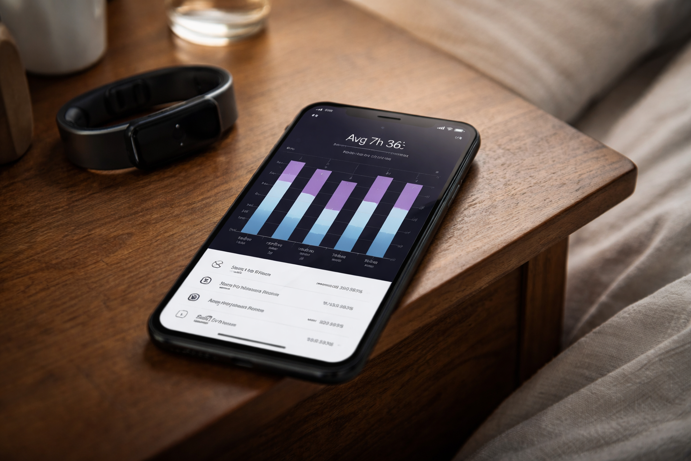
If your tracker consistently shows sleep latency exceeding 30 minutes, that pattern suggests difficulty falling asleep worth addressing, even if the exact timing is imprecise. Similarly, regularly seeing high WASO or low sleep efficiency points to sleep maintenance issues. Don’t fixate on hitting specific percentages for each sleep stage on any given night. The ranges will naturally differ and trackers lack the accuracy to distinguish between 18% and 22% REM sleep meaningfully.
Correlate Sleep with Lifestyle Factors
Sleep tracking becomes most useful when you connect it to behaviors. Notice when you sleep best and work backward to pinpoint contributing factors. Did you sleep better on nights when you avoided caffeine after 2pm? When you exercised in the morning rather than evening? When you maintained consistent bedtimes? The tracker provides objective feedback on subjective experiments with sleep hygiene.
Avoid Orthosomnia
Some people develop orthosomnia, an unhealthy obsession with achieving perfect sleep scores. They feel anxious when their tracker shows sub-optimal sleep, which ironically makes sleep worse. If tracking creates stress rather than insight, consider taking breaks from monitoring. Sleep is essential for health, but sleep tracking is optional.
Do You Need a Sleep Tracker?
Sleep tracking works best for particular use cases. If you’re experimenting with sleep hygiene changes, trackers offer objective feedback on what helps and what doesn’t. Athletes optimizing recovery benefit from seeing how sleep quality correlates with training intensity and performance. People investigating potential sleep issues gain data to discuss with doctors, though the tracker itself can’t give diagnoses.
However, if you consistently sleep well, feel rested and maintain healthy sleep habits, tracking adds little value. The numbers might be interesting, but they won’t change anything. Similarly, if you already know you have poor sleep but can’t or won’t change contributing factors, tracking simply documents problems you’re aware of.
Sleep on It (But Don’t Lose Sleep Over It)
Sleep trackers can be genuinely useful, but only if you keep them in their place. They’re good at showing patterns, nudging curiosity and helping you notice how your daily habits spill into the night. But they’re far less reliable guides to how you should feel when you wake up.
If checking your sleep helps you make small, sensible changes that leave you feeling better over time, it’s doing exactly what it should. If it turns every morning into a verdict, it’s probably time to loosen your grip on the numbers. At the end of the day, how you feel when you get out of bed often tells you more than any chart ever could.