
Heart rate variability (HRV) monitoring has moved from elite athletic training facilities into consumer wearables, but most people wearing HRV capable devices don’t really understand what they’re measuring or why it matters. Unlike your resting heart rate (a single number), HRV tracks the variation in time between each heartbeat, revealing insights about stress, recovery and overall nervous system health that a simple pulse check misses entirely.
This guide explains how HRV monitors work, what the data actually means, and whether you need a dedicated device, or if your existing wearable already does the job. We’ll cut through the marketing claims to help you determine if HRV tracking offers genuine value for your specific situation.
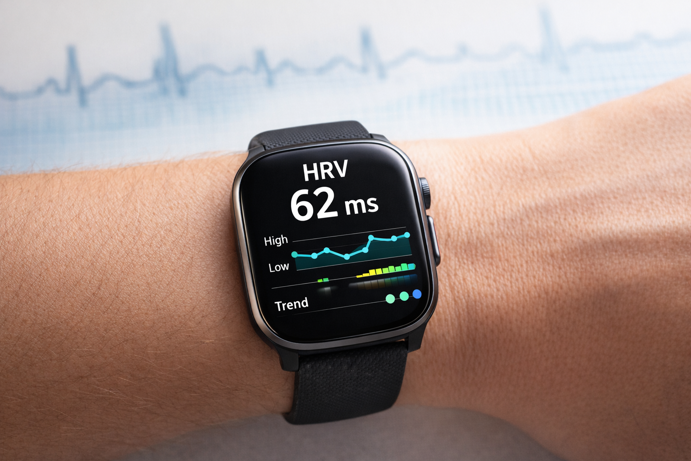
What Is Heart Rate Variability?
Heart rate variability measures the time variation between consecutive heartbeats. If your heart beats at 60 bpm, you might assume each beat occurs exactly one second apart. In reality, the interval might fluctuate between 0.9 and 1.1 seconds. For most healthy people, this variation is actually a positive sign of a flexible, adaptable cardiovascular system.
A HRV monitor is a wearable device or smartphone app that measures this beat-to-beat variation, typically using ECG sensors in chest straps or optical sensors in smartwatches, fitness trackers and rings. These devices track the precise timing between heartbeats and analyze patterns to provide valuable insights.
Why Variation Matters
Your autonomic nervous system controls involuntary functions like heart rate, digestion and breathing. It has two branches that work in opposition – the sympathetic nervous system (fight-or-flight response) and the parasympathetic nervous system (rest-and-digest mode). A healthy balance between these systems creates natural heart rate variation.
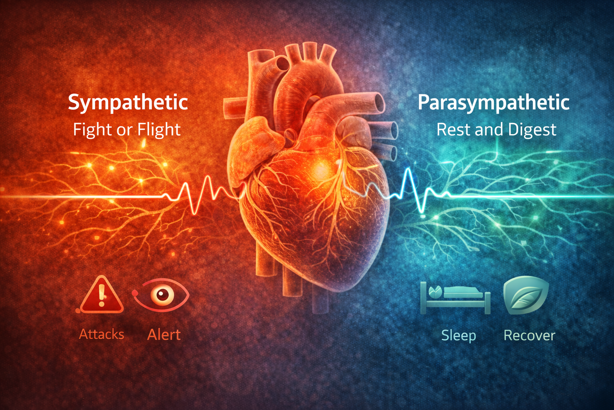
Higher HRV usually indicates better cardiovascular fitness, greater stress resilience and stronger recovery capacity. Lower HRV often signals physical stress, inadequate recovery, illness or chronic stress that’s taxing your system. The specific numbers matter less than your personal trends over time.
What HRV Reveals
- Recovery Status: Low HRV after intense training suggests your body needs more rest before the next hard workout
- Stress Levels: Chronic stress suppresses HRV as your sympathetic nervous system stays activated
- Sleep Quality: HRV usually rises during deep sleep as your parasympathetic system dominates
- Illness Onset: HRV often drops 1-2 days before you feel sick as your immune system activates
- Overall Fitness: Regular exercise typically improves HRV over months of consistent training
How HRV Monitors Work
HRV monitors use sensors to detect the precise timing of each heartbeat, then analyze the millisecond variations between beats. The technology falls into two main categories based on measurement method.
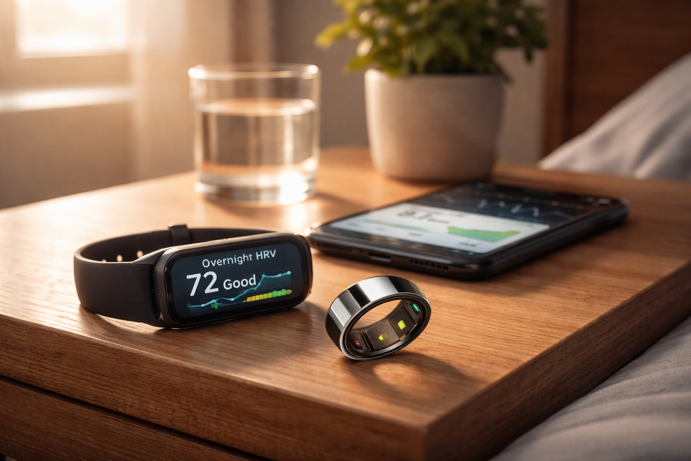
Most consumer devices measure HRV during sleep, when you’re still and optical sensors work best. You wake up to see your overnight HRV data, which informs decisions about today’s intensity – whether for training, work demands or just knowing if your body needs a lighter day. Some devices also offer spot check measurements using ECG sensors or camera based methods.
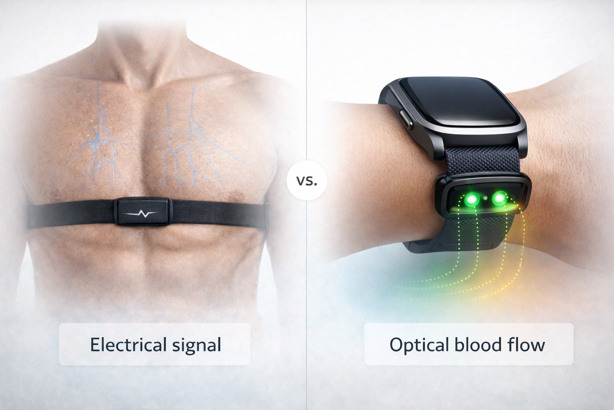
ECG Based Monitoring (Most Accurate)
Electrocardiogram (ECG) sensors detect the electrical activity of your heart through skin contact. Chest strap monitors like the Polar H10 use this method, measuring the R-R intervals (time between R-wave peaks in your heart’s electrical cycle). This direct electrical measurement delivers research validated accuracy comparable to clinical ECG for HRV analysis.
Some smartwatches including the Apple Watch and Samsung Galaxy Watch offer ECG functionality through sensors on the watch back and digital crown. However, these normally require a deliberate 30-60 second measurement rather than continuous monitoring.
Optical (PPG) Monitoring
Photoplethysmography (PPG) shines LED light into your skin and measures blood volume changes with each heartbeat. Most wrist worn fitness trackers and smartwatches use this method. While convenient for continuous wear, optical sensors are less accurate than ECG, especially during movement or in cold conditions when blood flow to extremities decreases.
PPG accuracy improves considerably when you’re stationary. Many devices take HRV readings during sleep or require you to sit still for morning measurements.
Key HRV Metrics Explained
Different devices report HRV using various metrics. Understanding these helps you interpret your data correctly.
- RMSSD (Root Mean Square of Successive Differences): Most common metric for short term HRV measurements. Measures beat-to-beat variation and reflects parasympathetic activity. Higher values indicate better recovery.
- SDNN (Standard Deviation of NN Intervals): Reflects overall HRV over longer periods (usually around 24 hours). Captures both sympathetic and parasympathetic influences.
- pNN50: Percentage of successive heartbeat intervals differing by more than 50 milliseconds. Another parasympathetic indicator.
- LF/HF Ratio: Compares low frequency to high frequency components of heart rate. Attempts to quantify sympathetic vs. parasympathetic balance, though its interpretation remains debated in research because LF power reflects mixed autonomic influences rather than purely sympathetic activity.
Consumer devices often simplify these metrics into proprietary scores or readiness ratings. While less scientifically precise, these simplified scores make HRV more accessible for general users who don’t need research grade data.
Types of HRV Monitors
HRV monitoring devices span from research grade equipment to mainstream consumer wearables. Each type serves different needs and accuracy requirements.
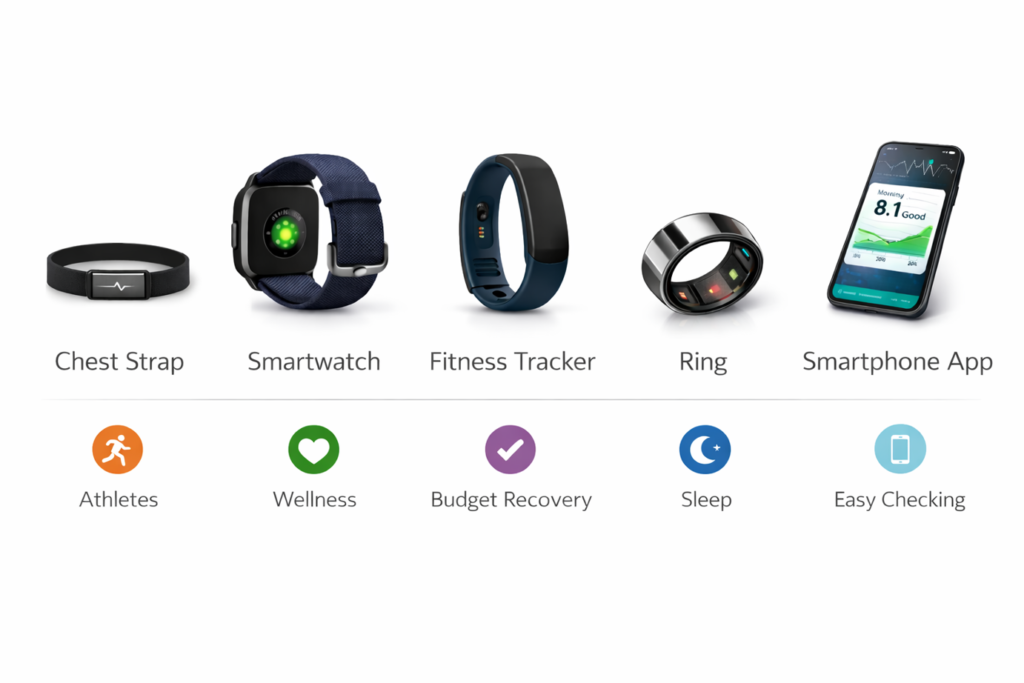
Quick Comparison: HRV Monitor Types
| Device Type | Accuracy | Best For | Typical Cost |
|---|---|---|---|
| Chest Strap (ECG) | ★★★★★ | Athletes, research grade data | $75-105 |
| Smartwatch (PPG) | ★★★★☆ (at rest) | Everyday wellness, continuous tracking | $249-529 |
| Fitness Tracker | ★★★☆☆ | Budget recovery tracking | $129-179 |
| Ring (Sleep HRV) | ★★★★☆ (sleep) | Sleep & recovery focus | $349-499 + membership |
| Subscription Wearable | ★★★★☆ | Comprehensive recovery analytics | $239/year |
| Smartphone Apps | ★★★☆☆ | No additional hardware needed | Free–$20 one time purchase (most) Up to ~$680/year (pro tools) |
Chest Strap Monitors
Best for: Athletes requiring research grade accuracy, anyone wanting clinical precision
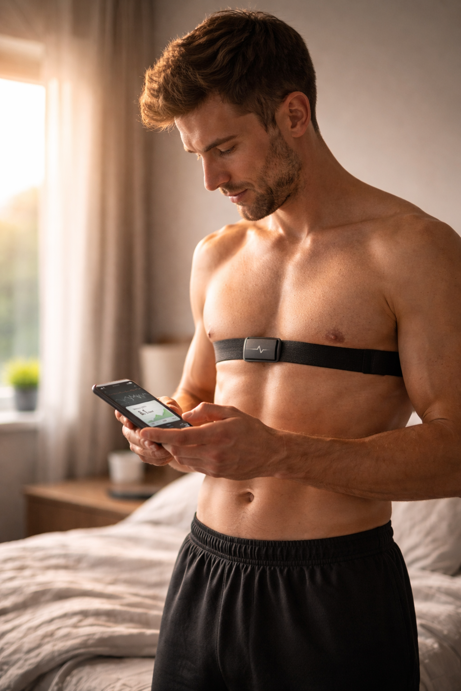
Chest straps worn around your torso position ECG sensors directly over your heart, delivering the most accurate HRV measurements available outside medical settings. These devices sync via Bluetooth to smartphone apps for data analysis and tracking.
Garmin HRM 200 ($75-85): A reliable chest strap heart rate and HRV monitor that transmits real-time data over ANT+ and Bluetooth to compatible watches, fitness equipment and apps. It features a user-replaceable battery with up to one year of life, a machine washable adjustable strap available in two sizes, and a 3 ATM water resistant build for everyday workouts. The comfortable elastic strap and simple pairing make it a solid choice for accurate interval data collection during training and rest.
Polar H10 ($90-105): A top tier chest strap that delivers highly accurate beat-to-beat (R-R) interval data for HRV tracking. It uses Bluetooth and ANT+, stores one training session internally, offers around 400 hours of battery life, and features a secure, machine washable strap with 30m water resistance. A go-to option for athletes and fitness enthusiasts using HRV apps that support external heart rate sensors.
Drawbacks: Must be worn during measurement (most people use for morning readings then remove). Requires proper skin contact and occasional electrode moistening. Some find chest straps uncomfortable or restrictive.
Smartwatches with HRV Tracking
Best for: People wanting continuous tracking without dedicated devices, existing smartwatch users
Modern smartwatches incorporate HRV monitoring into comprehensive health tracking ecosystems. The convenience of always-on-wrist wear enables passive background measurements during sleep and throughout the day.
Apple Watch Series 11 ($399-529): A comprehensive smartwatch with extensive health tracking that includes HRV trend data via Apple’s Health ecosystem. It uses advanced optical and electrical sensors to record heart and sleep metrics, with Sleep Score and overnight HRV insights appearing in the Apple Health app. The Always-On Retina display makes it easy to check metrics at a glance, and models with GPS + Cellular can stay connected without an iPhone on-the-go. With up to 24 hours of battery life and a host of wellness features (including irregular rhythm notifications and sleep tracking), it’s a strong option for iPhone users who want broad health monitoring beyond just HRV.
Garmin Forerunner 265 ($370-450): A dedicated GPS running smartwatch with advanced recovery and training insights. Its AMOLED touchscreen displays HRV Status, which tracks overnight HRV trends against a rolling baseline, while Training Readiness combines HRV, sleep, recovery time and recent training load to guide daily workout intensity. The watch syncs with Garmin Connect for deeper analytics and offers strong battery life (up to 13 days smartwatch mode, 20 hours GPS), making it ideal for runners and fitness enthusiasts who want actionable training guidance beyond basic HRV numbers.
Samsung Galaxy Watch 7 ($249-349): A solid Android smartwatch that tracks a wide range of health metrics. HRV is typically used as part of Samsung Health insights (for example, features like Energy Score, which uses sleep and other signals including heart rate variability) rather than offering research grade HRV analytics. It’s a good choice for Android users who want general wellness and trend monitoring within the Samsung ecosystem.
Drawbacks: Optical sensors less accurate than chest straps, especially during movement. HRV is one feature among many, sometimes buried in menus. Premium smartwatches carry high price tags if HRV is your primary interest.
Fitness Trackers with HRV
Best for: Budget conscious buyers, those primarily interested in fitness vs. general smartwatch features
Fitbit Charge 6 ($129–179, often includes a Premium trial): A slim fitness tracker that records overnight HRV trends via its optical sensor and displays them in the Fitbit app’s Health Metrics dashboard. Premium adds coaching and deeper context, but basic HRV trend visibility is available without a subscription, making it a solid budget option for general wellness tracking.
WHOOP 5.0 ($239/year subscription, hardware included): A screen-free, subscription-first wearable focused on recovery and strain, using continuous HRV, sleep and heart data to generate a daily Recovery Score. Designed for 24/7 wear with a removable battery pack for on-the-go charging, it offers deep recovery analytics at the cost of an ongoing membership.
Oura Ring 4 ($349-499 + $5.99/month): A finger-worn smart ring that measures overnight HRV via optical sensors, with a strong focus on sleep and recovery insights. Its compact form appeals to users who dislike wrist wearables. Membership required for detailed analytics beyond basic scores. Correct ring sizing is essential for reliable readings.
Drawbacks: Fitness trackers offer fewer features than smartwatches for similar or higher prices when subscriptions factor in. Some require ongoing memberships for data access.
For detailed comparisons of smart rings, including sizing guidance, battery life expectations and subscription costs, see our comprehensive smart ring buying guide.
Dedicated HRV Apps (Use Existing Devices)
Best for: People already owning compatible heart rate monitors or smartphones with camera based measurement
Several apps turn your existing hardware into HRV monitors without purchasing new devices.
Elite HRV (Free): Pairs with many Bluetooth heart rate monitors (including chest straps and some compatible smartwatches). Morning readiness score based on HRV trends. The free app provides core functionality, with optional paid web dashboard access and third-party integrations available.
HRV4Training ($10-12 one time purchase): Uses a smartphone camera to measure HRV via fingertip with no additional hardware required. Morning measurements take about 60 seconds and provide training and recovery guidance based on HRV trends. Camera based methods are less accurate than ECG but can be surprisingly usable with consistent technique. Optional advanced services are available for deeper analysis.
Kubios HRV (Free Lite version, $680+/year for professional versions): Professional grade HRV analysis software primarily designed for researchers and serious athletes. Imports data from a wide range of HRV monitors and offers deep analytical tools. The full professional versions are powerful but expensive and unnecessary for most general users.
Drawbacks: Requires consistent daily measurements for meaningful data. Camera based methods demand proper technique (steady hand, good lighting). Apps can’t track continuously throughout the day like dedicated wearables.
Who Actually Benefits from HRV Monitoring?
HRV tracking isn’t useful for everyone. It delivers the most value when you’re actively using the data to make decisions about training, stress management or health habits.
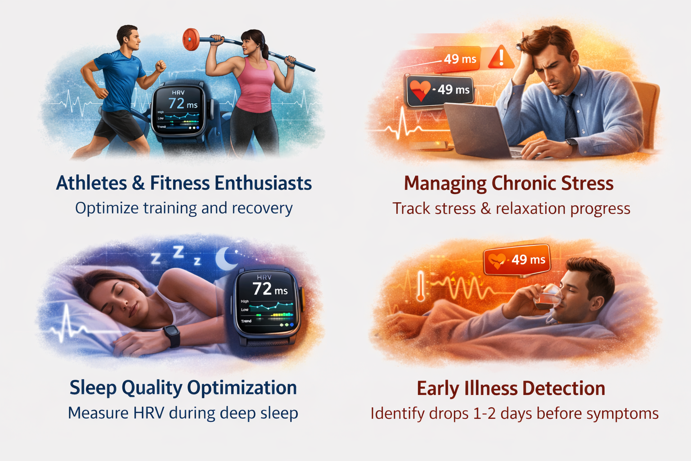
Athletes and Fitness Enthusiasts
HRV helps optimize training by indicating when your body has recovered enough for intense workouts versus when you need lighter activity or rest. Athletes using HRV guided training often report fewer overtraining injuries and more consistent performance gains compared to rigid training schedules that ignore recovery signals.
Endurance athletes (runners, cyclists, triathletes) find particular value as their training volume creates significant recovery demands. Dropping HRV suggests accumulated fatigue that rest days can address before it becomes chronic.
People Managing Chronic Stress
Chronic stress suppresses HRV as your nervous system remains in sympathetic overdrive. Tracking HRV provides objective feedback on stress management techniques like meditation, breathing exercises or lifestyle changes. Seeing HRV improve validates that your stress reduction efforts are physiologically effective, not just psychologically reassuring.
The data creates accountability that subjective “I feel stressed” observations lack. When HRV drops during high pressure work periods, it prompts concrete recovery actions rather than powering through until burnout hits.
Sleep Quality Optimization
HRV naturally rises during deep sleep as your parasympathetic nervous system takes over. Consistently low overnight HRV suggests sleep quality issues even when you subjectively feel you slept well. This can reveal problems with sleep environment (temperature, noise), evening habits (alcohol, late meals, screen time) or underlying health conditions affecting sleep architecture.
Devices like Oura Ring and Whoop specifically emphasize sleep HRV as a core metric for their recovery algorithms, offering feedback on how lifestyle factors affect sleep quality beyond just duration.
Early Illness Detection
HRV frequently drops 24-48 hours before obvious illness symptoms appear as your immune system activates. Athletes often report seeing HRV decline before feeling sick, allowing them to reduce training intensity pre-emptively. While not a diagnostic tool, this early warning can prompt rest that potentially shortens illness duration or severity.
Some users track HRV during illness recovery, using the return to baseline values as a signal they’re ready to resume normal activities rather than rushing back prematurely.
When HRV Tracking Isn’t Worth It
You’re not going to act on the data: If low HRV won’t change your behavior (skipping workouts, managing stress differently, adjusting sleep habits), the numbers serve no purpose beyond creating anxiety.
You have irregular heart rhythms: Conditions like atrial fibrillation invalidate standard HRV measurements. Consult your cardiologist before using HRV monitors if you have known heart rhythm disorders.
You’re seeking medical diagnoses: Consumer HRV monitors aren’t medical devices. Low HRV might prompt a doctor visit but can’t diagnose certain conditions. Don’t use HRV data to self-diagnose or alter prescribed medical treatments.
The data creates obsessive behavior: Some people fixate on daily HRV fluctuations, generating stress that ironically lowers HRV further. If tracking makes you more anxious rather than more informed, it’s counter-productive.
Accuracy: What to Expect from Consumer Devices
HRV measurement accuracy varies between device types. Understanding these limitations helps set realistic expectations.
The Gold Standard: Medical ECG
Clinical electrocardiogram equipment in medical settings provides the reference standard for HRV measurement. Multi-lead ECG systems detect R-wave timing with millisecond precision, making them the benchmark against which consumer devices are validated.
Consumer ECG Devices (Chest Straps)
High quality chest straps like the Polar H10 achieve accuracy comparable to medical ECG for HRV purposes. Research studies using chest straps against clinical ECG typically show >95% agreement in HRV metrics. This makes chest straps suitable for research studies and serious athletic training where precision matters.
Optical Wrist Sensors
Wrist worn optical sensors show significantly more variation in accuracy. Studies comparing optical HRV measurements to ECG reference often find:
- Good agreement during rest and sleep (when you’re still)
- Poor agreement during exercise or movement
- Individual variation based on skin tone, wrist anatomy and device fit
- Consistent underestimation or overestimation of HRV values compared to ECG
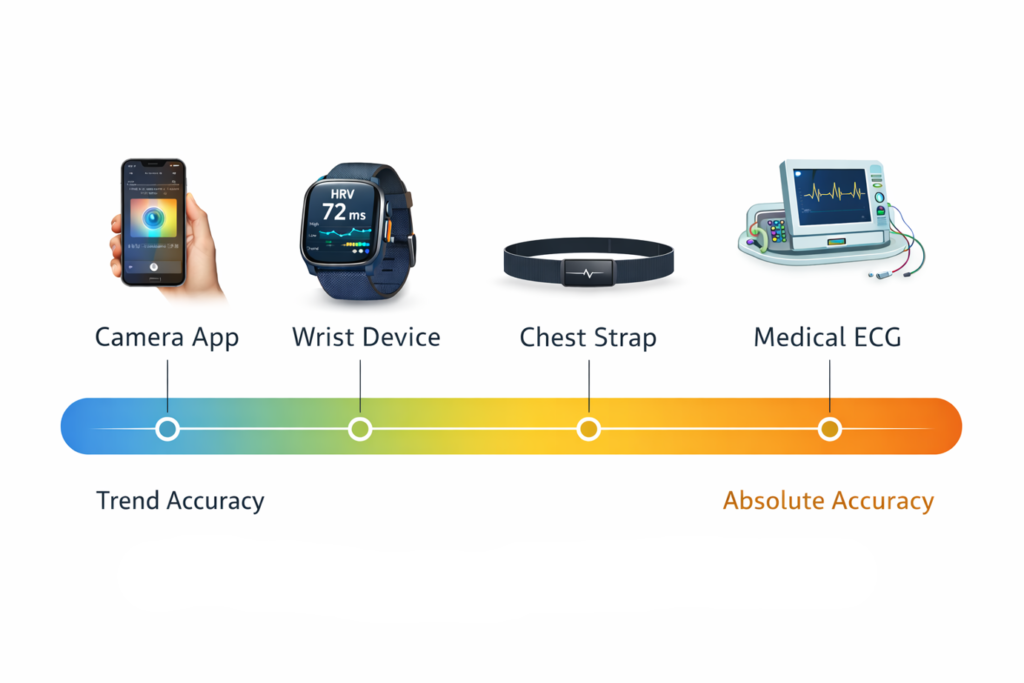
Despite lower absolute accuracy, optical sensors can still track relative trends effectively. If your morning HRV reads consistently around 60ms with a wrist device, a drop to 45ms signals meaningful change even if the absolute values differ from what an ECG would show.
Factors Affecting Optical Accuracy
- Device Fit: Loose watches allow motion artifacts. Too tight restricts blood flow. Proper snug-but-comfortable fit improves readings.
- Skin Characteristics: Darker skin tones absorb more LED light, potentially reducing signal quality. Tattoos on the wrist can interfere with optical sensors.
- Temperature: Cold hands reduce peripheral blood flow, degrading optical sensor performance. This is why overnight measurements when you’re warm in bed work better than morning readings in cold rooms.
- Movement: Any wrist motion creates signal noise. This is why most devices either measure HRV during sleep or require sitting still for spot measurements.
Practical Recommendation
For trend tracking (the primary consumer use case), optical sensors in quality devices provide sufficient accuracy. Focus on your personal baseline and relative changes rather than comparing absolute values to other people or to published research using ECG measurements.
If you need research grade accuracy for athletic training, health studies or medical purposes, invest in a chest strap. For general wellness and recovery monitoring, optical sensors in existing smartwatches work adequately.
How to Use HRV Data Effectively
Collecting HRV data is easy. Using it meaningfully requires an understanding of how to interpret trends, and what actions to take based on readings.
Establish Your Personal Baseline
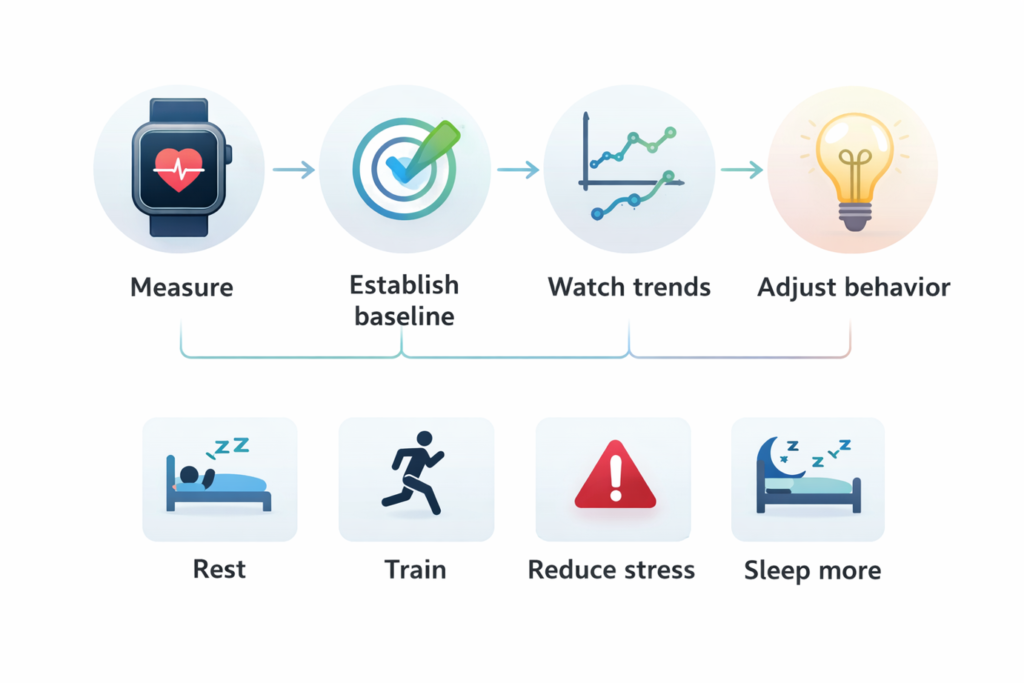
HRV varies enormously between individuals. A reading of 100ms might be normal for one person and exceptional for another. Spend 2-4 weeks measuring consistently under similar conditions (same time of day, same body position) to establish your personal range.
Most people check their HRV first thing in the morning, whether from overnight tracking or a brief spot measurement. This controls for variables like caffeine, food, activity and stress that fluctuate throughout the day. Morning data tends to give the most consistent baseline for tracking trends.
Focus on Trends, Not Single Readings
Daily HRV fluctuates normally by 10-20% or more. A single low reading doesn’t necessarily signal problems. Look at weekly averages and overall direction rather than reacting to daily variations.
For example, if your normal morning HRV is around 65ms and one day it reads 58ms, that’s within typical daily variation and not cause for concern. However, if it stays under 55ms for a week while your resting heart rate climbs, that’s a meaningful pattern suggesting you need additional recovery.
Many apps calculate 7-day rolling averages or compare today’s reading to your recent baseline. These smoothed metrics provide clearer signals than raw daily numbers.
Common HRV Patterns and Responses
HRV drops 20-30% below baseline: Strong signal to reduce training intensity or take a rest day. May indicate inadequate recovery, accumulated fatigue, stress or early illness. Prioritize sleep, reduce workload and consider stress management techniques.
HRV at or slightly above baseline: Green light for normal training intensity. Your system has recovered adequately from recent stress. Maintain your current training and recovery balance.
HRV substantially elevated above baseline: Often interpreted as excellent recovery. However, unusually high HRV alongside fatigue, elevated resting heart rate or decreased performance can reflect parasympathetic dominance from extreme training load rather than optimal recovery (a rare condition called parasympathetic overtraining). Context matters. If you feel great and perform well, high HRV is positive.
Steady HRV decline over weeks: Suggests accumulating stress (training, work, life stress) exceeding your recovery capacity. Implement active recovery strategies, including extra sleep, stress reduction, lighter training and nutrition improvements.
High day-to-day variability: Indicates inconsistent recovery patterns or measurement conditions. Review whether you’re checking HRV at the same time daily under similar circumstances. High variability can also reflect lifestyle chaos (irregular sleep, variable stress) that itself impacts health.
Integrating HRV with Other Metrics
HRV works best combined with complementary data rather than used in isolation.
- Resting Heart Rate: Often moves inversely with HRV. If HRV drops while resting heart rate rises, recovery is definitely compromised.
- Sleep Quality: Poor sleep can lower HRV. If HRV is low after a bad night’s sleep, you have a clear explanation and action step (prioritize sleep tonight).
- Subjective Feel: If HRV is normal but you feel terrible, trust how you feel. Numbers inform decisions but don’t override obvious fatigue or illness.
- Training Load: Compare HRV trends to your training volume. If load increased without adequate recovery time, declining HRV makes sense and suggests rest.
Do You Need a Dedicated HRV Monitor?
If you already own a modern smartwatch or fitness tracker, you probably don’t need dedicated HRV hardware. Most current devices from Apple, Garmin, Samsung, Fitbit and others include HRV tracking that’s sufficient for general wellness monitoring.
Consider a dedicated chest strap if:
- You’re a competitive athlete requiring maximum accuracy for training optimization
- Your wrist worn device shows erratic or inconsistent HRV readings
- You’re participating in research or working with a coach using HRV protocols
- You don’t want or need a smartwatch but want accurate HRV data
Your existing smartwatch is probably fine if:
- You’re tracking HRV for general wellness and recovery awareness
- You’re focused on relative trends rather than absolute accuracy
- You’re already wearing the device daily for other features
- Your device provides consistent readings that correlate with how you feel
Skip HRV monitoring entirely if:
- You won’t change your behavior based on the data
- Tracking creates anxiety rather than actionable insights
- You’re looking for medical diagnoses (see a doctor instead)
- You have irregular heart rhythms that invalidate HRV measurements
It’s Not About a Perfect Rhythm
Heart rate variability works best when it’s treated as context, not a target. Over time, it reflects how your body responds to stress, sleep, training and day-to-day demands – not how close you are to an “ideal” number.
When used thoughtfully, HRV acts as a quiet feedback signal. It highlights when recovery is falling behind, when stress is accumulating, and when your system is genuinely ready for more. Used poorly, it becomes just another metric to fixate on.
The real aim is awareness, not optimization. Track consistently, look for patterns rather than daily swings, and let the data support better decisions rather than override them.
Your body still communicates the most important signals. HRV simply helps you notice them.