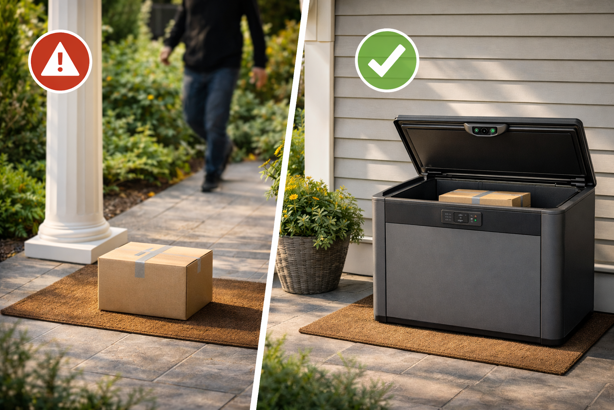
You watch the delivery driver drop a package on your porch through your doorbell camera, then watch a different person walk up and take it thirty minutes later. Recent industry surveys estimate that millions of packages are stolen in the U.S. annually, adding up to billions of dollars in losses. A smart package delivery box solves this by creating a secure drop off point that locks automatically after delivery, eliminating the window of opportunity that porch pirates exploit.
These weatherproof containers use Wi-Fi connectivity, smartphone apps and automated locking mechanisms to protect deliveries until you retrieve them. Some models include features like temperature control for groceries, built-in cameras or integration with smart home systems, transforming your porch from a theft magnet into a secure receiving station.
What Smart Package Delivery Boxes Do (and How They Stop Porch Pirates)
Smart package delivery boxes are special containers with electronic locks that secure packages after delivery. A courier places your package inside through an access door or top opening, then the box automatically locks via electronic latch or app controlled mechanism, preventing unauthorized access.
The “smart” component comes from Wi-Fi or Bluetooth connectivity that links the box to your smartphone. You receive instant notifications when deliveries arrive, can remotely unlock the box for multiple deliveries throughout the day and monitor access history through companion apps.
Many medium to large residential boxes accommodate packages up to 16 inches tall and 22 inches wide, and can hold multiple deliveries simultaneously. Advanced models often include keypads for PIN access, integrated cameras for visual confirmation or temperature control for perishables.
Best for: Frequent online shoppers with package theft history, apartment or townhome residents with exposed doorways, anyone receiving multiple deliveries weekly or traveling regularly.
Not ideal for: Infrequent deliveries (fewer than 2-3 packages monthly), gated communities with secure package rooms, households primarily receiving oversized shipments.
How Package Delivery Boxes Work
Delivery Mode and Auto-Locking
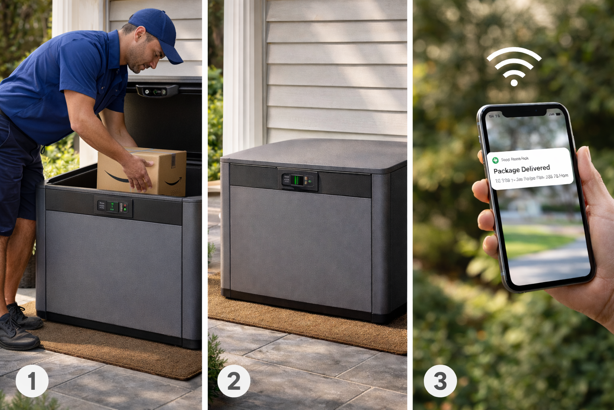
Some smart boxes offer a “delivery mode” setting that leaves the box unlocked each morning until your first package arrives. When the courier closes the lid after depositing your package, an electronic latch or solenoid lock engages automatically. You receive a push notification confirming delivery and lock engagement.
If you’re expecting multiple deliveries, the companion app lets you remotely unlock the box for subsequent packages. Without manual unlocking, couriers cannot access locked boxes. While this also prevents opportunistic theft, it means you have to actively monitor your deliveries.
Access Control Methods
Smart delivery boxes offer several access methods:
- App-based control lets you unlock via smartphone from anywhere with Internet access
- PIN keypads (available on premium models) allow you to create temporary codes for delivery drivers, friends or family
- One-time codes generated automatically based on tracking numbers work with specific carriers like Amazon and UPS, though this typically requires paid subscriptions
The most common approach combines delivery mode for the first package with app-controlled unlocking for subsequent deliveries.
Connectivity and Power
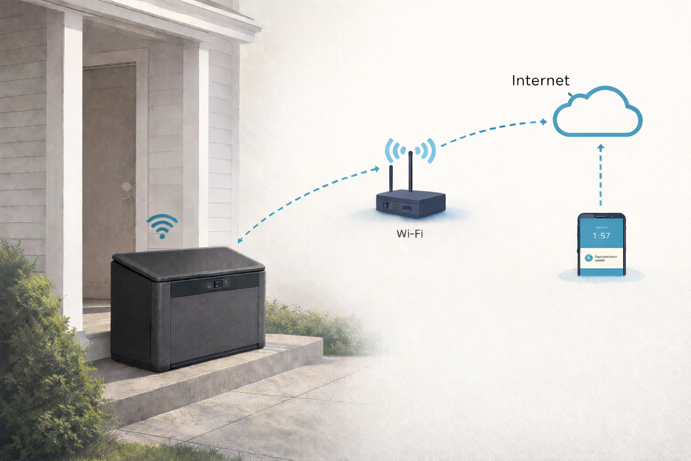
Wi-Fi models connect directly to your home network, enabling remote access from pretty much anywhere. They require either AC power from an outlet (limiting placement options) or rechargeable batteries lasting 1-4 months between charges. Bluetooth-only boxes work within 30-50 feet of your phone, adequate if you’re home during deliveries but useless for remote monitoring.
Some systems use hub based connectivity, where a Wi-Fi bridge placed indoors connects to a Bluetooth lock on the box. This extends range and reduces battery consumption but adds another device to maintain.
Types of Smart Package Boxes
Wi-Fi Connected Boxes
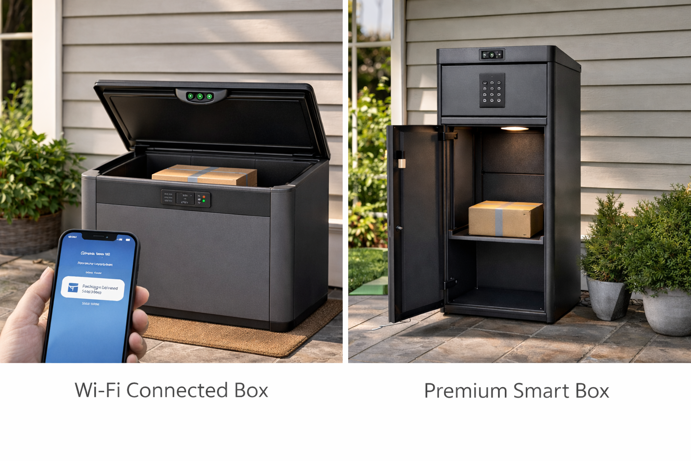
Mid-range smart boxes ($200-400) include Wi-Fi connectivity, smartphone apps and automatic locking. They send push notifications when packages arrive, allow remote unlocking for multiple deliveries and maintain delivery logs showing exact timestamps.
Pros: Remote monitoring from anywhere, instant delivery alerts, remote unlocking capability, delivery history tracking, smart home integration
Cons: Requires stable Wi-Fi coverage at installation location, battery charging every 1-4 months or AC power access, higher initial cost, dependency on manufacturer’s app and servers
Best for: Frequent online shoppers who want verification and control over deliveries, especially those who travel regularly or work away from home
Premium Smart Boxes
High end models ($400-600) offer advanced features like integrated security cameras, passive temperature control for groceries and PIN keypads for courier access codes. Boxes with temperature control moderate internal conditions, usually through insulated liners or passive cooling inserts designed to protect contents from direct heat or cold for short periods.
Pros: Visual delivery confirmation via built-in camera, temperature control protects perishables, PIN keypads eliminate app dependency for couriers, larger capacities (8+ cubic feet), premium materials and construction
Cons: Highest cost, often require monthly subscriptions ($2-10/month) for advanced features, more complex setup, may need professional installation
Best for: Households with frequent grocery deliveries, multiple daily packages or high value shipments requiring extra security and verification
Key Features to Consider
Capacity and Size
Standard boxes accommodate packages 15-16 inches tall, sufficient for most deliveries. Measure your typical package sizes before buying. If you regularly receive larger items or multiple simultaneous deliveries, look for boxes with 6-8 cubic feet capacity rather than the standard 4-5 cubic feet.
Consider installation space. Most boxes measure 24-28 inches wide and 18-28 inches deep, requiring significant porch real estate. Ensure adequate clearance for lid opening (normally 45-60 degrees) and that the box doesn’t block walkways or doorways.
Security Features
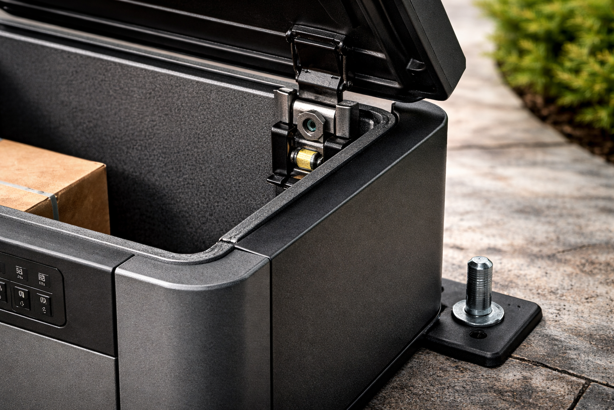
Electronic locks should be strong enough to resist forced entry attempts and casual prying, making it difficult for thieves to simply lift the lid. Look for boxes with anti-pry hinges, reinforced latch points and tamper alerts that notify you of unauthorized access attempts.
Physical security matters too. Lightweight boxes need anchoring systems (tethers or bolt-down hardware) or weighted bases accepting 40+ pounds of sand. Some models include built-in weight compartments specifically for this purpose.
Weather Protection
All outdoor boxes claim weatherproofing, but quality varies. Where manufacturers list an IP rating, look for IP65 water resistance or better, indicating protection against heavy rain. Boxes should include drainage holes or channels that prevent water accumulation, and raised internal floors to keep packages dry.
Materials matter too. Steel construction offers durability but may rust without proper coating. Heavy duty resin resists corrosion naturally but can become brittle in extreme cold. Powder coated steel delivers the best balance of strength and weather resistance.
App Quality and Subscription Costs
Test the companion app before committing. Essential features include delivery notifications, remote lock/unlock, delivery history and battery status monitoring. Check recent app store reviews for connectivity problems, crashes or abandoned updates.
Many manufacturers now charge monthly subscriptions ($2-10) for advanced features like cloud video storage, automatic PIN generation or extended delivery history. Basic locking and notifications usually remain free. Calculate total cost over 2-3 years including subscriptions before purchasing.
The Courier Compliance Challenge
Here’s the uncomfortable truth. Getting delivery drivers to consistently use your smart package box is often the biggest challenge. User reports show couriers don’t always use the boxes, sometimes leaving packages beside them instead due to time pressure, unfamiliar opening mechanisms, or uncertainty about access.
Several factors affect compliance. Boxes with simple top-opening lids tend to see better usage than those with front doors or complex mechanisms. Clear, visible signage helps (e.g. “PLACE PACKAGES INSIDE BOX”). Regular deliveries from the same drivers improve compliance as they become familiar with your system.
Consider leaving notes thanking drivers when they use your box. Positive reinforcement and familiarity will likely improve long term compliance. Some homeowners also report success reaching out directly to local distribution centers to request driver cooperation.
Smart Home Integration
Premium smart package boxes often integrate with Amazon Alexa, Google Assistant and Apple HomeKit (support more limited depending on brand) for voice control and automation. You can create routines like “unlock box when I arrive home” or “send notification when box opens”. Integration with security cameras and smart doorbells provides visual confirmation of deliveries.
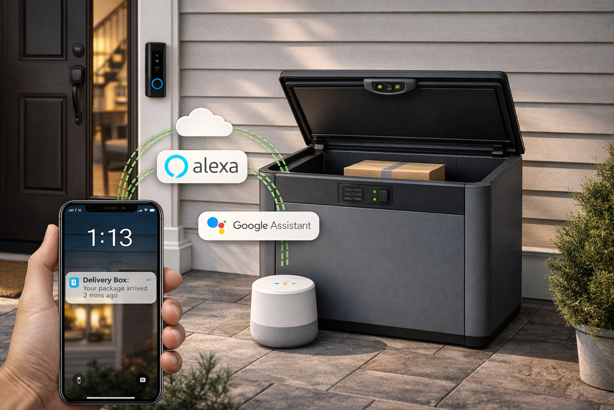
However, integration quality varies considerably between manufacturers. Yale products generally offer strong HomeKit support, while many other brands prioritize Amazon and Google ecosystems. Check compatibility before purchasing if integration is important to you.
Alternatives to Consider
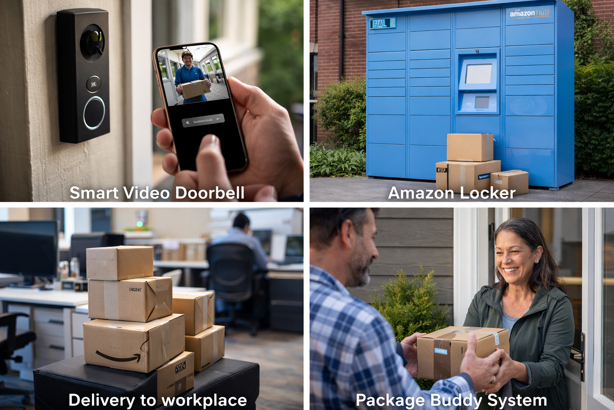
While very effective, smart package delivery boxes aren’t the only solution to porch piracy. Smart video doorbells and security cameras deter theft and provide evidence but don’t physically protect packages. Delivery to workplace or Amazon Lockers eliminates home theft risk entirely but sacrifices convenience. Requiring signatures ensures you’re home for deliveries but limits delivery windows and may incur fees.
Some neighborhoods have established package buddy systems where trusted neighbors accept deliveries for each other. This works well in tight knit communities but isn’t a viable option for everyone.
End the Doorstep Lottery
Every unattended delivery is a gamble. Sometimes you win and the package is still there. Sometimes you lose and you’re left scrolling through a doorbell clip that shows exactly when it disappeared. Smart package delivery boxes don’t eliminate risk entirely, but they do remove the randomness that porch piracy thrives on.
By securing parcels the moment they’re dropped off, these boxes turn delivery from a race against time into a controlled hand-off. When all is said and done, what really matters is whether the box is easy enough for drivers to use as part of their regular routine. When that happens, your porch stops being an open invitation and starts acting like a locked door.
Whether you choose a Wi-Fi connected box or a fully featured premium system, the goal is the same – no longer leaving deliveries to chance. Your home already protects what’s inside it. Ending the doorstep lottery is simply extending that protection to the last mile.