
Your home should support your health, not just your convenience. Smart home wellness devices use IoT technology to monitor, improve and automate the environmental factors that affect how you feel every day, from the air you breathe to the water you drink and how well you sleep at night.
Unlike the typical smart home gadgets which focus on entertainment or security, wellness devices target specific health outcomes: better hydration, cleaner air, improved sleep quality and reduced stress. They achieve this through sensors, automation and data tracking that make healthy habits easier to maintain.
This guide covers the main categories of smart home wellness devices for health and better sleep in 2026, helping you identify which devices offer genuine health benefits versus marketing hype.
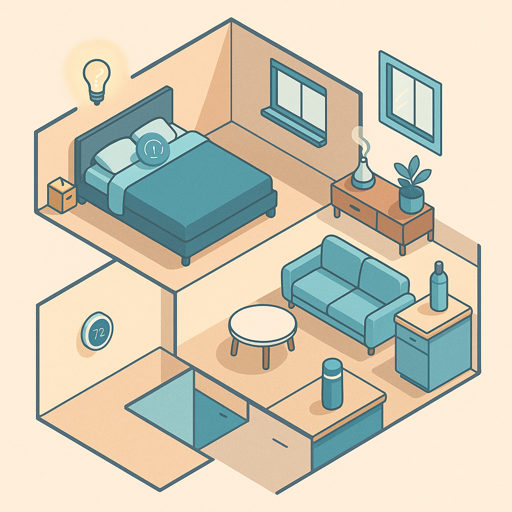
Quick Comparison: Top Smart Wellness Devices
| Device Category | Price Range | Best For | Key Benefit |
|---|---|---|---|
| Smart Water Bottles | $45-$140 | Chronic dehydration | Automatic intake tracking |
| Smart Diffusers | $35-$200 | Stress, ambiance | Scheduled aromatherapy |
| Smart Air Purifiers | $180-$1100 | Allergies, asthma | Removes 99.97% of particles |
| Air Quality Monitors | $45-$330 | Awareness, prevention | Real-time pollution data |
| Smart Sleep Trackers | $100-$10000 | Sleep issues | Pattern analysis |
| Smart Lighting | $40-$200 | Energy, mood | Circadian rhythm support |
| Smart Humidifiers/Dehumidifiers | $80-$280 | Dry air, congestion (humidifiers) Dampness, mold prevention (dehumidifiers) | Automated moisture control |
| Smart Massage Devices | $70-$350 | Recovery, muscle tension | Automated percussion therapy |
Jump to Section:
- Smart Water Bottles
- Smart Air Purifiers
- Smart Air Quality Monitors
- Smart Diffusers
- Smart Sleep Devices
- Smart Lighting for Wellness
- Smart Climate Control
- Smart Massage Devices
- Buying Guide
Smart Water Bottles
Smart water bottles solve a simple problem – most people forget to drink enough water. By tracking intake automatically and sending reminders, these bottles turn hydration into a measurable habit rather than mere guesswork.
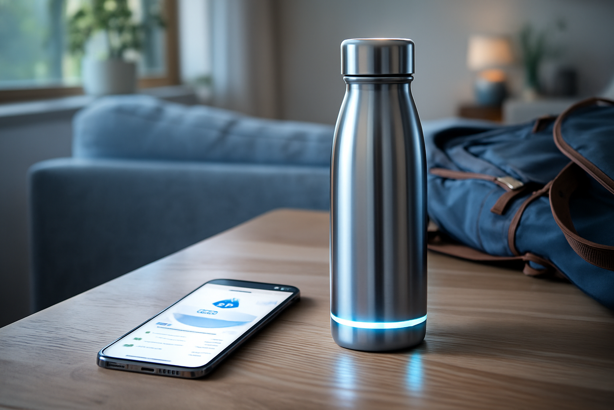
How They Work
Built-in sensors measure how much water you consume throughout the day. The bottle syncs via Bluetooth to a smartphone app that logs your intake, calculates personalized hydration goals based on your activity level, and sends reminders when you’ve gone too long without drinking. LED lights on the bottle give visual cues without requiring you to check your phone.
Top Smart Water Bottles for 2026
WaterH BOOST ($45-60)
Best overall. LED touch display built directly into the lid shows intake percentage without checking your phone. 32oz capacity requires just 2 refills daily. Triple-wall insulation keeps drinks cold for up to 24 hours. Battery life is designed to last weeks between charges, depending on usage. Syncs with Apple Health and Fitbit.
LARQ Bottle PureVis 2 ($109-139)
Best premium option. Combines UV-C purification (eliminates 99.999% of certain bacteria in lab testing), optional Nano Zero filtration and smart hydration tracking. Self-cleaning mode activates every 2 hours. 34oz capacity. Double-wall insulation keeps drinks cold for 24 hours. Battery lasts 2-3 weeks per charge.
WATER.IO Smart Bottle ($70-100)
Best for athletes. Dual sensor smart cap with real-time tracking. Syncs with Apple Health, Garmin, Oura Ring and Strava to automatically adjust hydration goals based on workout intensity. Color changing LED progress indicator and vibration reminders. 17oz capacity. Can pair two bottles with one app.
Key Features to Consider
- Tracking Method: Tilt sensors estimate intake based on angle, hybrid systems combine multiple sensors for better accuracy
- Battery Life: Ranges from 5-7 days (constant syncing) to 30 days (less active models)
- Insulation: Triple-wall (WaterH) outperforms standard double-wall designs
- Capacity: 17-34 oz typical, larger means fewer refills but heavier to carry
- App Integration: Better apps sync with fitness trackers and adjust goals automatically
Who Benefits Most
Ideal for people who consistently drink less than 64 oz daily, athletes whose hydration needs fluctuate with training, office workers who get absorbed in tasks and forget to drink, frequent travelers needing water purification, or anyone who is prone to kidney stones and requires high fluid intake.
Not worth it if: You already maintain consistent hydration habits or find phone notifications intrusive rather than helpful.
Read the complete smart water bottle buyer’s guide →
Smart Diffusers
Smart diffusers automate aromatherapy by diffusing essential oils or fragrance on a schedule, responding to your routines without manual operation.
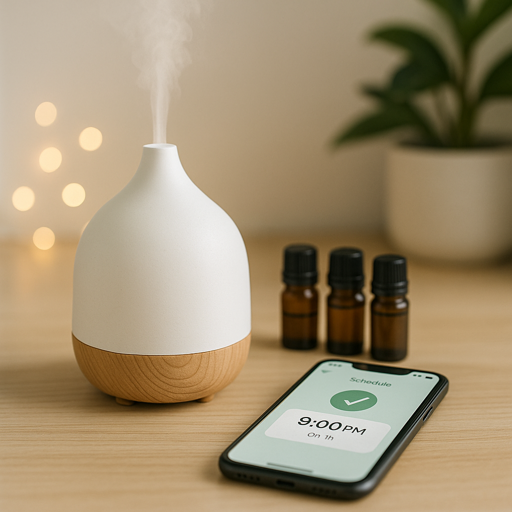
How They Work
Two main technologies exist. Ultrasonic diffusers vaporize water mixed with essential oils using high frequency vibrations, while dry diffusion systems (like Pura and Aera) use fragrance vials and fans to disperse scent molecules without water or heat.
Top Smart Diffusers for 2026
ASAKUKI Smart Wi-Fi Diffuser ($35-45)
Best large capacity ultrasonic option, and the one I’ve tested at home. The 500ml tank runs overnight without a refill, and the auto shut-off kicks in reliably once the water runs out. Wi-Fi setup through the Tuya Smart app takes around five minutes, and the scheduling feature works consistently for automated morning or evening routines. Seven LED colour options add a nightlight function that pairs well with a wind-down schedule.
Pura 4 ($35-50 device + fragrance purchase)
Most popular smart diffuser system. Holds two scent vials that diffuse independently. App controls intensity, schedules and automatic temperature adjustment. Detects vials automatically when swapped. Fragrance vials last approximately 3 weeks with moderate use. Both plug-in power and compact design suit any room.
Aera ($190-200 device + fragrance purchase)
Premium option with sophisticated scents. Dry-process diffusion maintains scent integrity without mist or residue. Hypoallergenic output. Curated fragrance library with 50+ options. App offers detailed scheduling and intensity control. Each fragrance capsule lasts for weeks.
Sierra Modern Home Smart Diffuser ($40-55)
Best budget ultrasonic option. 400ml tank delivers 12 hours of continuous mist. Wi-Fi compatible with Alexa and Google Home voice control. LED color options, timer settings and scheduling via app. Works as both diffuser and light humidifier.
Ultrasonic vs. Dry Diffusion
Ultrasonic Diffusers
- Add moisture to air
- Can use almost any essential oils
- Generally cheaper
- Require cleaning and water refills
- May create humidity build-up
Dry Diffusers
- No water needed
- Proprietary fragrance vials only
- More expensive
- Lower maintenance
- No humidity or residue issues
- Better for small spaces
Essential Oil Considerations
Quality matters. Synthetic fragrance oils are not the same as essential oils. They provide scent but lack aromatherapy benefits. True essential oils come from plants and contain active compounds. Look for 100% pure oils, third-party testing certificates and botanical names on labels.
Popular Wellness Scents
- Lavender: Promotes relaxation and sleep quality
- Peppermint: Enhances focus and reduces fatigue
- Eucalyptus: Supports respiratory comfort
- Lemon: Uplifting and energizing
- Chamomile: Calming, reduces stress
Who Benefits Most
Excellent for people using aromatherapy for stress management, those wanting automatic home fragrance without candles or sprays, individuals with specific scent routines (energizing morning, calming evening), or anyone who forgets to run their diffuser manually.
Not ideal if: You’re sensitive to fragrances or prefer unscented environments.
Read the complete smart diffuser buyer’s guide →
Looking to pair your diffuser with indoor plants? My guide to smart diffusers and indoor plants covers placement strategies, which diffuser types work best with different plants, and automation routines that simplify both plant care and aromatherapy.
Smart Massage Devices
Smart massage devices automate muscle recovery and tension relief through app guided percussion therapy, heat/cold treatment and scheduled routines that eliminate the need for manual massage appointments.
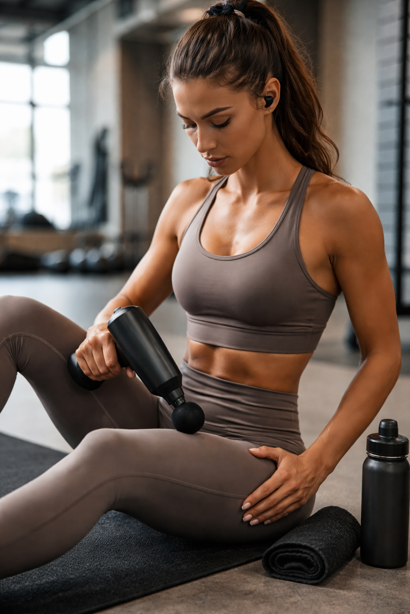
How They Work
Percussion massage guns, chair pads and targeted devices deliver deep tissue massage through automated programs. AI-powered apps guide routines based on your activity level and recovery needs, while heat and cold therapy enhance effectiveness for post-workout inflammation management.
Top Categories
Massage Guns ($130-350): Full body percussion therapy with app connectivity. RENPHO Thermacool adds heat/cold therapy, while Theragun Prime offers AI guided recovery with wearable integration.
Chair Pads ($200-260): Passive massage during work. COMFIER Shiatsu Chair Pad targets desk induced neck and back tension with adjustable positioning.
Specialized Devices ($70-230): Foot massagers for plantar fasciitis, eye massagers for screen fatigue. Medcursor Foot Massager delivers budget friendly foot relief, while Therabody SmartGoggles address eye strain.
Who Benefits Most
Essential for athletes requiring consistent recovery protocols, office workers with chronic neck and shoulder tension, anyone experiencing regular muscle soreness from workouts, or people who currently schedule professional massages but want on-demand relief at home.
Not ideal if: You find percussion therapy uncomfortable or already have a massage therapist you see regularly.
Read the complete smart massage device buyer’s guide →
Smart Air Purifiers
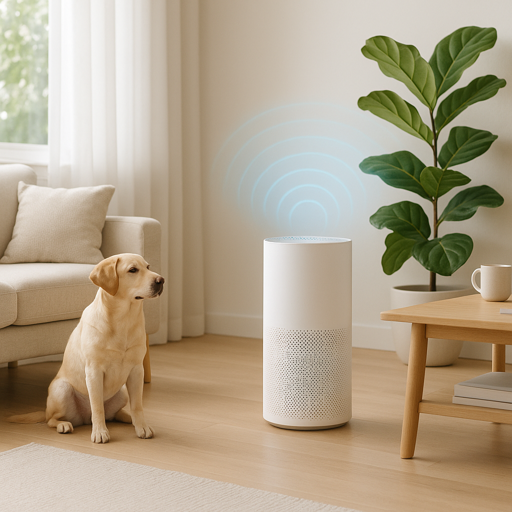
Smart air purifiers for allergies and asthma combine HEPA filtration with sensors and automation to maintain clean indoor air without manual intervention. They detect pollution levels in real-time and adjust fan speed accordingly.
How They Work
Air is drawn through multi-stage filters (pre-filter, HEPA, activated carbon) that capture particles as small as 0.3 microns including dust, pollen, pet dander, mold spores, smoke and some bacteria. Built-in sensors measure PM2.5, PM10, VOCs, and sometimes CO2 or NO2. The purifier automatically increases fan speed when pollution spikes, then reduces to quiet mode once air quality improves.
Technology Inside
HEPA Filters: High Efficiency Particulate Air (HEPA) filters capture 99.97% of airborne particles ≥0.3 microns. True HEPA meets this standard, but anything labeled “HEPA-type” does not.
Activated Carbon: Absorbs odors, gases and VOCs from cooking, cleaning products and off-gassing furniture.
Air Quality Sensors: Laser particle counters detect PM2.5 and PM10, and gas sensors track VOCs and NO2.
Top Smart Air Purifiers for 2026
Levoit Vital 200S-P ($180-220)
Best value for most homes. VeSync app delivers detailed air quality data and scheduling. Covers 1875 sq ft with quiet operation (23dB sleep mode). Three stage filtration with washable pre-filter. Auto mode genuinely responds to air quality changes.
Dyson Big & Quiet Formaldehyde BP03 ($900-1100)
Best for large spaces and detailed data. Designed for large rooms and open plan spaces with powerful airflow and long throw air projection (up to 32 feet). App breaks down pollutants individually (PM2.5, PM10, NO2, VOCs) with historical graphs. HEPA filter can last up to 5 years, with the activated carbon filter typically replaced every 1–2 years depending on usage (the MyDyson app notifies when replacement is needed). Quiet operation even at high speeds.
Blueair Pure 211i Max ($300-350)
Best smart features at mid-range price. Blueair app offers comprehensive scheduling and automation. Covers 3048 sq ft efficiently. Precise air quality monitoring with five color indicator. Compatible with Alexa.
Key Specifications
- CADR (Clean Air Delivery Rate): Measures cubic feet of clean air per minute. Higher numbers clean faster. Match CADR to room size: 200+ for bedrooms, 300+ for living rooms
- Coverage Area: Manufacturers usually rate for 2 air changes per hour. For allergy relief or wildfire smoke, choose a purifier rated for 2-3x your actual room size
- Noise Levels: Sleep mode should be ≤30dB. High speed will be louder (50-60dB) but runs less often with auto mode
- Filter Replacement: HEPA filters last 6-12 months ($30-60 each). Carbon filters 3-6 months ($15-30). Factor replacement costs into total ownership
Who Benefits Most
Crucial for people with allergies, asthma or COPD, households with pets generating dander, homes near busy roads with traffic pollution, anyone living in wildfire prone regions, or parents concerned about their children’s respiratory health.
Not necessary if: You live in an area with excellent outdoor air quality, have no respiratory sensitivities, and don’t have pets or indoor air quality concerns.
Read the complete smart air purifier buyer’s guide →
Smart Air Quality Monitors
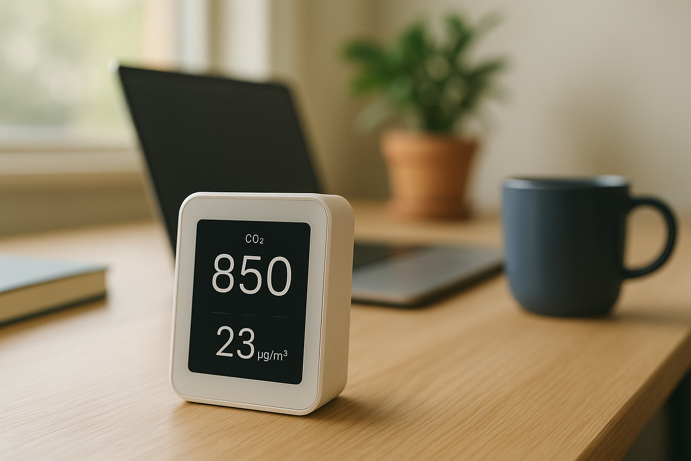
Air quality monitors don’t clean the air but they do measure it. By tracking real-time data on pollutants, these devices help you understand when to open windows or run purifiers.
What They Measure
PM2.5 & PM10: Particulate matter from dust, smoke, and combustion. PM2.5 particles are small enough to enter lungs and bloodstream.
VOCs (Volatile Organic Compounds): Gases from cleaning products, paints, furniture and building materials. Some VOCs are harmful with prolonged exposure.
CO2 (Carbon Dioxide): High levels indicate poor ventilation. Excess CO2 causes drowsiness, headaches and reduced cognitive function.
Radon: Radioactive gas from soil that enters through foundation cracks. Second leading cause of lung cancer after smoking.
Temperature & Humidity: Affect comfort and mold growth risk.
Top Air Quality Monitors for 2026
Airthings View Plus ($280-330)
Most comprehensive monitoring. Measures radon, PM2.5, CO2, VOCs, temperature, humidity and air pressure. E-ink display shows customizable data. Battery lasts months or plug in via USB-C. Acts as hub for other Airthings Wave devices.
Amazon Smart Air Quality Monitor ($45-80)
Best budget option for smart home users. Tracks PM2.5, VOCs, CO, humidity and temperature. Integrates directly with Alexa for voice queries and automated routines (e.g. “turn on purifier when air quality drops”). Compact design fits anywhere.
How to Use the Data
- CO2 Above 1000 ppm: Open windows for fresh air or improve ventilation
- PM2.5 Above 35 μg/m³: Run air purifier, avoid outdoor activities if pollution is external
- VOCs Elevated: Identify source (new furniture, cleaning products), increase ventilation
- Humidity Below 30%: Use humidifier, but keep in mind above 60% increases mold risk
- Radon Above 4 pCi/L: Install radon mitigation system (professional required)
Who Benefits Most
Valuable for anyone with unexplained respiratory symptoms or allergies, parents monitoring nursery air quality, people working from home who need optimal cognitive performance, homeowners in radon prone areas, or households using air purifiers who want to verify effectiveness.
Skip if: You’re looking for something to improve air quality directly. These devices only measure, they don’t clean.
Smart Sleep Devices for Better Sleep Quality
Smart sleep devices track and improve rest quality through monitoring, environmental adjustments, or both.
Sleep Tracking Technology
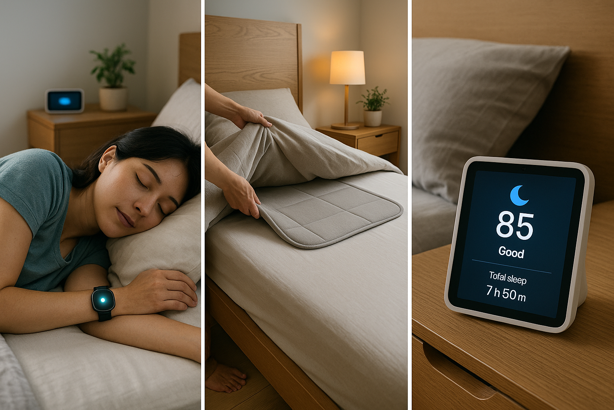
Wearable Trackers: Watches and rings measure heart rate, movement, blood oxygen, and sometimes skin temperature to determine sleep stages (light, deep, REM). Examples include Oura Ring ($350-550) and Whoop ($240/year subscription).
Non-Wearable Monitors: Under-mattress sensors or bedside devices track movement, breathing and heart rate without contact. Google Nest Hub 2 ($100) uses radar to detect breathing patterns.
Smart Mattress Covers/Beds: Eight Sleep Pod ($2,300-3,500) and Sleep Number Climate360 ($8,000-10,000) include built-in sensors plus active temperature control to optimize sleep conditions.
Key Metrics Tracked
- Sleep Stages: Time spent in light, deep and REM sleep. Balanced sleep cycles include adequate deep sleep (physical recovery) and REM sleep (mental restoration)
- Sleep Score: Aggregated metric based on duration, quality, consistency and disturbances. Helps identify trends over time
- Heart Rate Variability (HRV): Higher HRV during sleep indicates better recovery and lower stress
- Breathing Rate: Monitors for irregularities or sleep apnea indicators
- Sleep Latency: Time taken to fall asleep (long latency suggests difficulty unwinding)
Environmental Sleep Devices
White Noise Machines: Hatch Restore 3 ($170) combines white noise, nature sounds and sunrise alarm with app control and sleep tracking integration.
Smart Blinds: Automated window treatments gradually let in morning light to wake naturally. Brands like Lutron ($500-3500 per window) integrate with sleep schedules.
Accuracy Considerations
Consumer sleep trackers are reasonably accurate for detecting wake vs. sleep and gross sleep patterns, but they’re not medical devices. Sleep stage detection has 60-80% accuracy compared to polysomnography (medical sleep study). Use trackers for trend monitoring, not diagnosis.
Who Benefits Most
Helpful for people with inconsistent sleep schedules, athletes optimizing recovery, anyone with suspected sleep disorders (as preliminary screening before medical evaluation), or shift workers trying to maximize limited sleep time.
If you’re tracking recovery and body composition alongside sleep, a smart body fat scale pairs naturally with the metrics covered here.
Not necessary if: You sleep well consistently without issues or find tracking sleep creates anxiety rather than insight.
Smart Lighting for Wellness
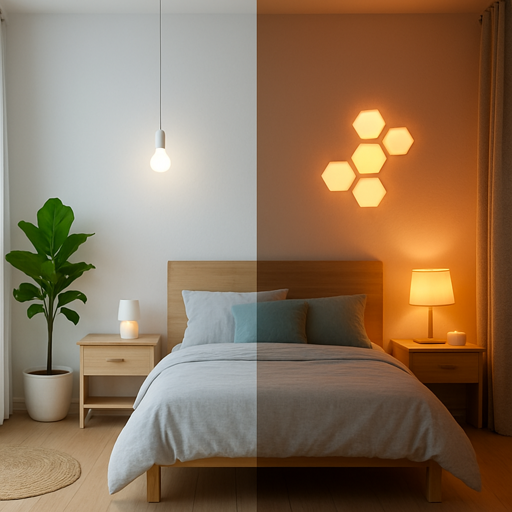
Smart lighting systems for better sleep and wellness adjust color temperature and brightness to support your natural circadian rhythm, our body’s internal clock regulating sleep-wake cycles.
Circadian Rhythm Science
Your body responds to light exposure throughout the day. Blue-rich light (5000K-6500K) in morning hours promotes alertness and suppresses melatonin. Warm light (2000K-3000K) in evening signals your body to prepare for sleep by allowing melatonin production.
Regular exposure to appropriate light timing can improve sleep quality, mood, energy levels and cognitive performance. Disrupted circadian rhythms contribute to insomnia, depression and metabolic issues.
Top Smart Lighting Solutions
Philips Hue White and Color Ambiance ($50-200 depending on kit)
Most versatile smart lighting system. Full color spectrum from energizing daylight (6500K) to warm candlelight (2000K). Scenes and schedules in app. “Circadian Lighting” automatically adjusts color temperature throughout day. Works with all major smart home platforms.
Nanoleaf Shapes or Lines ($40-200 per kit)
Decorative smart panels with full color control. Unique geometric designs serve as functional art. Circadian feature adjusts automatically. Touch-reactive and music sync modes. Expandable modular systems.
Practical Implementation
- Morning Routine: Gradually increase brightness with cool white light (5000K+) to wake naturally and boost alertness
- Daytime Work: Bright, neutral to cool light (4000K-5000K) maintains focus and energy
- Evening Wind Down: Dim warm light (2200K-2700K) starting 2-3 hours before bed signals your body to produce melatonin
- Night Mode: Red or very warm amber light (≤2000K) if you need visibility without disrupting melatonin production
Who Benefits Most
Particularly valuable for remote workers lacking natural daylight exposure, people with Seasonal Affective Disorder (SAD), shift workers with irregular schedules, anyone with insomnia or difficulty waking, or households wanting to improve sleep hygiene for children.
Skip if: You already get adequate natural light exposure throughout the day and have consistent sleep patterns.
Smart Climate Control
Humidity and temperature affect comfort, health and sleep quality. Smart climate devices maintain optimal conditions automatically.
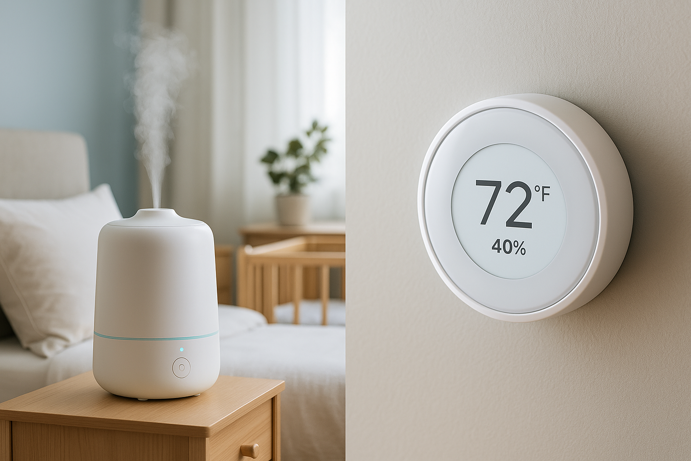
Smart Humidifiers & Dehumidifiers
Why Humidity Matters: Ideal indoor humidity ranges from 30-50%. Below 30% causes dry skin, irritated sinuses and respiratory discomfort. Above 60% promotes mold growth, dust mites and musty odors.
Levoit LV600S ($80-100)
Best smart humidifier for most needs. 6 liter capacity covers about 753 sq ft. Warm or cool mist options. VeSync app offers remote control, scheduling and humidity level monitoring. Auto mode maintains target humidity. Essential oil tray for aromatherapy. Quiet operation at 28dB.
Midea Smart Dehumidifier ($220-280)
Removes 50 pints daily from large spaces. Smart app shows real-time humidity with auto shut-off at target level. Reusable filter reduces maintenance. Continuous drain option for basements. Compatible with Alexa and Google Assistant.
Smart Thermostats for Sleep
Temperature regulation drastically affects sleep quality. Your body temperature naturally drops during sleep, and a cooler bedroom (60-67°F) facilitates this process.
Ecobee SmartThermostat Premium ($250-340)
Built-in air quality monitor tracks VOCs, humidity and temperature. Room sensors balance temperature across your home. Sleep mode automatically adjusts temperature for optimal rest. Alexa built-in for voice control.
Nest Learning Thermostat ($225-280)
Learns your schedule and preferences over time. Adjusts temperature automatically based on occupancy. Energy saving features reduce costs while maintaining comfort. Integrates with other smart home devices.
Who Benefits Most
Worthwhile for homes in dry climates requiring humidification, basements prone to dampness and mold, people with respiratory issues affected by humidity, anyone experiencing poor sleep from uncomfortable temperature, or households with children whose immune systems are sensitive to environmental factors.
Complete Buying Guide
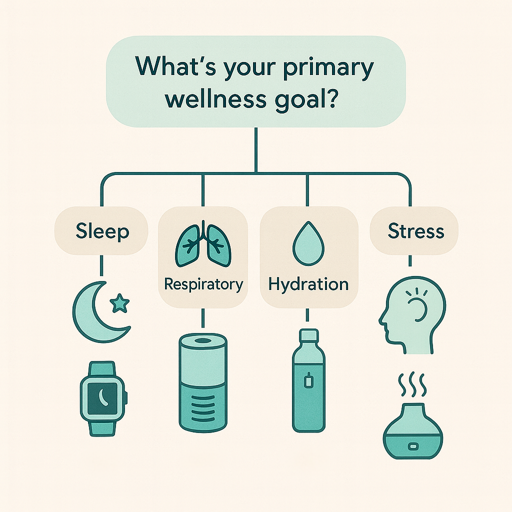
Choose Devices by Your Primary Wellness Goal
Not sure which of these devices you need? My air purifier vs humidifier vs diffuser guide explains the differences before you dive into the goal based recommendations below.
If your goal is better sleep:
- Smart lighting (circadian rhythm support) – High priority
- Smart thermostat or climate control – High priority
- Smart sleep tracker (identify issues) – Medium priority
- Smart diffuser with calming scents – Medium priority
- Smart air purifier (if allergies disrupt sleep) – As needed
For better respiratory health:
- Smart air purifier – Essential
- Smart air quality monitor – High priority
- Smart humidifier (if air is dry) – High priority
- Smart diffuser with eucalyptus – Low priority
If your goal is building healthy hydration:
- Smart water bottle – Essential
- All other devices – Not directly related
If your aim is to reduce stress:
- Smart diffuser with aromatherapy – High priority
- Smart lighting (warm, dimmable) – High priority
- Smart massage devices (physical tension relief) – High priority
- Smart sleep devices (ensure recovery) – Medium priority
- Air quality monitor (identify stressors) – Low priority
Smart Home Integration Considerations
Ecosystem Compatibility: If you already use Amazon Alexa, Google Home or Apple HomeKit, prioritize devices compatible with your existing ecosystem. Integration enables automation like “turn on air purifier when air quality drops” or “dim lights at 9 PM”.
Voice Control: Hands-free operation increases usage consistency. Check whether devices support your preferred voice assistant.
App Quality: Poor apps frustrate users and reduce device effectiveness. Read reviews specifically mentioning app reliability, ease of use and feature completeness.
Data Privacy: Understand what data devices collect and where it’s stored. Local processing is more private than cloud dependent systems. Review privacy policies for health related devices.
Maintenance and Ongoing Costs
Smart wellness devices require upkeep.
Replacement Filters
- Air purifiers: $50-120 annually
- Humidifiers: $20-40 annually (if applicable)
Consumables
- Diffuser fragrance oils/vials: $15-40 monthly (if using regularly)
- Water bottle charging (minimal electricity cost)
Subscriptions
- Premium app features: $0-5 monthly (most are free)
- Sleep tracking services: $0-20 monthly (Whoop requires subscription)
- Enhanced data storage: Typically free for basic features
Factor these costs into purchase decisions. A cheap purifier with expensive filters may cost more long term than a premium model with affordable filters.
Red Flags to Avoid
Overstated Health Claims: Devices claiming to “cure” conditions, “detoxify” your body or provide medical benefits beyond basic environmental improvement are very likely making unsubstantiated promises. Smart wellness devices improve your environment. They’re not medical treatments.
Proprietary Lock-In: Systems requiring brand-specific consumables with no alternatives may create expensive ongoing costs. Verify whether you can use third-party filters, essential oils or accessories.
Poor Privacy Practices: Devices collecting sensitive health data without clear privacy policies or selling data to third parties should be avoided. Research the company’s data handling before purchasing.
No Return Policy: Wellness is personal. So what works for others might not suit you. Buy from retailers offering at least 30 day returns.
Frequently Asked Questions
Do smart wellness devices actually work?
Effectiveness depends on the device and your specific needs. Smart air purifiers demonstrably remove particulate matter. This is measurable and scientifically validated. Smart water bottles help people who forget to drink by providing reminders. So they won’t add much value if you already hydrate consistently. Sleep trackers identify patterns but don’t directly improve sleep. You must act on the insights. Evaluate devices based on whether they address a real problem you have.
How much difference does indoor air quality really make?
The EPA reports indoor air can be 2-5 times more polluted than outdoor air. Poor indoor air quality contributes to respiratory issues, allergies, headaches and fatigue. For people with asthma, allergies or immune sensitivities, improving air quality often produces noticeable symptom reduction within days. For generally healthy people in good environments, effects are more subtle but still meaningful for long term health.
Can smart lighting genuinely improve sleep?
Yes, with consistent use. Exposure to bright blue light in evenings suppresses melatonin production and delays sleep onset. Research shows limiting blue light 2-3 hours before bed improves sleep quality. Smart lighting automates this by shifting to warm tones on schedule. However, lighting is one factor among many. Screen use, caffeine, stress and sleep environment also matter considerably.
Do these devices require technical knowledge?
No. Modern smart wellness devices are designed for mainstream consumers. Setup normally involves downloading an app, connecting to Wi-Fi and following on-screen instructions. Most complete setup in 5-10 minutes. If you can use a smartphone, you can use these devices.
What about data privacy and security?
Smart devices collect usage data and sometimes health metrics. Reputable manufacturers encrypt data and provide information about privacy controls. Check for encryption (data in transit and at rest), local processing options (data stays on device), clear privacy policies (what they collect and why) and account security (two-factor authentication available). Avoid devices from unknown manufacturers with vague privacy statements.
Smarter Homes, Healthier Habits
Smart home wellness devices work best when they solve a problem you actually experience, whether it be poor sleep, stale air, dehydration or daily stress. They aren’t magic fixes but they are tools that reduce friction and make healthy choices the easy, automatic option.
Start with one clear goal. Choose a device that directly supports it. Use it long enough to see whether it genuinely improves how you feel. From there, expand only if the technology earns its place in your routine.
If it doesn’t make healthy living easier, it’s not a wellness upgrade – it’s just another gadget.